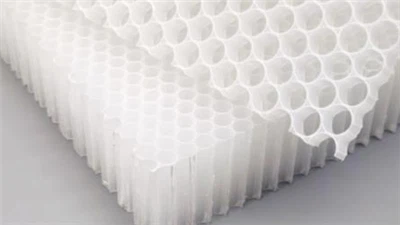
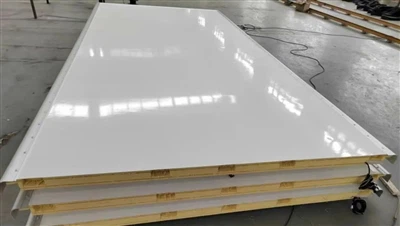
Fiber-reinforced plastic (FRP) sandwich sheets have become an essential class of composite materials in modern engineering, offering an ideal balance of strength, durability, and lightweight performance. Holycore, a specialized manufacturer in advanced composite and honeycomb-core materials, provides a range of FRP sandwich sheets engineered with different core structures and surface configurations. These sheets are widely adopted in sectors requiring anti-corrosion performance, high mechanical strength, impact resistance, thermal stability, and easy fabrication.
As industries shift toward materials with better longevity and lower lifecycle costs, FRP sandwich sheets are increasingly replacing traditional metal, wood, and solid plastic boards. Although their fundamental structure-consisting of a reinforced fiberglass sheet bonded to a core material-remains consistent, the properties and uses vary significantly depending on the type of core and surface materials involved. Holycore's FRP sandwich sheets typically combine FRP sheets with polypropylene (PP) honeycomb, thermoplastic honeycomb, foam cores, PET-based cores, or specially engineered composite cores. Each material combination presents unique advantages that suit different application scenarios.
FRP Sandwich Sheets with PP Honeycomb Core
Characteristics of PP Honeycomb Core
The polypropylene (PP) honeycomb core is one of the most widely used structures in Holycore's sandwich products. The open-cell honeycomb architecture delivers high stiffness with very low weight. Its internal geometry distributes loads uniformly across the panel while maintaining excellent impact resistance. PP also provides inherent moisture resistance, chemical tolerance, and recyclability, making it suitable for long-term industrial environments.
Holycore fabricates both open-cell PP honeycomb and PP honeycomb combined with non-woven fabric to enhance bonding strength with fiberglass sheets. The non-woven layer improves adhesion and surface stability, especially in demanding applications requiring extended fatigue resistance.
Common Uses
FRP sheets with PP honeycomb core are frequently used in:
Commercial Transportation
These panels serve as floorboards, interior wall panels, ceilings, luggage racks, and partition systems in:
buses
trucks
refrigerated vehicles
delivery vans
lightweight trailers
Their lightness helps reduce fuel consumption, while the fiberglass surface prevents corrosion and cleaning difficulties. Refrigerated truck manufacturers often value PP honeycomb cores due to their thermal insulation contribution and moisture-stable structure.
Marine and Watercraft Structures
FRP–PP honeycomb sheets are ideal for:
yacht interiors
cabin wall partitions
deck covers
utility compartments
The PP core does not absorb water, ensuring dimensional stability in humid environments. Holycore's fiberglass sheet options further enhance abrasion resistance and UV stability, helping marine interiors remain structurally sound despite saltwater exposure.
Construction and Architectural Panels
These sheets are increasingly used for:
modular building walls
portable structure partitions
prefabricated bathrooms
cleanroom walls
temporary protective barriers
Their combination of low weight and high rigidity enables faster installation and reduced load on steel or aluminum frameworks. Additionally, the moisture-proof property of PP prevents warping and microbial growth in humid spaces.
Industrial Equipment Housing
Manufacturers of industrial machinery use Holycore's FRP–PP honeycomb sheets for:
protective equipment covers
enclosures for electrical systems
machine guards
insulation housings
The core's shock absorption and the FRP sheet's durability make it suitable for high-usage environments where factory equipment generates vibration or heat.
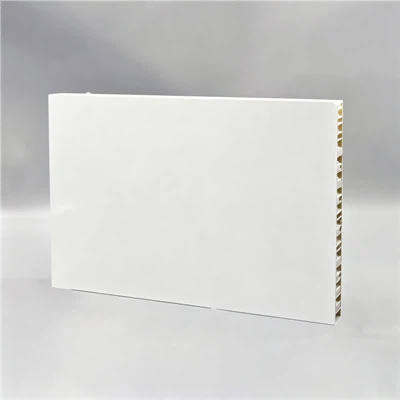
FRP Honeycomb Panel
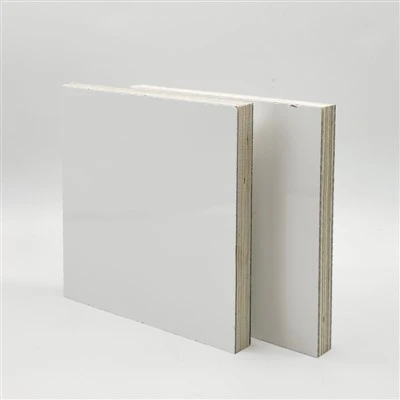
FRP Plywood Panel

FRP XPS Panel

FRP PET Panel

FRP PU Panel
FRP Sandwich Sheets with Thermoplastic Honeycomb Core
Core Properties
Holycore also produces sandwich sheets using thermoplastic honeycomb cores composed of engineered plastic resins beyond standard PP. These thermoplastic cores deliver higher temperature resistance, enhanced compressive strength, and improved rigidity compared with conventional PP honeycomb structures.
Industry Uses
Automotive Interior Panels
High-performance thermoplastic honeycomb cores enable:
roof inner liners
door modules
trunk floors
dashboard support layers
The sheets are compatible with thermal forming processes, enabling OEM manufacturers to shape them into curved and three-dimensional components required for modern automotive interiors.
Railway and Public Transport Systems
The fire-resistant FRP sheets combined with engineered thermoplastic cores are used for:
train ceiling panels
sidewall systems
partition panels
aisle flooring
Because transportation industries often require strict fire-safety certifications, Holycore's FRP sheets are engineered to support laminates and surface films suitable for regulated environments.
Modular Furniture and Interior Design
The combination of stiffness and light weight makes these panels ideal for:
prefabricated furniture boards
cabinetry
shelving systems
movable partitions
Designers favor FRP sandwich sheets with thermoplastic honeycomb cores when strength-to-weight ratio is a priority.
FRP Sandwich Sheets with Foam Cores
Holycore manufactures FRP sheets that incorporate foam cores such as PET foam, XPS foam, and other lightweight structural foams. These materials offer great thermal insulation, damping performance, and resistance to deformation.
PET Foam Core Sheets
PET foam is widely recognized for being environmentally friendly, recyclable, and highly stable under heat and pressure. It is suitable for:
Solar Energy Structures
PET-core FRP sheets are used in:
photovoltaic mounting system covers
inverter housings
solar-powered equipment enclosures
The sheets resist UV exposure and heat cycles, which ensures longevity in outdoor installations.
Cold-Chain and Insulated Containers
PET foam contributes better thermal insulation than honeycomb materials. These sheets are installed in:
cold storage boxes
insulated panels
temperature-controlled delivery containers
The FRP surface provides resistance to chemicals and abrasion, while the PET foam ensures stable insulation quality.
Industrial Flooring with Thermal Requirements
Manufacturing facilities that involve heat, chilled water, or chemical processes often use PET-core FRP sheets to maintain structural stability.
XPS Foam Core Sheets
Extruded polystyrene (XPS) foam is another lightweight core used by Holycore.
These sheets are commonly applied in:
HVAC ducts
building cladding
insulated rooftops
decorative wall panels
The foam core provides consistent mechanical support and superior thermal properties for indoor and outdoor building environments.
FRP Sandwich Sheets with Custom Composite Cores
Holycore develops specialized composite cores for projects that require enhanced fire resistance, higher stiffness, shock absorption properties, or application-specific performance.
High-Rigidity Composite Cores
These are used when maximum mechanical strength is mandatory, such as in:
industrial wind turbine platforms
mechanical equipment base panels
structural support boards in modular buildings
engineered walkable surfaces
The FRP sheets provide abrasion and weather resistance, while the custom core ensures rigid structural behavior under load.
Anti-Slip and Patterned Surface FRP Sheets
Holycore offers FRP sheets with embossed, patterned, or anti-slip textures. These sheets combine specialized surfaces with either honeycomb or foam cores.
They are widely used in:
vehicle flooring systems
warehouse floors
shipping container floors
wet-area walkways
industrial platforms
The texture enhances safety, while the core ensures low weight and high mechanical resilience.
FRP Sheets for Cleanrooms and Controlled Environments
Some Holycore FRP sandwich sheets incorporate cores engineered for extremely low dust emission, chemical stability, and resistance to sterilizing agents.
These are selected for:
pharmaceutical cleanrooms
food processing facilities
laboratory wall and ceiling panels
electronic manufacturing workshops
FRP surfaces resist frequent cleaning and exposure to disinfectants, and the core helps maintain flatness over long installation spans.

Yacht deck

Modular living units

Refrigerated truck

Portable public toilet

RV cabin

Ship deck
Specialty Uses Across Sectors
Mobile Structures and Prefabricated Units
The construction of:
mobile clinics
portable command centers
temporary housing
exhibition booths
prefabricated sanitary rooms
all benefit from FRP sandwich sheets due to the combination of portability and strength. Panels remain dimensionally stable under dynamic loading during transportation.
Agricultural Equipment and Livestock Facilities
FRP sheets with PP or PET cores are used for:
livestock pen partitions
greenhouse paneling
farm vehicle interiors
poultry house ceilings
They resist moisture, cleaning chemicals, and ammonia-rich air, which would degrade traditional steel or wood boards.
Energy, Chemical, and Utility Sectors
FRP sandwich sheets are selected for harsh environments where corrosion is a major concern.
Applications include:
chemical plant wall coverings
corrosion-resistant protective screens
wastewater treatment facility partitions
anti-corrosive flooring around pipeline areas
The fiberglass surface remains stable in acidic, alkaline, or salt-rich environments, making it reliable for long-term facility use.