In modern engineering and industrial manufacturing, reducing structural weight has become one of the most important design priorities. Whether in transportation, mobile architecture, logistics systems, marine interiors, or industrial equipment, manufacturers are constantly looking for materials that can deliver high strength without unnecessary mass.
For decades, plywood has been one of the most commonly used structural panel materials. It is familiar, easy to process, and widely available. However, as lightweight engineering evolves, honeycomb panels-especially polypropylene honeycomb panels-are increasingly becoming the preferred alternative.
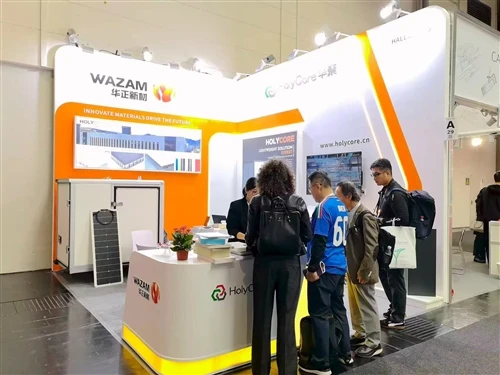
About Holycore
Holycore is a professional manufacturer specializing in polypropylene honeycomb composite solutions for lightweight industrial structures.
The company focuses on:
- Transport composite systems
- Logistics structural panels
- Marine lightweight panels
- Modular construction materials
- Industrial protective structures
Holycore develops engineered honeycomb solutions designed to help OEM manufacturers reduce weight, improve structural performance, and increase long-term operational efficiency.
By focusing on advanced thermoplastic honeycomb technology, Holycore supports global customers seeking modern alternatives to conventional heavy structural materials.
Understanding Lightweight Structures
Before comparing materials, it's important to define what "lightweight structures" actually means.
A lightweight structure is not simply a structure made from light materials. Instead, it is an engineered system designed to:
- Reduce overall mass
- Maintain structural rigidity
- Improve load efficiency
- Lower energy consumption
- Extend service life
- Simplify transportation and installation
These structures are commonly found in:
- Commercial vehicles
- Refrigerated truck bodies
- Mobile workstations
- Marine interiors
- Modular building systems
- Industrial enclosures
- Transit flooring systems
In these applications, every kilogram matters.


What Is a Honeycomb Panel?
A honeycomb panel is a sandwich composite structure consisting of:
- Two outer structural skins
- An internal polypropylene honeycomb core
The core contains a hexagonal cell structure inspired by natural honeycombs. This geometry allows the panel to achieve exceptional stiffness while keeping material usage and weight extremely low.
The hexagonal cells distribute load evenly across the structure, reducing stress concentration and improving impact resistance. Holycore's polypropylene honeycomb systems are specifically designed for structural applications where strength and weight optimization are both critical.
What Is Plywood?
Plywood is a wood-based panel made by bonding multiple thin layers of wood veneer together under heat and pressure.
Its layered grain orientation gives it:
- Basic structural stability
- Easy machining characteristics
- Moderate bending strength
Because of its long history, plywood is still widely used in:
- Furniture manufacturing
- Packaging systems
- Interior partitions
- Temporary construction
- Basic transport flooring
However, plywood was developed in an era when lightweight engineering was not the primary design goal.
Weight Comparison: Honeycomb Panel vs Plywood
When designing lightweight structures, weight is often the first engineering metric.
Plywood
Plywood has a solid layered structure, which means:
- Higher material density
- Greater mass per square meter
- Increased handling difficulty
As thickness increases, weight rises significantly.
Honeycomb Panel
Honeycomb panels use hollow cellular geometry, which means:
- Less raw material usage
- Lower overall density
- Superior stiffness-to-weight ratio
Because much of the interior volume is engineered air space, the panel can remain structurally rigid without carrying unnecessary weight. Industry use cases show PP honeycomb structures are increasingly replacing heavier structural boards in transport and modular applications.
Winner for Lightweight Structures:
Honeycomb Panel ✓
Structural Strength Comparison
Some people assume heavier automatically means stronger. In structural engineering, that is often not true.
Plywood Performance
Plywood handles distributed loads reasonably well, but under repeated vibration, moisture exposure, or point impact, it may:
- Lose stiffness over time
- Develop internal fatigue
- Experience edge damage
- Warp under environmental stress
Honeycomb Panel Performance
Honeycomb geometry transforms concentrated force into distributed force across adjacent cells.
This provides:
- Better load sharing
- Higher bending stiffness
- Improved impact absorption
- Reduced structural deformation
Holycore's engineering data shows honeycomb cell architecture helps prevent localized structural failure under dynamic loading conditions.
Winner for Structural Efficiency:
Honeycomb Panel ✓
Moisture Resistance and Environmental Stability
Lightweight structures are often used in harsh conditions.
Plywood Challenges
Plywood may absorb moisture over time, which can lead to:
- Expansion and contraction
- Surface deformation
- Reduced mechanical consistency
- Increased maintenance requirements
Honeycomb Panel Advantages
Polypropylene honeycomb panels offer:
- Excellent moisture resistance
- Chemical resistance
- Stable dimensions
No water absorption issues typical of wood-based materials
This makes them suitable for:
- Refrigerated logistics
- Outdoor modular systems
- Marine interiors
- Washdown environments
Winner for Environmental Stability:
Honeycomb Panel ✓
Load Distribution Performance
In lightweight structures, the ability to manage load distribution is essential.
Plywood
Plywood distributes force through its layered wood fibers, but stress often remains concentrated around the impact zone.
Honeycomb Panel
Honeycomb panels distribute force through interconnected hexagonal cells.
This provides:
- Better energy absorption
- Lower stress concentration
- Reduced crack initiation risk
- Improved fatigue resistance
This structural behavior is one of the main reasons honeycomb systems are widely used in transportation engineering.
Winner for Load Management:
Honeycomb Panel ✓
Service Life and Maintenance
Plywood
Plywood may require:
- Surface sealing
- Moisture protection
- Regular inspection
Replacement under harsh service conditions
Honeycomb Panel
Polypropylene honeycomb systems typically provide:
- Longer service cycles
- Lower maintenance requirements
- Better dimensional stability
- Improved lifecycle cost efficiency
For high-use industrial environments, this can significantly reduce total ownership cost.
Winner for Lifecycle Value:
Honeycomb Panel ✓
Application Comparison
Where Plywood Still Works Well
Plywood remains useful for:
- Low-cost furniture
- Temporary structures
- Interior decorative use
- Light-duty packaging
Where Honeycomb Panels Perform Better
Honeycomb panels are suitable for:
- Truck body panels
- Vehicle flooring systems
- Cargo partitions
- Marine interiors
- Portable industrial cabins
- Clean-room partitions
- Structural packaging systems
Holycore's lightweight honeycomb panel systems are widely applied in transportation, logistics, industrial enclosures, and modular engineering projects.
Why More Engineers Are Switching to Honeycomb Panels
Across engineering communities, lightweight composite structures continue gaining attention because they solve a core design challenge:
How do you increase strength without increasing weight?
Honeycomb structures answer this with geometric efficiency.
As one engineering discussion summarized on Reddit:
"High strength-to-weight ratio... weight reduction is critical."
That's exactly why honeycomb panels are replacing older solid structural materials in modern applications.
FAQ
Why are honeycomb panels ideal for lightweight structures?
Because their cellular structure provides high stiffness while significantly reducing overall material weight.
Do honeycomb panels last longer than plywood?
In demanding industrial environments, honeycomb panels typically offer longer service life and better dimensional stability.
Can honeycomb panels handle structural loads?
Yes. When properly engineered, honeycomb panels can support medium to high structural loads efficiently.
Are honeycomb panels suitable for outdoor use?
Yes. They provide excellent resistance to moisture and environmental exposure.
Can Holycore customize honeycomb panels?
Yes. Holycore offers customized honeycomb panel solutions based on specific industrial requirements.
Need Lightweight Honeycomb Panel Solutions?
Contact Holycore to explore customized honeycomb panel solutions engineered for high performance lightweight structures.