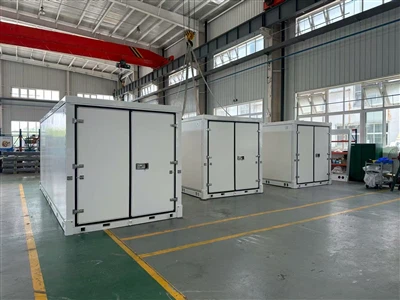
Lightweight composite panels are widely used across transportation, industrial equipment, construction, and advanced manufacturing. However, many projects fail to fully benefit from these materials because selection is often driven by supplier catalogs or price comparisons, rather than engineering logic.
In reality, lightweight composite panels-especially honeycomb sandwich structures-must be treated as a system-level design solution. Their performance depends not only on the material itself, but on how well they are matched to load conditions, environmental requirements, and manufacturing constraints.
This guide provides a structured framework to help engineers, OEMs, and technical buyers evaluate and specify lightweight composite panels correctly. By following this approach, it becomes possible to achieve maximum structural efficiency, reduced weight, and optimized lifecycle cost.
Define Load Requirements Clearly
The first step in selecting any composite panel is to define the actual load conditions it will experience in service.
This includes:
Static loads (dead weight, constant pressure)
Dynamic loads (vibration, movement, repeated stress)
Impact loads (sudden forces, collisions)
Fatigue loads (long-term cyclic stress)
It is also critical to understand:
Load direction (in-plane vs. out-of-plane)
Span length and support conditions
Allowable deflection limits
Unlike solid materials, sandwich panels behave differently under different loading modes. The face sheets carry tensile and compressive stresses, while the core resists shear and stabilizes the structure.
If load conditions are not properly defined, the result is either:
Overdesign (unnecessary cost and weight), or
Underperformance (risk of failure)
Accurate load definition is therefore the foundation of all subsequent design decisions.
Select the Appropriate Core Structure
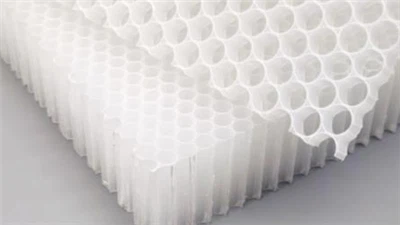
The core is the defining feature of a lightweight composite panel. It determines the weight, shear strength, and structural efficiency of the system.
Common core options include:
Aluminum honeycomb
High strength-to-weight ratio
Excellent fire resistance
Good dimensional stability
Thermoplastic honeycomb (e.g., polypropylene)
Lightweight and cost-effective
High impact resistance
Recyclable and moisture-resistant
Aramid honeycomb
Extremely lightweight
Used in aerospace and high-end applications
When selecting a core, several parameters must be considered:
Cell size: smaller cells provide higher strength but increase density
Wall thickness: thicker walls improve strength but add weight
Core density: directly affects compressive and shear performance
The goal is to find a balance between mechanical performance and weight efficiency, rather than simply choosing the strongest or lightest option.
Choose Face Sheet Materials Based on Function
The face sheets are responsible for most of the panel's bending strength and surface performance.
Typical materials include:
Aluminum
Good balance of strength, weight, and corrosion resistance
Suitable for most industrial applications
Steel
Higher strength but significantly heavier
Used where extreme load capacity is required
FRP (Fiberglass Reinforced Plastic)
Excellent corrosion resistance
Suitable for chemical or marine environments
Decorative or stone veneers
Used in architectural applications where aesthetics are important
When selecting face sheets, consider:
Required stiffness and strength
Surface durability and impact resistance
Environmental exposure
Compatibility with the core material
A common mistake is underestimating the importance of face sheets. Even with a strong core, weak face sheets will limit overall panel performance.
Optimize Panel Thickness for Stiffness
Panel thickness is one of the most effective ways to improve structural performance.
In sandwich structures, increasing thickness increases the moment of inertia, which significantly improves bending stiffness.
Key points:
Increasing thickness in honeycomb panels adds minimal weight
Thicker panels can span longer distances with less deflection
Proper thickness reduces the need for additional support structures
Instead of increasing material density or using heavier materials, engineers should first consider optimizing panel thickness to achieve the required performance.
Ensure High-Quality Bonding Between Layers
The bond between the core and face sheets is critical to panel integrity.
Poor bonding can lead to:
Delamination
Reduced load transfer
Premature structural failure
To ensure reliable performance:
Use appropriate adhesive systems
Maintain proper surface preparation
Control curing conditions
Bonding quality is often overlooked during specification, but it plays a decisive role in long-term durability.
Design Edges and Connection Points Properly
Edges and connection areas are the most vulnerable parts of a composite panel.
Without proper design, these areas can experience:
Local crushing
Fastener pull-out
Structural failure
Key considerations include:
Edge sealing to protect the core
Reinforcement for load-bearing edges
Use of inserts or embedded fasteners
Connections should be designed to distribute loads evenly and avoid stress concentration.
Evaluate Environmental Conditions
Environmental factors can significantly affect panel performance over time.
Important considerations:
Temperature range and thermal cycling
Exposure to moisture or humidity
Chemical exposure (acids, solvents, saltwater)
UV radiation
Different materials respond differently:
Aluminum cores offer good corrosion resistance
Thermoplastic cores resist moisture and chemicals
FRP skins provide excellent durability in harsh environments
Selecting materials that match the operating environment ensures long-term reliability.
Integrate Multiple Functions into One Panel
One of the key advantages of composite panels is their ability to combine multiple functions.
A well-designed panel can provide:
Structural strength
Thermal insulation
Acoustic damping
This reduces the need for additional materials and simplifies system design.
Benefits include:
Lower total weight
Fewer components
Faster assembly
Functional integration is a major reason why composite panels are widely adopted in modern manufacturing.
Align Panel Design with Manufacturing Processes
Panel selection must consider how the product will be manufactured and assembled.
Important factors:
Cutting and machining requirements
Tolerances and dimensional stability
Compatibility with adhesives or fasteners
Suitability for automated production
Panels that are difficult to process can increase production time and cost, even if their material performance is high.
Designing with manufacturing in mind ensures efficient implementation.
Evaluate Total Cost of Ownership
Material cost alone does not reflect the true value of a composite panel.
A comprehensive evaluation should include:
Initial material cost
Transportation and handling costs
Installation and labor costs
Maintenance and replacement costs
Operational efficiency over time
Lightweight panels often reduce costs in other areas, such as logistics and energy consumption.
As a result, they can offer lower total cost of ownership, even if the initial price is higher.
Prototype and Test Before Full Deployment
Before committing to large-scale production, it is essential to validate the design through testing.
Typical tests include:
Bending and stiffness tests
Shear strength evaluation
Impact resistance testing
Fatigue testing
Testing helps confirm that the panel meets performance requirements under real conditions.
It also allows for adjustments before full-scale implementation.
Select a Capable Manufacturing Partner
The performance of a composite panel depends not only on design, but also on manufacturing quality.
When choosing a supplier, consider:
Ability to produce both core and panels
Customization capabilities
Quality control processes
Production capacity and consistency
A capable partner ensures that the designed performance is achieved in actual production.
Conclusion
Selecting lightweight composite panels requires a structured engineering approach. By focusing on load conditions, material selection, panel design, and lifecycle cost, it is possible to achieve optimal performance with minimal weight.
When properly designed and implemented, composite panels offer:
Higher structural efficiency
Reduced material usage
Improved durability
Lower overall cost
They are not simply a material choice, but a strategic solution for modern manufacturing challenges.
Final Perspective
Successful projects do not begin with a product-they begin with a clear understanding of requirements.
By applying engineering principles to panel selection, manufacturers can unlock the full potential of lightweight composite systems and achieve better outcomes across performance, cost, and sustainability.