As the demand for higher efficiency in logistics continues to grow, reducing truck body weight has become a priority for both manufacturers and fleet operators. The challenge is finding a solution that lowers weight without compromising strength, durability, or cost control.
Traditional materials often force a trade-off between performance and efficiency. Today, more companies are turning to composite panels as a practical alternative-offering a smarter way to build lighter, stronger, and more reliable truck bodies for real-world use.
Company Overview
- At Holycore, we don't just manufacture panels-we rethink how truck bodies and logistics equipment should be built. Our focus is on developing composite solutions that replace traditional heavy structures with smarter, lighter, and more efficient alternatives.
- Instead of following standard designs, we work from real application scenarios-frequent loading, humid environments, long-distance transport-and engineer panels that hold up under daily use. The goal is simple: reduce weight where it matters, keep strength where it's needed, and avoid unnecessary material waste.
- We support customers with flexible configurations, stable production, and practical design input, helping turn lightweight concepts into scalable, ready-to-use solutions. Whether it's for truck bodies, insulated containers, or mobile units, Holycore delivers panels that perform beyond the lab-in real logistics conditions.
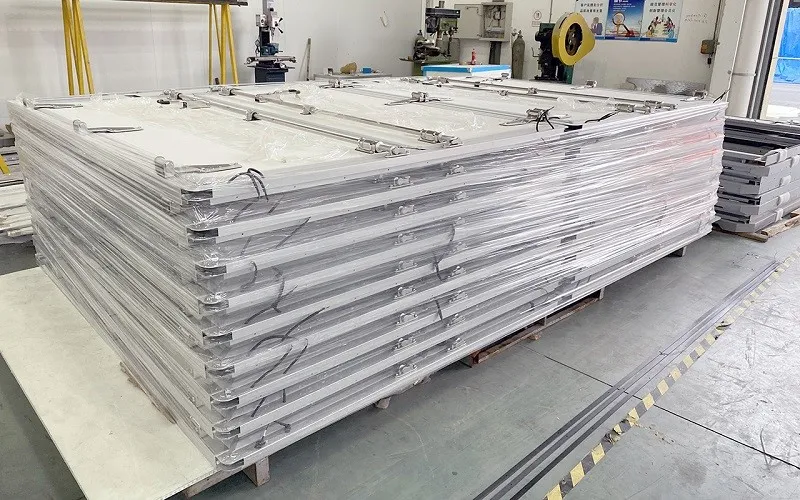


Looking for Lightweight Truck Panels? Here's a Proven Composite Solution
- If you want to reduce truck weight without sacrificing strength, the key is using a smarter structure-not just lighter material. Honeycomb composite panels achieve this by distributing loads efficiently, allowing strong and rigid panels with much less material.
- In real use, they handle moisture, impact, and daily wear better than traditional panels, while also being lightweight. They're easy to customize and integrate into existing truck designs, making them practical for both manufacturers and fleets.
- The result is a truck body that's lighter, more efficient, and more cost-effective over time.
Why Traditional Panels Are Holding You Back
Many truck bodies still rely on solid metal or thick laminated panels. They're strong, but they come with trade-offs:
- Excess weight limits payload
- Higher fuel consumption over time
- More stress on tires and suspension
- Less flexibility in design
These issues add up quickly, especially for fleets running daily operations.
What Makes This Composite Solution Different
Instead of using solid material throughout, PP honeycomb panels use a structured core that spreads load efficiently.
What that means in practice:
- You get rigidity without bulk
- Panels stay stable even under repeated use
- Less material is needed to achieve the same performance
It's a structural advantage, not just a material change.


Built for Real Logistics Conditions
Truck panels don't operate in ideal environments-they deal with moisture, impact, and constant handling.
Composite panels are designed for that reality:
- Waterproof by nature, no performance drop in humid or wet conditions
- Impact-resistant, suitable for frequent loading and unloading
- Corrosion-free, especially useful in cold chain and outdoor use
- Easy to clean, important for food and pharmaceutical transport
This makes them a practical choice, not just a lightweight option.
How Much Weight Can You Actually Save?
One of the most common questions is how much weight reduction is realistic. In practical applications, switching from traditional solid panels to honeycomb composite panels can reduce truck body weight by 30%–50%, depending on the structure and design.
This reduction is not just theoretical-it directly impacts:
- Fuel or energy consumption
- Payload capacity per trip
- Overall vehicle efficiency
For fleet operators, even a small percentage of weight reduction can translate into significant cost savings over time.
Designed for Long-Term Use, Not Just Initial Performance
Some lightweight solutions perform well at the beginning but degrade quickly under real working conditions. This is where well-engineered composite panels make a difference.
PP-based panels are built for long-term reliability:
- Maintain structural stability after repeated use
- Resist moisture, corrosion, and daily wear
- Less prone to deformation compared to traditional materials
This means fewer repairs, less downtime, and more consistent performance throughout the vehicle's service life.
Where These Panels Work Best
PP composite panels are already widely used in:
- Dry freight truck bodies
- Refrigerated trucks
- Last-mile delivery vehicles
- Mobile service trucks
- Insulated cargo boxes
They perform well in both structural panels and interior partitions.
Not Just Lighter - More Efficient Overall
Switching to lightweight panels isn't only about reducing weight.
Over time, you'll also see:
- Lower fuel or energy costs
- Increased payload capacity
- Reduced maintenance needs
- Longer service life
These benefits matter more than the initial material price, especially for commercial fleets.
Easy Integration Into Existing Designs
One concern many manufacturers have is whether new materials will complicate production.
In reality, honeycomb composite panels are designed for smooth integration:
- Compatible with common fabrication methods
- Available in customizable sizes and thicknesses
- Suitable for modular assembly
- Reduces need for complex reinforcements
This makes the transition easier than expected.
What to Look for When Choosing a Supplier
Not all composite panels perform the same. It's important to choose a supplier that understands real applications.
Key things to check:
- Consistent panel quality
- Stable bonding performance
- Customization capability
- Experience in logistics and truck applications
A reliable supplier helps avoid long-term issues.
In Summary
Choosing the right truck panel solution is ultimately about balancing weight, strength, and long-term cost. Instead of relying on traditional heavy materials, adopting composite panels offers a more efficient approach-reducing weight while maintaining the durability required for daily operations.
For manufacturers and fleet operators, this means better fuel efficiency, higher payload capacity, and lower maintenance over time. In a competitive logistics environment, lighter and smarter panel solutions are not just an upgrade-they are a practical step toward improved performance and profitability.
Get the Right Lightweight Panel Solution for Your Project
Looking to reduce weight, improve efficiency, or upgrade your truck body design? Our composite panels are built for real logistics conditions-lightweight, durable, and easy to integrate.
Get a Free Quote in 24 Hours