Construction Panels
In transportation and construction projects, engineers often need to reduce panel weight without significantly increasing panel thickness or sacrificing structural rigidity. Traditional solid plastic sheets, plywood, and metal panels add mass as thickness increases. PP honeycomb core addresses this challenge by introducing a cellular structure that supports loads through geometry rather than material volume.
For manufacturers of vehicle panels, modular buildings, trailers, cleanroom partitions, and industrial enclosures, the selection of core material directly influences panel weight, handling characteristics, installation efficiency, and long-term structural behavior. Understanding how PP honeycomb core functions helps procurement teams evaluate whether it matches specific design requirements.
Why Transportation Panels Require Lightweight Core Materials
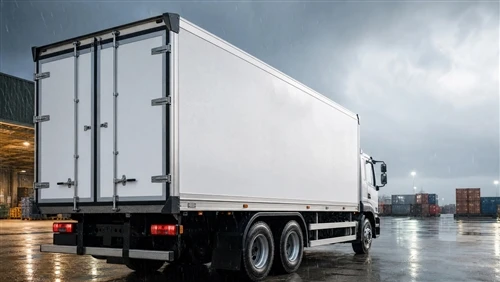
Transportation panels used in truck bodies, trailers, RVs, and rail interiors must balance weight and structural stiffness. Heavier panels reduce payload capacity and increase fuel consumption or energy demand during operation.
PP honeycomb core replaces solid material with a hexagonal cellular structure, typically with densities of 60–120 kg/m³. In a sandwich panel, the core transfers shear loads while the face sheets resist tension and compression, allowing manufacturers to reduce panel weight without significantly increasing panel thickness.
The Engineering Problem: Reducing Weight Without Losing Panel Stiffness
When a panel becomes thinner, it typically bends more easily under load. One solution is to increase material thickness, but this adds weight and material consumption.
PP honeycomb core solves this problem through a sandwich structure.
Instead of using a thick solid sheet, engineers bond two face sheets to a lightweight honeycomb core.
Top Skin ( FRP /CFRT)
1
>>
PP Honeycomb Core
2
>>
Bottom Skin (CFRT / FRP)
3
In this configuration:
- Face sheets resist tensile and compressive forces.
- The honeycomb core transfers shear loads between skins.
- Panel thickness increases without a proportional increase in weight.
As panel thickness grows from 10 mm to 30 mm or 40 mm, bending stiffness increases significantly while the core contributes only a small fraction of the total panel mass.
Why Transportation Manufacturers Use PP Honeycomb Core
Vehicle manufacturers continuously evaluate every kilogram added to a structure.
In buses, recreational vehicles, truck bodies, rail interiors, and cargo compartments, panel weight affects:
- Fuel consumption
- Battery range in electric vehicles
- Payload capacity
- Vehicle center of gravity
- Installation labor
Typical Transportation Components
PP honeycomb core is commonly integrated into:
Bus sidewall panels
Caravan furniture panels
Truck body partitions
Railway interior wall systems
Cargo compartment flooring
Vehicle ceiling panels
The honeycomb structure transfers distributed loads through thousands of interconnected cells, allowing the panel to support operational loads while reducing dead weight.
Common Construction Applications
| Application | Function of Honeycomb Core |
|---|---|
| Interior partitions | Reduce wall weight |
| Cleanroom panels | Support large panel spans |
| Modular buildings | Lower transportation weight |
| Elevator interiors | Reduce installation load |
| Architectural cladding | Maintain panel flatness |
| Ceiling systems | Reduce suspended load |
How the Honeycomb Structure Carries Load
The performance of PP honeycomb core comes primarily from its geometric configuration.
Each hexagonal cell acts as a miniature load-transfer structure.
When a force is applied to the panel:
1.The upper skin receives the load.
2.The core distributes the force through cell walls.
3.Shear stress transfers across the panel thickness.
4.The bottom skin resists deformation.
This mechanism prevents the face sheets from moving independently.
With the core in place, the skins act together as a single structural unit.

FAQ
1. Why is PP honeycomb core used in transportation panels?
PP honeycomb core reduces panel weight by using a cellular structure instead of solid material. This helps increase payload capacity in truck bodies, trailers, and RVs while maintaining panel thickness.
2. Is PP honeycomb core suitable for building applications?
Yes. It is commonly used in modular buildings, cleanroom partitions, and portable structures where lightweight panels and moisture resistance are important design requirements.
3. How does PP honeycomb core compare with plywood cores?
PP honeycomb core typically offers lower density and does not absorb moisture like plywood. It can help reduce panel weight while maintaining sandwich panel construction.
4. What specifications should I evaluate before purchasing?
Key factors include core thickness, cell size, density, compressive strength, shear strength, and compatibility with the selected face-sheet material and adhesive system.
5. Can PP honeycomb core be used with FRP, aluminum, and steel skins?
Yes. PP honeycomb core is commonly bonded with FRP, aluminum, coated steel, and other composite face sheets used in transportation and construction panels.
6. What environmental conditions can PP honeycomb core handle?
PP honeycomb core is typically used in environments exposed to humidity, vibration, and normal outdoor temperature variations. The final performance depends on the complete sandwich panel design and skin materials.