Introduction: Why PP Honeycomb Core Dominates Modern Lightweight Composite Design
What Is PP Honeycomb Core? Raw Material & Basic Definition
-
100+Patents
-
40 +Countries Served


How PP Honeycomb Core Bears Load: Mechanical Structural Logic
Main Manufacturing Processes of PP Honeycomb Core
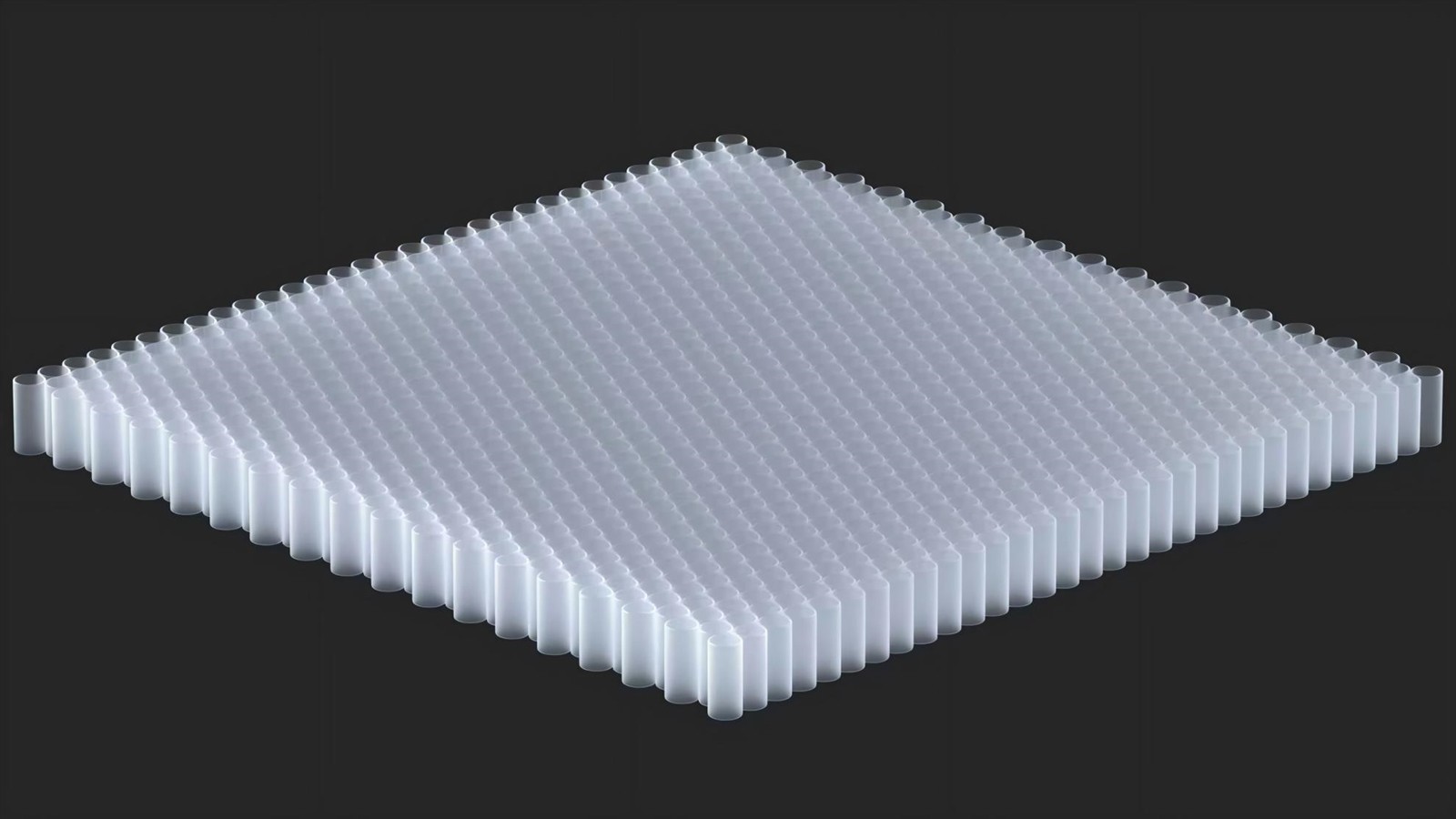
Continuous Extrusion & Slitting
Thermal Bonding Cell Forming
Secondary Compression Shaping
Core Advantages: PP Honeycomb Core VS Solid Plastic, Wood & Metal Cores
| Performance Dimension | PP Honeycomb Core | Solid Plastic Core | Wood Core | Metal Core |
|---|---|---|---|---|
| Lightweight Performance | Ultra-low bulk density, cuts overall component weight by 40%-60% vs. solid substrates | High density, limited weight reduction effect | Medium density, heavy weight for large-size applications | Highest density, brings obvious dead weight burden |
| Waterproof & Corrosion Resistance | 100% zero water absorption, excellent resistance to acid, alkali and salt spray | Good water resistance, poor corrosion resistance to organic chemicals | Easy to absorb water, swell and mold, poor anti-corrosion performance | Prone to rust and electrochemical corrosion in humid/coastal environments |
| Temperature Stability | Stable mechanical performance in -40℃~80℃ wide temperature fluctuation range | Easy to soften at high temperature, brittle at low temperature | Easy to deform and crack under extreme temperature changes | Stable performance, but obvious thermal expansion and contraction |
| Recyclability & Environmental Compliance | 100% thermally recyclable polypropylene material, meets global low-carbon and circular economy standards | Most are non-recyclable or difficult to recycle | Biodegradable, but easy to produce waste in processing | Recyclable, but high recycling cost and energy consumption |
| Shock Absorption & Impact Resistance | Excellent honeycomb buffer structure, effectively reduces cargo impact damage during transport | Poor shock absorption, easy to transfer impact force | Poor impact resistance, easy to crack and break under force | High hardness, easy to cause rigid impact damage to cargo |
| Long-Term Maintenance Cost | Almost no maintenance required, ultra-low long-term use cost | Easy to age and deform, high replacement cost | High maintenance cost for anti-mold, anti-corrosion treatment | High maintenance cost for anti-rust treatment and regular inspection |
| Structural Stiffness-to-Weight Ratio | Highest ratio, achieves equivalent rigidity to solid boards at 1/3 of the weight | Low ratio, needs large weight to achieve sufficient rigidity | Medium ratio, limited load-bearing capacity | Low ratio, heavy weight while providing limited lightweight advantage |
| Processing & Customization Adaptability | Supports CNC precision cutting, thickness/density customization, compatible with various FRP skins | Difficult to process, limited customization flexibility | Easy to process, but poor dimensional stability after processing | High processing difficulty, high cost of customized molding |
Wide Industrial Application Scenarios for PP Honeycomb Core

FAQ
Q: What raw material is HolyCore's PP honeycomb core made of?
A: Our honeycomb core is produced with pure polypropylene (PP) resin. We also offer modified grades including flame-retardant, high-impact, UV-stabilized PP formulas to match outdoor, transport and special industrial usage.
Q: What thickness sizes of PP honeycomb core can I customize?
A: The customizable thickness range covers 6 mm to 100 mm. We adjust cell wall thickness and cell density at the same time to balance lightweight effect and load-bearing stiffness per your panel requirements.
Q: Can PP honeycomb core work with fiberglass FRP skins to make sandwich panels?
A: Absolutely. PP honeycomb is the ideal core matching polyester, vinyl ester and epoxy fiberglass sheets. Thermal fusion lamination bonds skins and core tightly without liquid glue, avoiding delamination during long-term transport.
Q: Is PP honeycomb core waterproof and rust-proof?
A: Yes. Pure PP material absorbs zero water, and will never rot, swell or rust like wood and metal cores. It resists salt spray, mild acid and alkali, suitable for coastal vehicles, chemical workshops and humid outdoor scenarios.
Q: Is PP honeycomb environmentally friendly and recyclable?
A: 100% recyclable. Unlike thermoset composite cores that cannot be reused, PP honeycomb can be heated, melted and remanufactured into new core materials, complying with EU carbon reduction and circular economy regulations.

conclusion
Against the global trend of industrial lightweighting and carbon reduction, PP honeycomb core has become an indispensable core filler material for fiberglass sandwich composite panels, thanks to its unique cellular mechanical structure, superior comprehensive performance and recyclable environmental properties. It solves multiple pain points of traditional heavy core materials such as excessive weight, corrosion and short service life, bringing obvious cost-saving and efficiency-improving benefits for vehicle manufacturers, industrial equipment factories and construction material producers. As a professional PP honeycomb core supplier operating on holycore.com, HolyCore owns mature automated manufacturing capacity and rich customized engineering experience, capable of supplying stable bulk honeycomb core products and full technical matching support for global composite panel manufacturers. In the future, PP honeycomb composite structures will expand to more lightweight industrial fields, and HolyCore will keep optimizing core formulas and processing technology to deliver more reliable, low-cost lightweight core solutions for worldwide industrial partners.