Introduction: The Global Push for Truck Lightweighting in Logistics

Soaring fuel prices, stricter carbon emission limits and rising market demand for higher legal cargo loads have forced truck OEMs and trailer manufacturers worldwide to upgrade lightweight vehicle designs. Traditional metal and wooden cargo boxes can no longer satisfy low-cost, eco-friendly transport demands, while thermoplastic composite sandwich honeycomb panels have become a revolutionary material reshaping the whole truck body manufacturing sector.
Core Scientific Principles Behind Thermoplastic Composite Lightweighting
High Strength-to-Weight Ratio of Honeycomb Sandwich Structures
Thermal Fusion Bonding: No Adhesive, Stable Long-Distance Transport
Corrosion & Weather Resistance of Full PP Thermoplastic Formulation
How Thermoplastic Composites Outperform Steel, Aluminum & Plywood Truck Bodies
Payload Increase & Fuel Cost Reduction Data
Lower Long-Term Maintenance & Repair Frequency
Full Recyclability Aligned With Green Logistics Regulations
Main Application Scenarios of Thermoplastic Composite Truck Bodies
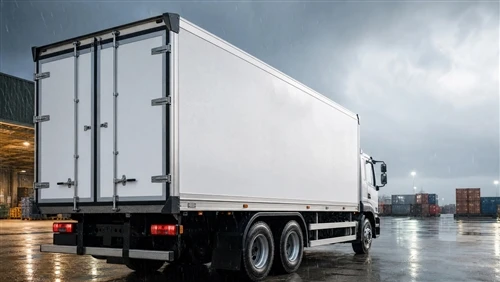
Dry Freight Delivery Vans & 4.2m Light Trucks
Refrigerated Insulated Trailers
Long-Haul Semi-Trailer Side Walls & Floors
Holycore's HolyPan® Thermoplastic Composite Solutions for Truck Manufacturers

Automated Production Base & German Lamination Equipment
Full Material Customization: Skin Texture, Core Density & Panel Thickness
Global Certification & Stable Bulk Export Capacity
OEM & ODM Lightweight Customization for Global Truck Body Factories
Key Specifications Buyers Evaluate
- Thickness Spectrum: Customizable composite panel thickness ranges from 6 mm up to 100 mm, meeting lightweight truck wall, floor and roof structural demands.
- Resin Matrix Selection: Polyester, vinyl ester and high-performance epoxy resin formulas, matched for cold-chain, dry freight and chemical transport truck compartments.
- Surface Finishes: Protective gel coat, high-gloss smooth finish, matte anti-scratch coating and heavy-duty anti-slip textures for cargo loading zones.
- Panel Dimensions: Oversized wide-format thermoplastic composite sheets to cut assembly seams and lower truck body manufacturing labor costs.
- Fire Performance: Custom flame-retardant resin formulations that comply with global road transport and logistics safety standards.
- UV Exposure: Built-in weather-resistant outer layers to stop outdoor yellowing, ideal for long-term highway and coastal truck operation.
Monitored Failure Mechanisms
- Delamination Risks: Weak thermal fusion bonding between fiberglass skins and PP honeycomb core reduces the truck panel's load-bearing capacity during bumpy long-distance transport.
- Resin Cracking Profiles: Frequent drastic temperature swings or sharp cargo impacts produce surface micro-cracks, weakening the lightweight truck body structure.
- Edge Damage & UV Degradation: Unprotected panel edges crush easily during shipment and assembly; prolonged direct sunlight accelerates material aging and shortens trailer service life.
How HolyCore Supports Composite Truck Body Manufacturers
Skin Customization
Core Optimization
Integrated Processing

Conclusion