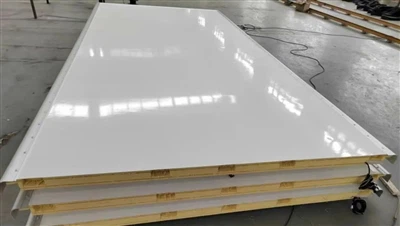
In many industries, OEM manufacturers are facing increasing requirements for lightweight structures, improved strength-to-weight ratios, thermal insulation, and customized product designs. Traditional solid panels often increase overall weight and material consumption, while standard composite panels may not meet specific requirements for size, performance, or installation methods.
Custom honeycomb panels have become an important structural material for OEM projects because they combine lightweight construction with high mechanical strength. By using a honeycomb core structure between two surface skins, these panels achieve improved stiffness without adding unnecessary weight. This design principle allows manufacturers to develop customized components for transportation equipment, industrial machinery, architectural systems, cleanroom applications, marine structures, and other specialized fields.
For OEM buyers, selecting a suitable honeycomb panel supplier requires more than checking material specifications. Project requirements such as panel dimensions, core materials, surface finishes, load conditions, environmental exposure, and production consistency all influence the final performance of the finished product.
This article explains the key factors OEM customers should understand when sourcing custom honeycomb panels for industrial projects.
What Are Custom Honeycomb Panels?
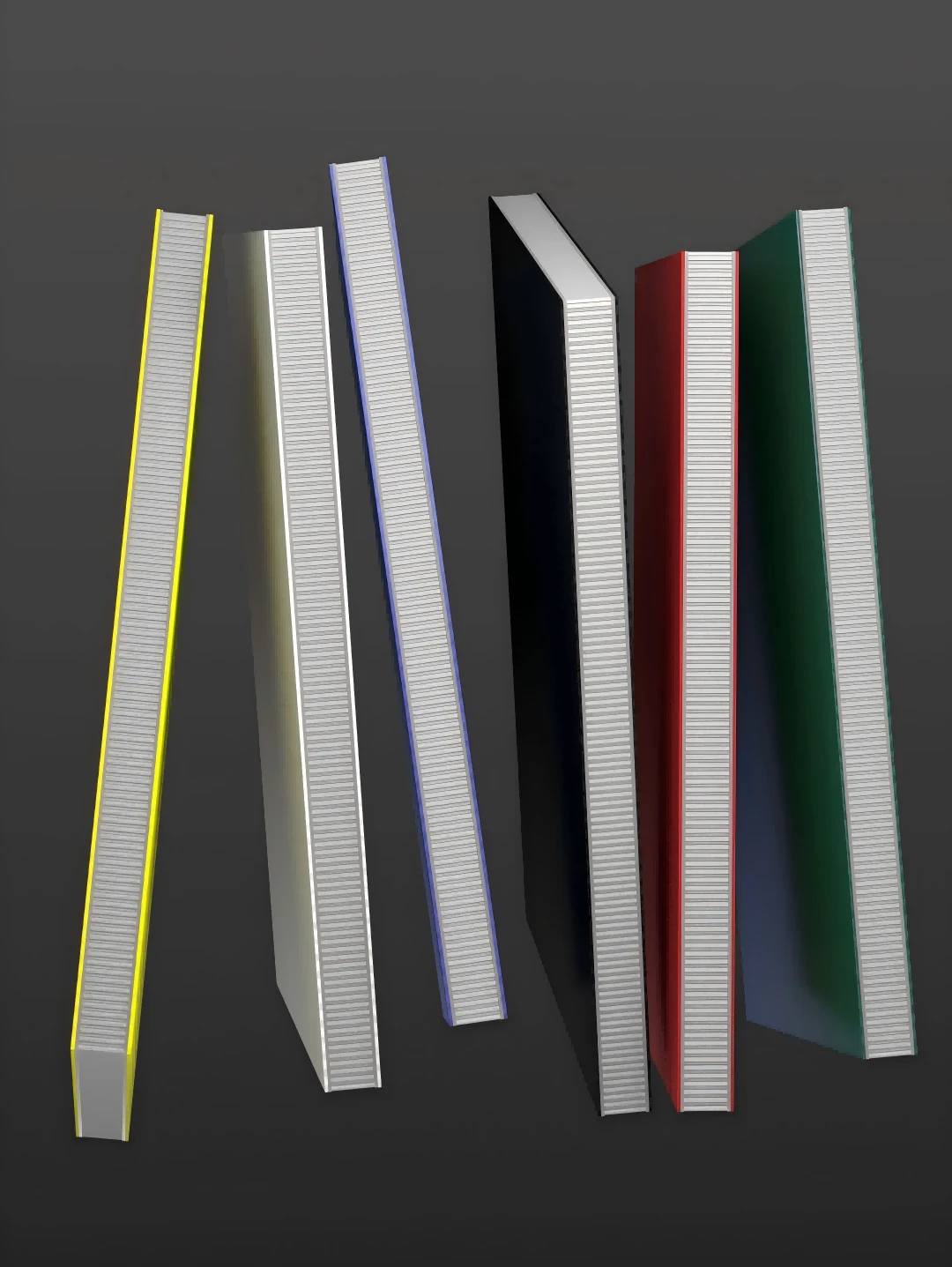
Custom honeycomb panels are composite structures consisting of three main layers: two external face sheets and a lightweight honeycomb core positioned between them.
The honeycomb core is typically manufactured with a hexagonal cell structure similar to natural honeycomb. This geometric design creates multiple internal support points, allowing the panel to resist bending forces while maintaining a low overall weight.
A typical honeycomb panel structure includes:
Face sheets: Provide surface protection, impact resistance, and structural reinforcement.
Honeycomb core: Provides internal support and increases bending stiffness.
Adhesive bonding layer: Connects the core and face sheets to form a unified composite structure.
Unlike solid metal plates or thick composite sheets, honeycomb panels distribute applied loads across the entire surface area. This makes them suitable for applications where weight reduction and structural performance are both important.
For OEM projects, honeycomb panels are usually customized according to specific product designs rather than purchased as standard-size materials.
Why OEM Projects Require Customized Honeycomb Panels
OEM projects often involve unique product structures, production processes, and performance requirements. A standard panel size or material combination may not match the customer's final assembly requirements.
Customization allows manufacturers to control important parameters, including:
Panel Dimensions and Shape
OEM projects frequently require panels with specific:
Length and width dimensions
Thickness requirements
Curved or irregular shapes
Edge processing designs
Mounting holes or embedded components
For example, an equipment manufacturer may need lightweight access doors with integrated mounting points, while a transportation company may require curved panels matching the vehicle body structure.
Custom manufacturing allows honeycomb panels to be produced according to engineering drawings instead of requiring additional cutting or modification during assembly.
Core Material Selection
The honeycomb core is one of the most important factors affecting panel performance.
Common core materials include:
Aluminum Honeycomb Core
Aluminum honeycomb cores are widely used in applications requiring high strength and low weight.
Typical characteristics include:
High compression resistance
Good dimensional stability
Corrosion-resistant properties when properly treated
Suitable performance under mechanical loading
Common applications include aerospace components, vehicle panels, industrial platforms, and architectural structures.
Paper Honeycomb Core
Paper honeycomb cores provide a cost-effective lightweight solution for applications where extreme mechanical performance is not required.
They are often used in:
Interior panels
Furniture structures
Packaging systems
Exhibition equipment
PP Honeycomb Core
Polypropylene honeycomb cores provide moisture resistance and chemical stability.
They are commonly selected for:
Automotive interior components
Marine applications
Outdoor equipment panels
The correct core selection depends on factors such as load requirements, environmental conditions, and production cost targets.

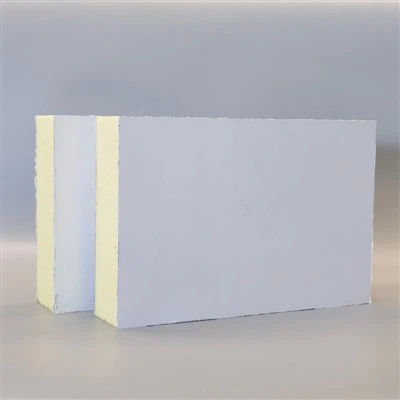
Surface Material Options for Custom Honeycomb Panels
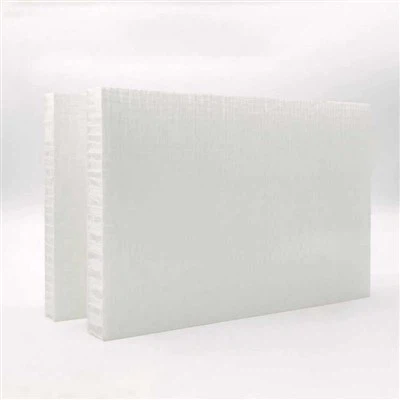
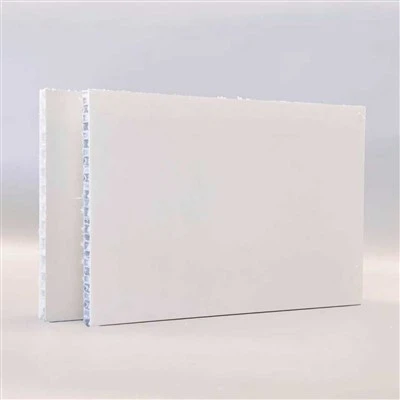
The face sheet material determines the external performance of the panel, including appearance, impact resistance, corrosion resistance, and environmental durability.
Common face sheet materials include:
Aluminum Sheets
Aluminum-faced honeycomb panels are widely used in industrial applications because aluminum provides:
Low density
Corrosion resistance
Good machining performance
Smooth surface finishing options
They can be treated with powder coating, anodizing, or other surface processes depending on project requirements.
Fiberglass Reinforced Plastic (FRP)
FRP face sheets provide:
Moisture resistance
Chemical resistance
Electrical insulation properties
They are often used in environments where panels may contact water, chemicals, or changing temperatures.
Carbon Fiber Composite Sheets
Carbon fiber honeycomb panels are selected for applications requiring extremely high stiffness with minimum weight.
They are commonly used in:
Racing equipment
Aerospace components
Advanced industrial structures
However, material cost and manufacturing requirements are higher compared with aluminum or fiberglass solutions.
Manufacturing Process of Custom Honeycomb Panels
Understanding the manufacturing process helps OEM buyers evaluate supplier capabilities.
A typical honeycomb panel production process includes several stages.
Core Preparation
The honeycomb core is produced or cut according to required dimensions.
During this stage, manufacturers control:
Cell size
Core thickness
Density
Compression strength
Different cell structures influence the final mechanical performance of the panel.
Face Sheet Preparation
Surface sheets are processed according to project requirements.
Processes may include:
Cutting
Surface cleaning
Coating
Drilling
Embedding inserts
Proper surface preparation is essential because bonding quality directly affects panel durability.
Adhesive Bonding
The face sheets and honeycomb core are assembled using specialized adhesives.
The bonding process must achieve:
Uniform adhesive distribution
Strong connection between layers
Stable performance under temperature changes
Poor bonding quality can cause delamination, reducing the service life of the panel.
Pressing and Curing
The assembled panel is placed under controlled pressure and temperature conditions.
This process ensures:
Flatness
Bond strength
Structural stability
For OEM projects requiring large quantities, production consistency during this stage is especially important.
Key Factors OEM Buyers Should Consider Before Ordering
Choosing a honeycomb panel supplier requires evaluating technical compatibility rather than only comparing prices.
Load Requirements
Different applications create different mechanical demands.
OEM buyers should provide information about:
Static loads
Dynamic impact conditions
Vibration requirements
Installation method
A panel used as an equipment cover has different requirements compared with a structural floor panel.
Environmental Conditions
The operating environment affects material selection.
Important factors include:
Temperature range
Humidity exposure
Chemical contact
UV exposure
Salt spray conditions
For example, marine equipment requires different material combinations compared with indoor industrial equipment.
Surface Appearance Requirements
Some OEM projects require not only structural performance but also visual consistency.
Customers may specify:
Color coating
Surface texture
Gloss level
Decorative finishes
This is particularly important for transportation interiors, architectural panels, and consumer-facing equipment.
Applications of Custom Honeycomb Panels in OEM Industries
Custom honeycomb panels are used across multiple industries because they provide lightweight structural performance.
Transportation Manufacturing
In transportation equipment, reducing weight can improve energy efficiency and payload capacity.
Applications include:
Vehicle interior panels
Train flooring systems
Truck body components
Lightweight doors
Industrial Equipment
Industrial manufacturers use honeycomb panels for equipment structures where weight reduction improves operation and maintenance.
Applications include:
Machine covers
Protective enclosures
Access panels
Control cabinets
Architecture and Construction
Honeycomb panels are used in modern building systems requiring lightweight and decorative structures.
Applications include:
Curtain wall systems
Interior partitions
Ceiling panels
Decorative facades
Cleanroom and Laboratory Systems
Clean environments require panels with stable surfaces and easy maintenance.
Honeycomb panels can be customized with:
Smooth coatings
Corrosion-resistant surfaces
Easy-clean finishes
Applications include:
Laboratory walls
Medical facilities
Industrial cleanrooms
Advantages of Working With a Custom Honeycomb Panel Manufacturer
For OEM projects, cooperation with an experienced manufacturer provides several practical benefits.
Engineering Support
A capable supplier can help optimize:
Material selection
Panel structure
Thickness design
Production methods
This reduces the risk of selecting unsuitable materials during early project development.
Flexible Production
OEM suppliers can adjust production according to customer requirements, including:
Prototype manufacturing
Small batch production
Large-scale production
Customized packaging
This is important for companies developing new products or expanding production lines.
Consistent Quality Control
For OEM customers, consistency between batches is critical.
Manufacturers should control:
Raw material inspection
Core density
Bonding strength
Panel dimensions
Surface quality
Stable production ensures that customized panels can be integrated into continuous manufacturing processes.
Common Questions About Custom Honeycomb Panels
Can honeycomb panels be customized according to drawings?
Yes. OEM manufacturers usually provide technical drawings, CAD files, or product specifications. Honeycomb panels can then be produced with customized dimensions, shapes, thicknesses, and processing requirements.
Are honeycomb panels stronger than solid panels?
The answer depends on the application. Honeycomb panels are designed to provide high bending stiffness with reduced weight. In many structural applications, they achieve similar or improved stiffness compared with solid panels while significantly reducing weight.
What information should OEM buyers provide?
Before quotation, buyers should provide:
Panel dimensions
Required thickness
Core material preference
Surface material requirements
Application environment
Quantity requirements
Technical drawings if available
These details help manufacturers recommend suitable configurations.
Can honeycomb panels be used outdoors?
Yes, but the material combination must match outdoor conditions. Aluminum or composite face sheets with appropriate coatings are commonly selected for outdoor applications requiring weather resistance.
Conclusion
Custom honeycomb panels provide OEM manufacturers with a lightweight structural option for applications requiring controlled weight, stiffness, and customized design. Their performance depends on the combination of core material, face sheet selection, bonding technology, and manufacturing precision.
For OEM projects, the most suitable honeycomb panel is not simply the lightest or lowest-cost option. The correct solution must match the product structure, operating environment, assembly requirements, and long-term performance expectations.
By working with a manufacturer capable of providing engineering support, flexible customization, and stable production processes, OEM customers can integrate honeycomb panels more effectively into their final products and improve overall manufacturing efficiency.