Introduction: Why Thermoplastic Composites Are Becoming the Standard for Modern Cold Chain Logistic
Global Cold Chain Logistics Development & Material Upgrade Trend
- Metal aluminum panels form severe thermal bridges, leading to massive interior condensation, extra refrigeration power loss and frequent panel delamination after freeze-thaw cycles;
- Thermosetting fiberglass FRP becomes brittle under long-term sub-zero operation, prone to cracking and cannot be recycled after service life ends, generating massive solid waste;
- Disposable EPS foam boxes have poor mechanical strength, cannot be reused, and fail to meet cross-border food safety and carbon footprint standards;
- Ordinary single-layer plastic sheets lack structural rigidity, unable to be used as large-area refrigerated compartment wall and cold storage partition structures.


Core Pain Points of Conventional Cold Chain Structural Material

Serious thermal bridging: Aluminum and metal panels conduct cold rapidly, triggering wall condensation, accelerating cargo spoilage and increasing refrigeration energy consumption by 15%-22%;
Poor freeze-thaw cycle resistance: Thermoset FRP and ordinary composite materials crack and delaminate after repeated temperature alternation between -25℃ and ambient temperature, shortening equipment service life to 2-3 years;
Excessive self-weight: Metal refrigerated car bodies increase vehicle curb weight, reduce effective cargo load and raise fuel consumption and carbon emissions during long-distance transport;
Non-recyclable waste: Thermosetting resin materials cannot be remelted and reprocessed, scrapped panels become difficult-to-dispose solid waste, failing ESG sustainable development assessment of large logistics groups;
Weak anti-impact performance: Conventional rigid plastics and foam materials break easily under loading & unloading collision, increasing equipment maintenance frequency and long-term operating costs;
Moisture absorption and corrosion risk: Open-core structural materials absorb condensed water, breed mold and bacteria, failing food and pharmaceutical hygiene safety standards.
Six Core Technical Advantages of Thermoplastic Composites for Cold Chain
Natural Thermal Break Structure, Cut Refrigeration Equipment Energy Consumption
Low-Temperature Dimensional Stability, No Delamination Under Repeated Freeze-Thaw Cycles
Ultra-Light High-Strength, Reduce Vehicle Load & Transport Carbon Emissions
Excellent Moisture & Corrosion Resistance, Eliminate Condensation Damage Risk
100% Recyclable Thermoplastic Matrix, Fit Circular Economy Requirements
High Impact Toughness & Easy On-Site Welding & Maintenance
Comparative Table: Thermoplastic Composites VS Traditional Cold Chain Material
| Evaluation Dimension | Aluminum Alloy Panel | Thermoset FRP Panel | Disposable EPS Foam | Holycore Thermoplastic Composite Panel |
|---|---|---|---|---|
| Thermal Bridge Performance | Severe heat conduction, high energy loss | Medium insulation, easy condensation | Good short-term insulation, no structural strength | Natural thermal break, 18%+ energy saving |
| Freeze-Thaw Cycle Resistance | Condensation leads to internal corrosion | Delamination & cracking after 1-2 years | Disposable, cannot bear repeated temperature alternation | Stable structure, no delamination within 10+ years |
| Material Weight | Heavy, increase vehicle fuel consumption | Medium weight | Ultra-light, no bearing capacity | 40% lighter than aluminum, lightweight & high-strength |
| Recyclability | Metal can be recycled, high recovery cost | Cannot remelt, non-recyclable waste | Single-use, massive waste generation | 100% remelt & recycle, circular material |
| Impact & Maintenance | Easy dent, difficult repair | Brittle crack, whole plate replacement | Fragile, disposable after damage | High toughness, local hot-weld repair |
| Moisture & Sanitation | Easy condensation rust | Water absorption mold growth | Absorb water, breed bacteria | Closed-cell waterproof, food & medical grade safe |
| Service Life | 5-7 years | 2-3 years | Single trip only | 10-15 years long service cycle |
Full-Scenario Cold Chain Application Fields of Holycore Thermoplastic Panel
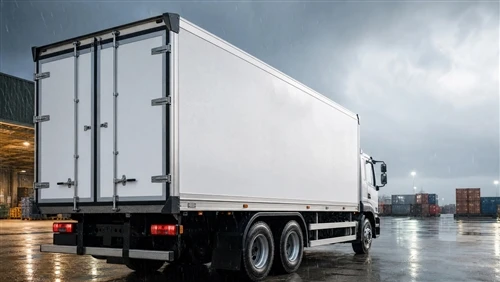
- Refrigerated Transport Vehicles: Full compartment wall, roof, floor and door panels for medium & large fresh food, pharmaceutical refrigerated trucks and insulated vans;
- Fixed Cold Storage Facilities: Internal partition boards, insulation wall panels, cold room sliding door core boards for large food cold storage and medical low-temperature warehouses;
- Reusable Insulated Logistics Containers: Structural frame panels of turnover insulated boxes for cross-regional fresh and vaccine batch transit;
- Portable Temperature-Controlled Transport Cases: Lightweight composite shell plates for laboratory low-temperature reagent transport boxes and medical vaccine portable incubators;
- Intermodal Cold Chain Equipment: Structural panels for rail refrigerated containers, sea reefer auxiliary partitions and airport cold chain turnover equipment;
- Special Low-Temperature Transport Equipment: Anti-corrosion insulation panels for chemical cryogenic reagent and frozen aquatic product dedicated transport vehicles.

FAQ
Q1 What is the service life of Holycore thermoplastic composite panels used on refrigerated trucks?
Q2 Can thermoplastic composite panels reduce refrigeration energy consumption of cold chain equipment?
Q3 Are Holycore thermoplastic panels suitable for pharmaceutical vaccine cold chain transport with high hygiene standards?
Q4 Can damaged thermoplastic composite panels be repaired on site?
Q5 Are Holycore thermoplastic composite panels fully recyclable after scrapping?

conclusion
For refrigerated vehicle manufacturers, cold storage engineering contractors, pharmaceutical logistics enterprises and fresh food transport operators seeking high-performance cold chain structural materials, Holycore provides free one-on-one thermoplastic composite panel scheme evaluation service. Before submitting formal procurement quotation requests, customers can provide the following cold chain project technical information to obtain accurate material matching and budget calculation:
☑ Application scenario: refrigerated truck compartment / fixed cold storage partition / portable vaccine insulated container
☑ Required panel thickness, overall size and load-bearing structural demands☑ Long-term working temperature range (minimum temperature & temperature alternation frequency)
☑ Special functional requirements: antibacterial, flame retardant, anti-slip surface, food-grade hygiene
☑ Estimated annual order quantity and on-site assembly installation conditions
☑ Local export certification standards and enterprise ESG material recycling requirements