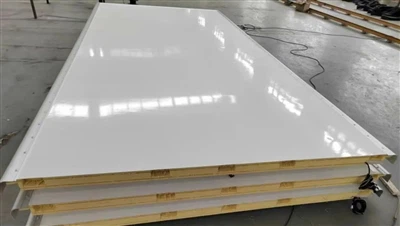
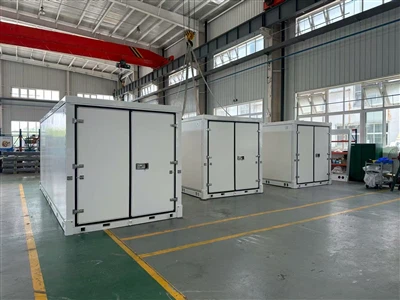
With the rapid upgrade of cold chain logistics, commercial vehicle manufacturing, modular construction, and mobile storage, panel selection has become a core factor affecting equipment service life, operating costs, and product compliance. Discover how HolyCore FRP sandwich panels solve traditional wood panel vulnerabilities.
Request Free Sample & Test ReportIndustry Background: Why Wood Panels Fail Modern Transport & Construction Demands
Global cold chain and commercial vehicle industries are pushing lightweight, low-maintenance, and eco-friendly material upgrades, while traditional wood panels expose obvious limitations in long-term operation:
In contrast, integrated FRP sandwich panels with FRP outer skin + XPS/PP honeycomb core form a fully closed non-absorbent composite structure, with outstanding advantages in weight reduction, thermal insulation, and anti-corrosion, becoming the preferred substitute for wood panels in refrigerated trucks, dry freight vehicles, cold storage, and modular buildings.
Core Structural Differences
Comparing traditional multi-layer glued wood against engineered FRP sandwich architecture.
Traditional Wood Panels
Most adopt multi-layer glued plywood or solid wood board, single homogeneous solid structure, open wood fiber pores on the surface, and no independent thermal barrier interlayer.
Wood fiber absorbs water vapor and liquid, glue layers separate under temperature & humidity alternation, and natural wood texture has inconsistent internal stress leading to bending deformation.
HolyCore FRP Sandwich Panels
Dual-sided seamless FRP fiberglass reinforced skin + closed-cell XPS foam / PP honeycomb core integrated hot-pressed composite structure.
The outer FRP skin forms a fully waterproof barrier film; the inner honeycomb/foam core creates a continuous thermal break layer. Zero water absorption, uniform internal stress, and no glue layer delamination risk under wide temperature ranges (-25℃ ~ 80℃).
Explore Full Product Specifications →Full-Dimensional Performance Comparison
Side-by-side technical index benchmarking between HolyCore FRP sandwich panels and plywood panels.
| Evaluation Index | HolyCore FRP Sandwich Panel | Traditional Wood Plywood Panel |
|---|---|---|
| Weight Per Square Meter | 30%–40% lighter than same-thickness wood | High density, heavy dead weight |
| Water Absorption Rate | ≤0.01%, fully closed waterproof | 12%–25% high water absorption |
| Anti-Mold & Hygiene | Non-porous, no mold breeding, food-grade | Easy mildew/bacteria, unsuitable for cold chain |
| Thermal Conductivity | 0.023–0.025 W/(m·K), excellent insulation | High heat transfer, poor temperature lock |
| Temperature Adaptation | -30℃ ~ 80℃, no deformation | Deform & crack below 0℃ or above 50℃ |
| Corrosion Resistance | Acid, alkali, salt fog resistant | Corroded by brine, fruit acid, disinfectant |
| Impact & Bending Rigidity | High specific strength, no fracture after impact | Easy dent, crack under impact load |
| Service Life | 10–15 years without major maintenance | 2–4 years in humid cold chain environments |
| Post-Scrap Recyclability | 100% thermoplastic recyclable core & skin | Difficult to recycle due to adhesive glue |
| Long-Term Maintenance | Only simple wiping, no repainting | Annual anti-mold & anti-corrosion paint needed |
Detailed Performance Gap Analysis
An in-depth evaluation across five critical engineering metrics.
01 Lightweight & Load-Bearing Mechanical Performance
HolyCore FRP Panels: Adopt hollow honeycomb or foam core design while retaining high bending strength. Under equal thickness, weight is reduced by nearly 40% compared with wood panels. For refrigerated trucks and dry freight vehicles, lightweight panels directly cut curb weight, increase single-trip payload, and lower long-term fuel consumption.
Wood Panels: Rely on solid fiber to bear force, resulting in heavy self-weight. Long-term bumpy road vibration causes internal fiber fracture and board bending, leading to cargo box door gap leakage and structural deformation.
02 Waterproof, Anti-Mold & Food Hygiene Compliance
HolyCore FRP Panels: Seamless non-porous polymer FRP skin completely isolates water vapor, juice, brine, and disinfectant penetration. Zero mold or bacterial residue after long-term cold storage operation, fully meeting EU LFGB food contact standards for fresh and pharmaceutical transport.
Wood Panels: Open fiber pores absorb condensed water inside cold boxes, rapidly growing mold and mildew spots, contaminating food and medical goods, and failing cold chain hygiene inspection standards.
03 Thermal Insulation & Temperature Stability
HolyCore FRP Panels: The closed-cell core forms a continuous air barrier, greatly slowing cold and heat exchange, cutting refrigeration unit operating time by over 18%, and reducing vehicle power consumption. Matched thermal expansion coefficients between skin and core ensure zero delamination after thousands of temperature alternations.
Wood Panels: No independent insulation layer and strong cold conduction result in serious temperature loss. Under repeated freeze-thaw cycles, wood absorbs water and expands, then shrinks upon dehydration-triggering board cracking and glue layer separation.
04 Weather Resistance & Long Service Life
HolyCore FRP Panels: Added UV-resistant gel coat on the surface resists outdoor sunlight aging, rain erosion, and coastal salt fog corrosion-remaining stable for 10+ years without surface peeling.
Wood Panels: Fade, crack, and rot under outdoor exposure, requiring repainting every 6–12 months, with a service life less than half that of FRP panels.
05 Maintenance Cost & Circular Sustainability
HolyCore FRP Panels: Surface stains require only water wiping; partial collision damage can be locally hot-melt repaired without whole-board replacement. Thermoplastic FRP and PP honeycomb cores can be crushed, remelted, and reprocessed after scrapping, supporting enterprise ESG carbon footprint audits.
Wood Panels: Require regular anti-mold and anti-corrosion paint renovation, consuming high labor and material expenses annually. Waste plywood with chemical glue belongs to difficult-to-dispose solid waste that cannot be efficiently recycled.
Choose HolyCore FRP Sandwich Panels If:
- Refrigerated truck / insulated van bodies for fresh fruit, seafood, or vaccine transport
- Fixed cold storage partitions, cold room door core panels, and low-temp cladding
- Dry freight trucks, mobile RVs, and mobile storage box structural panels
- Coastal construction, humid area modular prefab walls, and ceiling boards
- Food processing workshops and clean room hygienic partition panels
- Equipment operates in high humidity or coastal salt fog environments
- You prioritize long service life, lower annual maintenance, or ESG recycling goals
Choose Traditional Wood Panels If:
- Short-term temporary simple warehouse partitions with low budget and short service cycle
- Indoor dry environment temporary decoration without humidity & temperature fluctuation
- Small low-load manual turnover boxes without cold chain and transport vibration
- Ultra-limited budget with no requirement for long-term durability
- Low-load static structures without frequent vibration and collision
HolyCore Premium FRP Sandwich Panel Product Line
Holding 100+ material patents and ISO 9001 & IATF 16949 certifications, HolyCore provides certified replacement solutions across 60+ countries.
HolyPan® FRP PP Honeycomb
Ultra-light high-strength construction tailored for RVs, dry freight trucks, and mobile storage boxes.
CFRT XPS FRP Panel
Superb thermal insulation, explicitly engineered for refrigerated vehicles and cold storage walls.
HexWood Decorative FRP
Wood-grain FRP surface, directly replacing decorative wood boards in interior clean rooms and architectural spaces.
Standard FRP Foam Panel
Cost-effective mass-production model for medium-budget cargo box OEMs and body builders.
All panels pass SGS third-party waterproof, anti-mold, and low-temperature cycle testing. View full technical specs at HolyCore.com →
FAQ
Common queries regarding FRP and wood panel selection for OEMs and contractors.
Can FRP sandwich panels completely replace wood panels for refrigerated truck bodies?
Yes. FRP panels solve all core defects of wood panels such as water absorption, mildew, deformation, and poor insulation, while reducing long-term operation and maintenance costs. Global mainstream cold chain vehicle OEMs have fully shifted to FRP composite panel solutions.
Is the total project cost of FRP panels higher than wood panels?
The one-time purchase price is slightly higher, but FRP panels have 3–5 times longer service life and zero annual anti-corrosion painting maintenance. Calculated over a 10-year operational cycle, the comprehensive cost is far lower than wood panels.
Can HolyCore customize FRP panel thickness and surface finish?
Absolutely. We adjust FRP skin thickness, XPS/honeycomb core density, surface color, and wood grain texture according to truck body and construction drawing demands, supporting OEM customized sizes and decorative finishes.
Are HolyCore FRP panels recyclable after service life ends?
Our thermoplastic FRP and PP honeycomb cores are fully remeltable and recyclable materials containing no non-recyclable thermosetting glue components, helping enterprises complete carbon emission and ESG audit reports.
What temperature range can HolyCore FRP panels withstand?
Stable structural performance from -30℃ ultra-low cold chain temperature to 80℃ high-temperature outdoor environments, with no warping, bubbling, or delamination under long alternating temperature cycles.