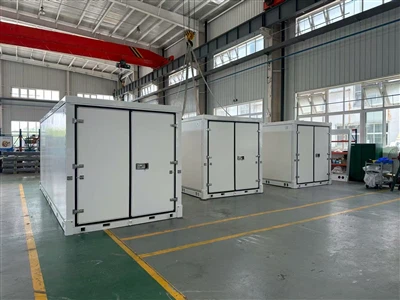
Driven by booming new energy, aerospace, transportation, modular construction, and marine industries, global manufacturers are raising strict standards for structural materials: lightweight strength, long service life, low maintenance cost, low carbon footprint, and full recyclability.
Request Technical Evaluation & QuoteGlobal Advanced Structural Engineering Development & Material Upgrade Trend
The global lightweight structural material market maintains a steady annual growth rate exceeding 12%, covering new energy vehicle chassis, aerospace secondary structures, yacht bulkheads, prefabricated building load-bearing walls, and industrial transport equipment. Stricter global carbon neutrality targets require structural equipment to cut emissions across manufacturing, operation, and end-of-life disposal.
The Solution: Holycore Continuous Fiber Reinforced Thermoplastic Composites
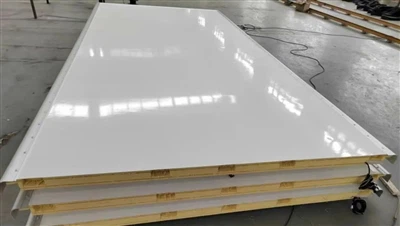
As a professional manufacturer focusing on independent R&D, automated production, and customized development of thermoplastic composite honeycomb sandwich panels, Holycore delivers flagship HolyPan® honeycomb composite panels. Integrating closed-cell PP honeycomb core and PP/PEEK thermoplastic skins with proprietary low-loss manufacturing technology, Holycore delivers long-life, energy-saving, eco-friendly structural materials for operators worldwide.
Core Pain Points of Conventional Heavy-Duty Structural Materials
Traditional options fail to meet dual demands of precise load-bearing control and waste recycling targets.
Six Core Technical Advantages of Holycore Thermoplastic Composites
Engineered specifically to solve heavy-duty structural challenges.
1. Natural Thermal Break Structure, Cut Equipment Energy Consumption
Holycore thermoplastic honeycomb composite panels adopt a closed-cell PP honeycomb core as a natural thermal barrier. The independent air-locked honeycomb structure effectively blocks cold and heat exchange without continuous heat conduction channels, reducing overall energy consumption of structural equipment by over 18% compared with aluminum alloy cases.
2. Low-Temperature Dimensional Stability, No Delamination Under Repeated Freeze-Thaw Cycles
Unlike irreversibly cured thermoset resin, Holycore's closed-cell CFRPP thermoplastic core maintains a consistent thermal expansion coefficient under -30℃ long-term alternating temperatures. The solid thermoplastic structure completely avoids deformation, bubbling, and cracking common to thermoset FRP, keeping stable performance for 10+ years without delamination.
3. Ultra-Light High-Strength, Reduce Vehicle Load & Transport Carbon Emissions
With a density of only 1.28g/cm³, Holycore thermoplastic composite panels are 40% lighter than aluminum alloy sheets and 30% lighter than traditional thermoset FRP panels while retaining superior bending and compressive structural strength-significantly increasing cargo payload and lowering fleet carbon emissions.
4. Excellent Moisture & Corrosion Resistance, Eliminate Condensation Damage Risk
All thermoplastic matrix and honeycomb core structures are non-hydrophilic closed-cell materials, offering full waterproof and anti-moisture penetration performance. The surface resists salt mist, acidic/alkaline liquids, and industrial detergents, meeting strict food contact and pharmaceutical inspection standards.
5. 100% Recyclable Thermoplastic Matrix, Fit Circular Economy Requirements
Holycore's full thermoplastic panels can be reheated, remelted, reshaped, and hot-welded after reaching end-of-life. Scrapped panels can be fully recovered and reprocessed into new composite raw materials, helping industrial enterprises pass international ESG, BSCI, and carbon footprint audits.
6. High Impact Toughness & Easy On-Site Welding & Maintenance
The thermoplastic molecular structure buffers collision impacts without brittle fracture. Damaged panels can be easily repaired through on-site hot melt welding without replacing the entire plate. Panels also support arbitrary cutting, bending, and customized structural assembly.
Comparative Performance Matrix
Thermoplastic Composites VS Traditional Structural Materials.
| Evaluation Dimension | Aluminum Alloy Panel | Thermoset FRP Panel | Disposable EPS Foam | Holycore Thermoplastic Composite Panel |
|---|---|---|---|---|
| Thermal Bridge Performance | Severe heat conduction, high energy loss | Medium insulation, easy condensation | Good short-term insulation, no structural strength | Natural thermal break, 18%+ energy saving |
| Freeze-Thaw Resistance | Condensation leads to internal corrosion | Delamination & cracking after 1–2 years | Disposable, cannot bear temp alternation | Stable structure, no delamination in 10 years |
| Material Weight | Heavy, increases fuel consumption | Medium weight | Ultra-light, no load-bearing capacity | 40% lighter than aluminum, high-strength |
| Recyclability | Metal recyclable, high recovery cost | Cannot remelt, non-recyclable waste | Single-use, massive waste generation | 100% remelt & recycle circular material |
| Impact & Maintenance | Easy dent, difficult repair | Brittle crack, whole plate replacement | Fragile, disposable after damage | High toughness, local hot-weld repair |
| Moisture & Sanitation | Easy condensation rust | Water absorption, mold growth | Absorbs water, breeds bacteria | Closed-cell waterproof, food/medical safe |
| Service Life | 5–7 years | 2–3 years | Single trip only | 10–15 years long service cycle |
Full-Scenario Structural Application Fields
Holycore thermoplastic panels adapt across diverse demanding industrial environments.
FAQ
Technical details regarding structural implementation and maintenance.
What is the service life of Holycore thermoplastic composite panels used for heavy-duty transport vehicles?
Under normal daily vehicle operation environments, our thermoplastic sandwich panels maintain stable structural and thermal insulation performance for 10–15 years, far exceeding the 2–3 year service life of traditional thermoset FRP panels. No delamination, bubbling, or cracking occurs after thousands of freeze-thaw cycles.
Can thermoplastic composite panels cut energy consumption of structural equipment?
Yes. The closed-cell honeycomb thermoplastic matrix breaks thermal bridge heat exchange efficiently, reducing the daily average running time of heating/refrigeration units by over 18%, effectively lowering long-term electricity and fuel operating costs.
Are Holycore thermoplastic panels suitable for pharmaceutical and food structural projects with high hygiene standards?
Absolutely. Our full thermoplastic raw materials pass food and medical contact safety testing. The closed-cell structure does not absorb condensed water to breed mold and bacteria, withstanding repeated cleaning with disinfectants.
Can damaged thermoplastic composite panels be repaired on site?
Unlike brittle thermoset fiberglass that requires whole-plate replacement, Holycore thermoplastic panels support local hot melt welding repair on site, replacing only small damaged areas to cut downtime and maintenance costs.
Are Holycore thermoplastic composite panels fully recyclable after scrapping?
All skin CFRPP sheets and PP honeycomb cores belong to pure thermoplastic materials without irreversible thermosetting resin. Scrapped panels can be crushed, remelted, and re-extruded into new composite raw materials, realizing 100% material cyclic utilization.