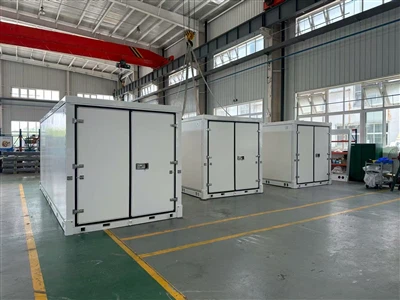
A Structural Shift in Engineering Priorities
In 2026, the adoption of honeycomb sandwich panels among OEMs is no longer confined to specific high-performance sectors. What was once a material associated primarily with aerospace has now become a mainstream engineering solution across transportation, industrial equipment, construction, and advanced manufacturing.
This transition reflects a broader shift in engineering priorities. Manufacturers are no longer optimizing for strength alone, but for a more complex set of variables including:
Structural efficiency
Lifecycle cost
Energy consumption
Supply chain resilience
Sustainability compliance
Within this context, honeycomb sandwich panels are increasingly viewed not as an alternative material, but as a strategic enabler of modern manufacturing systems.
From Material Selection to System Optimization
Traditional material selection has typically focused on mechanical properties at the component level. However, OEMs are now making decisions based on system-level performance.
Honeycomb sandwich panels contribute to this shift by:
Reducing overall structural mass
Lowering load requirements for supporting components
Improving integration across subsystems
The result is not only a lighter component, but a more efficient overall system architecture.
Manufacturers such as Holycore support this transition by offering panel systems that can be configured according to specific load cases, rather than relying on standardized material specifications.
Lightweighting as an Engineering Constraint, Not an Option
Across multiple industries, lightweighting has become a design constraint driven by regulation, cost pressure, and performance requirements.
In transportation, reduced weight directly correlates with fuel efficiency and emissions.
In industrial equipment, it affects energy consumption and mechanical wear.
In construction, it influences structural load and installation efficiency.
Honeycomb sandwich panels address these constraints through:
High stiffness-to-weight ratios
Efficient distribution of material away from the neutral axis
Scalable thickness without proportional weight increase
This allows OEMs to meet increasingly stringent performance targets without resorting to overdesign.
Lifecycle Cost as a Primary Decision Metric
The evaluation framework used by OEMs has shifted from initial material cost to total cost of ownership (TCO).
Honeycomb sandwich panels contribute to lifecycle cost reduction through:
Lower transportation and handling costs
Reduced installation time
Decreased structural support requirements
Improved durability and fatigue resistance
While initial procurement costs may be higher than conventional materials, the cumulative savings across the product lifecycle often justify the transition.
Holycore's approach emphasizes cost-performance balance, enabling broader adoption beyond niche applications.
Alignment with Sustainability and Regulatory Requirements
Sustainability has become a mandatory consideration in material selection, driven by both regulatory frameworks and corporate ESG commitments.
Honeycomb sandwich panels support these objectives by:
Reducing raw material consumption
Lowering emissions associated with transportation and operation
Enabling the use of recyclable materials such as aluminum and thermoplastics
As OEMs increasingly evaluate suppliers based on environmental impact, material systems that contribute to measurable sustainability outcomes gain strategic importance.
Holycore's product portfolio reflects this direction, with continued development in recyclable and resource-efficient composite structures.
Compatibility with Modern Manufacturing Systems
The evolution of manufacturing toward automation, modularization, and high-throughput production places new demands on material systems.
Honeycomb panels offer several advantages in this context:
Reduced weight facilitates automated handling
Large-format panels minimize assembly steps
Consistent structural properties support process stability
These characteristics align well with modern production environments, where efficiency is driven not only by material performance, but also by process integration.
Functional Integration and System Simplification
A notable trend in OEM design is the reduction of component complexity through functional integration.
Honeycomb sandwich panels inherently support this approach by combining:
Structural performance
Thermal insulation
Acoustic damping
into a single engineered component.
This reduces:
Part count
Assembly complexity
Potential failure points
Such integration is particularly valuable in applications where space, weight, and reliability are critical.
Supply Chain Considerations and Material Efficiency
Global supply chain dynamics continue to influence material strategies. OEMs are increasingly prioritizing solutions that:
Use less raw material
Offer flexibility in sourcing
Reduce logistics burden
Honeycomb panels, by design, achieve structural performance with significantly less material volume than solid alternatives.
This contributes to:
Improved material efficiency
Reduced dependency on high-mass materials
Greater adaptability in sourcing strategies
Holycore's manufacturing model supports these requirements through scalable production and diversified material options.
Expanding Application Landscape
The adoption of honeycomb sandwich panels is being reinforced by cross-industry validation.
Key sectors include:
Transportation and logistics
Industrial machinery and automation systems
Architectural and modular construction
Renewable energy infrastructure
As implementation expands, engineering familiarity increases, leading to:
Faster design cycles
Reduced adoption barriers
Greater standardization in applications
This network effect is accelerating the transition from selective use to broad industry adoption.
Design Flexibility as a Competitive Advantage
Modern OEM products require increasing levels of customization. Honeycomb sandwich panels provide:
Adjustable core density and thickness
Compatibility with various face sheet materials
Adaptability to different load and environmental conditions
This flexibility enables engineers to design structures that are optimized for specific applications, rather than constrained by the limitations of traditional materials.
Holycore supports this through application-oriented engineering, offering panel configurations tailored to diverse industrial requirements.
Conclusion: From Alternative Material to Industry Standard
The growing adoption of honeycomb sandwich panels among OEMs in 2026 reflects a broader transformation in manufacturing and engineering.
These panels are no longer viewed as a specialized solution, but as a foundational material system that supports:
Structural efficiency
Cost optimization
Sustainability goals
Advanced manufacturing processes
Companies such as Holycore contribute to this transition by providing not only materials, but integrated solutions aligned with modern industrial demands.
Final Perspective
As engineering challenges become increasingly complex, material systems must deliver value across multiple dimensions simultaneously.
Honeycomb sandwich panels represent a response to this requirement-
not as a trend, but as an evolution in how structures are designed, manufactured, and optimized.