Operational Efficiency Bottlenecks of Traditional Mobile Storage Construction Materials
Every conventional material used for mobile storage units creates recurring efficiency losses for manufacturers, rental operators, and logistics fleets:
Heavy Steel Panel Storage Units
Steel's extreme dead weight limits usable internal payload within legal road weight caps, forcing fewer goods per transport trip and increasing fuel consumption by large margins. Steel rapidly rusts in coastal, humid, or seafood transport environments, requiring annual anti-corrosion repainting that halts storage unit availability for maintenance. Bulky pre-assembled steel bodies cannot be flat-packed for export, wasting massive container space and inflating ocean freight expenses for global storage OEMs.
Plywood Lined Mobile Storage Containers
Plywood absorbs condensation and ambient moisture, spawning mold, warping, and layer delamination within 2–4 years of outdoor mobile use. Weak impact resistance creates cracked wall panels from routine loading/unloading, leading to damaged stored inventory and frequent unit downtime for repairs. Glued plywood cannot be fully recycled, generating costly landfill waste and failing ESG sustainability reporting requirements for rental storage brands.
Dense Solid Plastic Single-Layer Panels
Solid plastic sheets lack structural rigidity, sagging under wide unsupported spans and heavy stacked storage loads. They offer minimal thermal insulation, making them unsuitable for temperature-controlled mobile cold storage lockers, and scratch easily during daily warehouse handling, accelerating visual degradation of rental storage assets. High raw material density eliminates any meaningful lightweight payload advantage over composite alternatives.
The Core Lightweight Composite Technology Behind HolyPan® Mobile Storage Panels
HolyPan® is built on a fully thermoplastic sandwich composite architecture engineered exclusively for mobile storage's dynamic, mobile operating conditions:
- Dual Fiberglass-Reinforced PP Outer Skins: Continuous glass fiber embedded polypropylene skins deliver high surface impact resistance, scratch resistance, and complete water/moisture barrier performance. The seamless non-porous surface repels mold, brine, acid vapor, and coastal salt fog without additional coating maintenance.
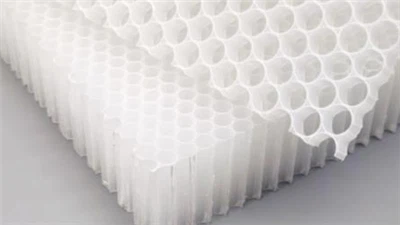
- Hexagonal PP Honeycomb Lightweight Core: A closed-cell polypropylene honeycomb inner core replaces dense solid substrates, cutting total panel weight by 35–45% while retaining equivalent bending and compressive strength compared to steel and plywood. The cellular geometry distributes impact and stacking loads evenly across the entire panel surface.
- Glue-Free Thermal Fusion Bonding Process: Skin and honeycomb core are fused via high-temperature industrial hot pressing with zero chemical adhesive layers. This eliminates delamination, bubbling, and layer separation failures common in glued composite or plywood panels during constant road vibration and temperature cycling.
- Fully Recyclable Mono-PP Composition: Every component of HolyPan® uses unified polypropylene thermoplastic material. At end-of-life, panels can be crushed, remelted, and re-extruded into new core or storage panels, enabling closed-loop circular production without mixed-material sorting complexity.
Six Key Efficiency Gains Enabled by Lightweight Composite Mobile Storage Builds
Every efficiency improvement from lightweight composite storage construction stems from the honeycomb sandwich structure's unique strength-to-weight ratio and thermoplastic durability:
Gain 1: Maximized Legal Payload Capacity
A full-size 10ft unit built with HolyPan® weighs 300–380kg less than steel, unlocking 15–20% extra usable cargo storage capacity within legal weight caps. For electric vans, reduced weight extends single-charge driving range.
Gain 2: Slashed Cross-Border CKD Shipping
Panels pre-cut into flat, stackable components optimize container space utilization by over 30% versus pre-assembled units, drastically lowering ocean freight and import weight tariffs.
Gain 3: Minimal Maintenance Uptime
Thermoplastic construction eliminates rust, mold, and rot entirely. Minor collision damage can be repaired via localized hot melt welding, cutting maintenance labor and downtime by 70%.
Gain 4: Accelerated On-Site Assembly Speed
Lightweight panels require fewer crew members to install. Pre-sized, edge-sealed CKD kits eliminate secondary cutting and waterproofing, halving total on-site assembly time.
Gain 5: Extended Service Lifespan
Units maintain stable structural integrity for 10–15 years-three times longer than plywood containers and double the service life of steel units prone to rust degradation.
Gain 6: Streamlined ESG Compliance
100% recyclable mono-PP composite construction eliminates non-recyclable waste streams from end-of-life units, simplifying ESG carbon reporting and satisfying green supply regulations.
Side-by-Side Operational Performance: HolyPan® vs Steel / Plywood / Solid Plastic
| Metric | Heavy Steel Units | Plywood Lined Units | Solid Plastic Sheets | HolyPan® Composite |
|---|---|---|---|---|
| Weight & Payload | Heaviest; restricts payload | Medium; gains water mass | Moderate; poor rigidity | 35–45% lighter than steel |
| Maintenance & Uptime | Annual anti-rust repainting | Bi-annual mold remediation | Frequent scratch touch-ups | Zero routine coating needed |
| Cross-Border Shipping | Low container stacking density | Prone to sea water damage | Dense sheets limit volume | +30% container utilization |
| Asset Lifespan | 5–7 Years (rust failure) | 2–4 Years (mold/warp) | 4–6 Years (sagging/wear) | 10–15 Years (stable life) |
Specialized Mobile Storage Unit Types Optimized with HolyPan® Composite Panels
Dry Goods Portable Self-Storage Lockers (Rental Business)
Recommended Variant: Standard 70–90kg/m³ PP honeycomb composite panels
Ultra-light frame boosts transportable storage capacity; scratch-, mold-, and rust-resistant surface preserves rental unit visual condition with zero annual upkeep.
Temperature-Controlled Mobile Cold Storage Containers
Recommended Variant: XPS insulated FRP composite sandwich panels
Closed-cell insulation core cuts refrigeration power draw during transit; non-porous gel coat lining eliminates mold growth on stored food or pharmaceutical inventory.
Construction Site Temporary Mobile Storage Pods
Recommended Variant: Medium-high density 100–120kg/m³ reinforced honeycomb panels
High impact absorption withstands tool and material collision damage on-site; UV and rain resistant thermoplastic eliminates weather-related structural degradation.
Coastal & Marine Mobile Storage Trailers
Recommended Variant: UV & salt-stabilized anti-corrosion composite panels
Zero rust formation from coastal salt spray exposure; eliminates annual anti-corrosion painting maintenance for port and waterfront storage fleets.
Small Moving & Logistics Mobile Storage Totes
Recommended Variant: Low-density 40–60kg/m³ thin honeycomb composite sheets
Minimal unit weight reduces delivery vehicle fuel consumption; impact-resistant surface enables repeated stacking and cross-town transit.
CKD Modular Composite Design: Cutting Cross-Border Storage Unit Shipping Efficiency Losses
For OEM manufacturers exporting disassembled mobile storage kits to overseas assembly markets, HolyCore's custom Completely Knocked Down (CKD) composite cutting service delivers two layers of efficiency optimization:
Real-World Mobile Storage Fleet Efficiency Case Study
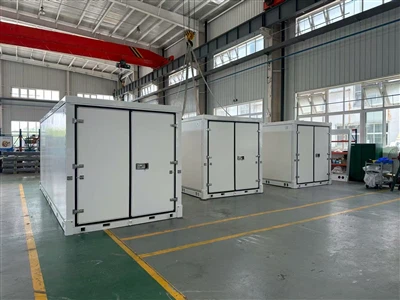
A regional self-storage rental manufacturer switched all their 10ft mobile transportable storage units from steel construction to HolyPan® lightweight composite modular kits, recording measurable efficiency gains across a 12-month rollout:
HolyCore Custom Composite Panel Range for All Mobile Storage Applications
As the original developer of HolyPan® lightweight honeycomb composite panels for mobile storage manufacturing, HolyCore provides fully customizable composite material series covering all portable storage unit use cases:
- Standard HolyPan PP Honeycomb Composite Panels: Lightweight wall/roof panels for dry goods self-storage lockers and moving totes.
- XPS Insulated Composite Sandwich Panels: Thermal barrier construction for temperature-controlled mobile cold storage containers.
- Reinforced High-Density Honeycomb Panels: Impact-resistant floor and wall components for construction site storage pods.
- Anti-Corrosion UV-Stabilized Composite Series: Salt fog resistant panels for coastal marine mobile storage trailers.
- CKD Pre-Cut Modular Composite Storage Kits: Flat stackable serialized panel sets for cross-border OEM export manufacturing.
All panel variants pass third-party SGS water absorption, salt spray, low-temperature cycling, and impact testing, supported by ISO 9001 and LFGB certifications.
FAQ About Lightweight Composite Mobile Storage
Will lightweight composite panels reduce the structural strength of mobile storage units?
No. HolyPan® honeycomb composite panels deliver equivalent compressive and impact rigidity as steel at drastically lower weight, engineered to withstand heavy stacked storage loads and highway vibration.
Is the upfront cost of composite storage panels higher than steel or plywood?
Initial material pricing carries a slight premium, but massive long-term gains in payload capacity, reduced shipping freight, minimal maintenance, and doubled asset lifespan deliver far lower 10-year total lifecycle costs.
Can lightweight composite panels be used for outdoor year-round mobile storage in cold coastal climates?
Yes. UV and salt-stabilized variants maintain stable structural performance from -30℃ cold winter conditions to +70℃ hot, humid coastal summer environments with zero risk of rust, mold, or warping.
Does flat-pack CKD cutting of composite panels weaken their structural integrity during ocean shipping?
All cut modular panels receive full resin edge sealing to block moisture intrusion into the core. Simulation testing verifies no bubbling or delamination occurs during long container transit.
What minimum order quantity applies for mobile storage composite sample testing?
MOQ starts at one single finished composite panel sample to support small-batch trial storage unit prototyping before mass procurement.
Request Free Mobile Storage Material Feasibility Evaluation & Composite Samples
For self-storage rental operators, mobile storage OEM manufacturers, construction site equipment suppliers, and cold chain portable container producers, HolyCore provides a complimentary operational efficiency assessment service. Please share your project details below: