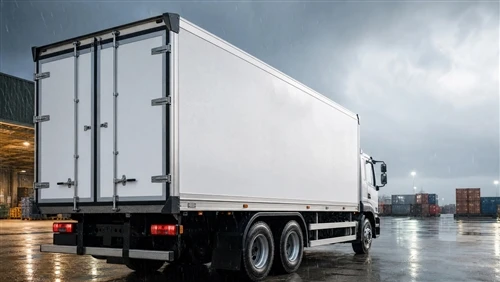
Commercial vehicle fleets, cross-border CKD OEMs, and cold chain operators face two core pain points: insufficient structural durability and limited payload. Legacy materials like steel, plywood, and standard FRP carry excessive dead weight and require frequent repair. Holy Pan® composite panels deliver a lightweight, high-strength upgrade for new van builds and fleet retrofits.
Full Article Navigation
Hidden Drawbacks of Traditional Commercial Vehicle Body Materials
Most standard commercial truck bodies rely on steel, plywood, or basic thermoset FRP, creating persistent operational losses for fleet owners:
Steel Plate Bodies
Adds 300–500kg of unnecessary dead weight, restricting available payload. It rusts rapidly under coastal salt fog, seafood brine, and frequent rain, requiring mandatory annual repainting and frequent dent repairs.
Plywood Composite Bodies
Absorbs condensed moisture in cold and humid environments, causing mold growth, warping, and layer delamination within 2–4 years. Disposable glued wood cannot be recycled, creating high waste disposal fees.
Standard Thermoset FRP Bodies
Relies on chemical adhesives prone to bubbling and layer separation after thousands of freeze-thaw cycles. Damaged panels require full removal rather than localized repair and cannot be remelted for recycling.
Two Core Upgrade Goals: Boosted Durability & Higher Payload
Every commercial vehicle body upgrade project centers on two performance targets that directly govern long-term logistics profitability:
Delivers a 10–15 year service lifespan (3x longer than plywood or steel) by offering superior salt-fog resistance, freeze-thaw structural stability, impact toughness, and hygienic anti-mold surfaces.
Reduces curb weight without sacrificing structural rigidity, enabling fleets to load more goods per run within legal weight limits, reduce total trip counts, and cut fuel expenditure.
How Holy Pan® Composite Panels Improve Vehicle Body Durability
Corrosion & Moisture Barrier
Fully sealed PP skin and closed honeycomb core with zero water absorption repel brine, acids, and salt fog, eliminating mold, rust, and internal core swelling.
Thermally Fused Toughness
Glue-free hot-melt bonding absorbs cargo collisions and highway vibration without delamination. Minor damage can be repaired locally via hot welding.
Temperature Stability (-30℃ to 50℃)
Matched thermal expansion coefficients between skin and core eliminate internal stress buildup, preventing warping during extreme thermal cycles.
10–15 Year Service Life
High impact toughness and zero routine anti-rust painting requirements extend service life to 10–15 years, avoiding 3–5 year replacement cycles.
How HolyPan® Lightweight Design Maximizes Effective Payload
30%–40% Lighter Than Steel Truck Bodies
A standard 4.2m van body reduces curb weight by 320–450kg vs. steel, unlocking 15%–20% additional payload capacity per trip within legal gross weight limits.
Lower Fuel & Energy Consumption
Every 400kg weight reduction saves ~1.4L of fuel per 100km. For electric commercial vehicles, lighter bodies extend single-charge range and reduce battery strain.
Optimized CKD Flat-Pack Shipping
Flat modular panels raise ocean container space utilization by over 30%, drastically cutting cross-border shipping tariffs for OEM export projects.
Side-by-Side Performance Comparison
| Material Type | Durability & Life | Payload & Weight | Maintenance & Recycling |
|---|---|---|---|
| Holy Pan® Composite | 10–15 years; zero rust/mold, thermal stable | Lightest panel; maximum payload gain | Zero painting; localized hot weld; 100% recyclable |
| Steel Plate | 5–7 years; prone to rust & dents | Heaviest; reduces payload by 300–500kg | Mandatory annual repainting; high repair labor |
| Solid Plywood | 2–4 years; water absorption, warping, mold | Medium weight; gains water weight over time | Frequent full replacement; landfill disposal fees |
| Standard Thermoset FRP | 6–8 years; glue layer separation risk | Moderate weight reduction | Requires full panel replacement; non-recyclable |
Solutions by Commercial Vehicle Type
Dry Freight Light Commercial Vans
Recommended: Standard 70–90kg/m³ Holy Pan® PP honeycomb panels. Maximizes cargo volume and prevents goods damage during transit.
Refrigerated Cold Chain Trucks
Recommended: Holy Pan® XPS insulated composite sandwich panels. Closed-cell core cuts refrigeration energy and prevents mold growth.
Coastal & Seafood Transport Vehicles
Recommended: UV & salt-fog stabilized Holy Pan® panels. Completely eliminates corrosion from brine and marine environment exposure.
Heavy-Duty Industrial Delivery Trucks
Recommended: High-density 120–150kg/m³ reinforced panels for floor sections. Resists pallet and forklift indentation.
CKD Modular Body Upgrade for OEM Projects
For vehicle manufacturers exporting CKD body kits, upgrading to Holy Pan® provides distinct supply chain edges:
- Flat-Pack Stacking: Pre-cut wall, roof, and floor panels optimize container space, saving 25%+ in ocean freight per batch.
- Numbered Component Marking: Serialized panels paired with multilingual drawings minimize assembly errors at destination plants.
- Pre-Finished Customization: Color coating, logos, and edge sealing are pre-applied in-factory, eliminating post-assembly painting.
- Full Homologation Compliance: ISO and SGS testing data simplify local vehicle approval processes in overseas markets.
Real Fleet Upgrade Case: 50-Unit Van Retrofit
A domestic logistics fleet retrofitted 50 units of 4.2m dry freight vans from steel to Holy Pan® composite bodies, recording the following 1-year operational metrics:
Borehole Composite Product Range
FAQ
Will composite panels reduce the structural strength of truck bodies?
No. Holy Pan® honeycomb structures provide equivalent bending and impact rigidity as steel at a fraction of the weight, engineered specifically for commercial transport vibration and cargo contact.
Can composite panels retrofit existing old truck bodies?
Yes. Borehole supplies both cut-to-size panels for renovating worn in-service fleet bodies and complete CKD modular kits for new OEM vehicle manufacturing.
How much extra payload can I gain?
Expect 300–450kg of additional cargo capacity when replacing steel bodies, and 150–220kg extra payload when upgrading from plywood or thermoset FRP.
Request Free Upgrade Feasibility Evaluation & Samples
Get a complimentary technical assessment. Submit your vehicle type, current material, chassis dimensions, and operating conditions for a side-by-side payload and cost-saving calculation.
Contact Commercial Vehicle Composite Team