Introduction
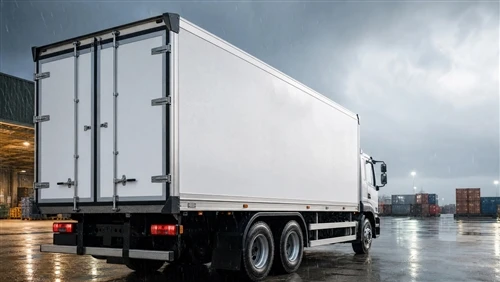
Medium- and heavy-duty truck fleets operate under substantially different conditions from light commercial vehicles. Construction fleets, municipal service vehicles, logistics trucks, mining support vehicles, agricultural transporters, emergency vehicles, and long-haul freight carriers may accumulate high annual mileage while carrying substantial payloads. Their body structures must therefore tolerate vibration, repeated loading, road impact, weather exposure, and frequent maintenance operations.
For fleet operators and vehicle manufacturers, importing completely assembled truck bodies is not always the most efficient production model. Transportation volume, import duties, local assembly policies, body customization requirements, and after-sales support can make a CKD (Completely Knocked Down) truck body kit a more practical alternative.
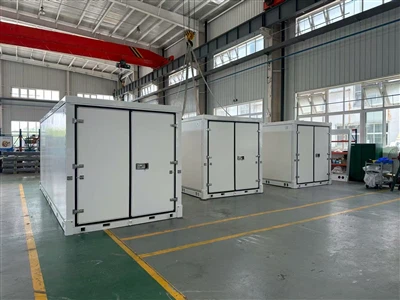
A CKD truck body kit divides the truck body into engineered components and subassemblies that can be packed, transported, and assembled in the destination market. Instead of shipping a complete body, the supplier manufactures structural members, panels, doors, brackets, mounting components, and accessories according to an agreed design. The local facility then assembles these components onto the appropriate truck chassis.
For medium- and heavy-duty fleets, the purpose of CKD assembly is not simply to reduce shipping volume. A properly engineered system must maintain structural integrity under fleet operating conditions while also supporting repeatable assembly, vehicle standardization, maintenance, and future body configuration changes.
What Makes Fleet-Oriented CKD Truck Bodies Different?
A truck body designed for a single vehicle is not necessarily suitable for a fleet program.
Fleet applications require repeatability. If a customer operates 100, 500, or several thousand trucks, body dimensions, mounting interfaces, replacement components, and assembly procedures need to remain consistent across production batches.
The CKD system therefore needs to address four major requirements:
Structural durability
Production repeatability
Fleet-level standardization
Application-specific configuration
For example, a logistics fleet may require standardized box bodies for distribution operations, while a construction fleet may require reinforced cargo bodies with higher floor capacity and additional side protection.
The CKD platform should accommodate these differences without requiring the entire body structure to be redesigned for every order.
Medium-Duty vs. Heavy-Duty Truck Body Requirements
Medium- and heavy-duty vehicles share many structural principles, but their operating loads can differ significantly.
| Parameter | Medium-Duty Fleet | Heavy-Duty Fleet |
|---|---|---|
| Typical application | Distribution, municipal service, regional transport | Construction, mining support, long-haul, heavy cargo |
| Payload requirement | Moderate to high | High to very high |
| Structural reinforcement | Moderate | Heavy |
| Floor design | Standard/reinforced | Heavy-duty reinforced |
| Chassis interface | Application-specific | High-load mounting system |
| Vibration exposure | Moderate to high | High |
| Road impact | Moderate | High |
| Body weight control | Important | Important but balanced with strength |
| Maintenance frequency | Regular | Frequent under severe conditions |
| Customization demand | Medium to high | High |
The key engineering principle is that body strength should be matched to the actual load case, rather than simply making every component thicker.
Over-reinforcement increases tare weight and reduces available payload. Insufficient reinforcement can cause permanent deformation, fatigue cracking, or mounting failure.
Main Structural Components of a CKD Fleet Body
A medium- or heavy-duty CKD body is typically divided into several functional assemblies.
Floor Frame
The floor frame is the primary load-bearing section. It distributes cargo loads and transfers forces to the truck chassis.
Typical components include:
Longitudinal members
Cross members
Floor panels
Reinforcement plates
Chassis mounting brackets
Suspension-related clearance structures
Cross-member spacing should be determined according to cargo weight, floor material, expected load distribution, and body dimensions.
Heavy-duty applications may require closely spaced cross members or reinforced longitudinal rails to prevent excessive floor deflection.
Side Walls
Side walls protect the cargo and contribute to the overall body structure.
Depending on application, they may use:
Galvanized steel
Painted steel
Aluminum
Composite panels
Sandwich panels
A fleet body may also incorporate replaceable side panels so that localized damage can be repaired without replacing the entire body.
Front Wall
The front wall closes the cargo compartment and can require additional reinforcement where cargo may move during braking.
Heavy-duty bodies may use reinforced posts and horizontal members to maintain structural stability.
Roof
The roof protects cargo from environmental exposure and may also contribute to body rigidity.
For refrigerated applications, roof construction becomes part of the insulated envelope. For general cargo bodies, a lighter roof structure may be sufficient.
Rear Door
Rear doors experience repeated operating cycles and must remain aligned throughout vehicle service life.
A fleet-oriented design should consider:
Hinge durability
Locking system reliability
Door seal replacement
Impact resistance
Adjustment capability
Maintenance accessibility
Designing the Floor for Fleet Loads
Floor engineering is one of the most important areas in medium- and heavy-duty body construction.
A truck body does not experience only one static load. The floor can be subjected to dynamic forces caused by:
Braking
Acceleration
Turning
Uneven roads
Forklift loading
Cargo movement
Repeated impact
A nominal payload rating therefore does not fully describe the actual structural requirement.
For example, a body designed for palletized goods may experience concentrated wheel loads from forklifts. A body used for bulk materials may experience a more evenly distributed load.
The floor design should therefore consider both distributed loads and concentrated loads.
Material selection also influences floor performance. Steel floors provide high resistance to impact and localized loading, while aluminum floors can reduce vehicle weight.
In some applications, a composite floor can provide a balance between weight and durability.
Chassis Mounting Is a Critical Engineering Interface
One of the most important differences between a body component and a complete truck body is the chassis interface.
The body is mounted onto a chassis that experiences torsional movement as the truck travels over uneven terrain.
If the body mounting system is too rigid, excessive forces may be transferred into the body structure. If it is too flexible, unwanted movement can occur.
Therefore, CKD body kits should define:
Mounting bracket positions
Fastener specifications
Hole patterns
Mounting clearances
Frame compatibility
Body-to-chassis interface dimensions
Required fastening torque
For fleet production, these interfaces should be standardized wherever possible.
A standardized mounting system allows the same body architecture to be adapted to multiple vehicles with controlled changes to brackets or interface components.
Structural Materials for Medium and Heavy-Duty Applications
Material selection should be based on the required combination of strength, weight, corrosion resistance, manufacturability, and local repair capability.
High-Strength Steel
High-strength steel can be used in structural members where strength-to-weight ratio is important.
It can reduce material thickness while maintaining required structural performance, although forming and welding parameters must be controlled carefully.
Carbon Steel
Carbon steel remains widely used because of its availability, weldability, and relatively low cost.
It is particularly suitable for:
Frames
Brackets
Reinforcement members
Corner posts
Heavy-duty floor structures
The main requirement is adequate corrosion protection.
Galvanized Steel
Galvanized steel is useful for components exposed to moisture because the zinc coating provides additional corrosion protection.
It can reduce maintenance requirements in humid or corrosive environments.
Aluminum
Aluminum is frequently considered for fleet bodies where tare weight is a major concern.
Reducing body weight can increase available payload without changing the truck's gross vehicle weight limit.
However, aluminum structures require appropriate joining methods and careful interface design when combined with steel.
Composite Panels
Composite panels can provide low weight, corrosion resistance, and good thermal properties.
They are particularly suitable for box bodies, refrigerated bodies, and applications where surface appearance and insulation are important.
CKD Body Design for High-Mileage Fleet Operations
Fleet trucks may operate for thousands of hours and accumulate substantial mileage over their service life.
Repeated vibration can be more damaging than a single high load.
This makes fatigue resistance an important consideration.
Potential fatigue locations include:
Welded joints
Bracket connections
Corner posts
Cross-member connections
Door hinges
Chassis mounting brackets
Reinforcement transitions
A well-designed CKD system should avoid unnecessary abrupt changes in cross-section and minimize stress concentrations.
Where welded structures are used, weld quality and joint geometry become particularly important.
For bolted and riveted structures, fastener selection, hole quality, joint clamping, and installation torque must be controlled.
Corrosion Protection for Fleet Applications
Fleet vehicles may operate in a wide range of environments.
A truck used in a dry inland region has different corrosion requirements from a truck operating in:
Coastal areas
Tropical climates
Snow regions
High-humidity environments
Industrial zones
Mining environments
Common protection methods include:
Hot-dip galvanizing
Electro-galvanizing
Powder coating
Primer and topcoat systems
Cathodic protection through zinc coatings
Protective sealants
The design should also prevent water from becoming trapped inside structural sections.
Drainage holes, sealed joints, appropriate panel overlaps, and protected fasteners can help reduce corrosion-related failures.
Standardization Is Essential for Fleet Procurement
Fleet customers typically purchase vehicles in batches rather than individually.
This creates an opportunity to standardize body components.
For example, a fleet operator could define a standard body platform with:
Standard floor width
Standard rear door system
Standard locking mechanism
Standard mounting brackets
Standard corner posts
Standard fasteners
Standard spare parts
Optional components can then be added according to vehicle function.
This reduces the number of unique components that the fleet needs to stock.
Standardization can also simplify technician training because the same assembly principles are repeated across multiple vehicles.
Local Assembly and Production Efficiency
The local assembly plant should be designed around the actual CKD kit.
A basic production line may include:
Component receiving → Inspection → Component identification → Floor assembly → Wall installation → Roof installation → Door installation → Sealing → Chassis mounting → Final inspection
The assembly sequence should minimize unnecessary movement.
For higher production volumes, the facility can use dedicated fixtures to position walls and floor structures.
Assembly fixtures are particularly valuable because they reduce dependence on manual measurement.
A fixture can establish the required:
Body width
Body length
Corner position
Door opening
Wall verticality
Assembly reference points
This improves consistency across production batches.
Quality Control for Fleet CKD Programs
Fleet projects require stronger quality systems than one-off body production.
The supplier should establish inspection points at multiple stages.
Incoming Material Inspection
Materials should be checked for:
Grade
Thickness
Coating
Surface condition
Certification where required
Component Inspection
Finished components should be checked for:
Dimensions
Hole locations
Flatness
Weld quality
Surface treatment
Identification
Assembly Inspection
The completed body should be checked for:
Overall dimensions
Squareness
Door alignment
Mounting interface
Fastener installation
Sealing
Structural appearance
Functional Inspection
Doors, locks, hinges, lighting systems, and other installed equipment should be tested before vehicle delivery.
For fleet production, inspection records should ideally be traceable by production batch or vehicle identification.
Spare Parts and Maintenance Considerations
A CKD fleet project should consider after-sales service before mass production begins.
Fleet operators need to know which components are replaceable and how quickly replacement parts can be obtained.
A practical spare-parts strategy can divide components into three levels.
High-frequency consumables
Door seals
Fasteners
Lock components
Hinges
Protective covers
Medium-frequency replacement components
Side panels
Door leaves
Brackets
Fenders
Low-frequency structural components
Floor members
Corner posts
Major reinforcement structures
Using standardized component codes allows the supplier and fleet operator to maintain a common spare-parts database.
Packaging for International CKD Transportation
Packaging is part of the engineering process, not simply a shipping activity.
Medium- and heavy-duty body components can be large and relatively thin. Poor packaging can result in bending, surface damage, or deformation during transportation.
A CKD packaging system should therefore control:
Maximum stack height
Package weight
Component orientation
Protection between finished surfaces
Moisture exposure
Forklift handling points
Package identification
Where possible, components should be nested to maximize container utilization.
However, the highest possible packing density should not compromise unloading safety or component integrity.
The ideal packaging configuration balances transportation efficiency, protection, and assembly convenience.
CKD for Different Fleet Applications
The same CKD manufacturing platform can support different fleet requirements.
Logistics Fleets
Logistics vehicles prioritize internal volume, payload efficiency, fast rear-door operation, and low maintenance.
Construction Fleets
Construction trucks require stronger floors, reinforced structures, and resistance to impact and harsh road conditions.
Municipal Fleets
Municipal applications may require customized compartments, service doors, lighting systems, and equipment mounting structures.
Mining Support Fleets
Mining-related vehicles can encounter dust, vibration, uneven terrain, and high operating loads. Reinforced structures and corrosion protection become particularly important.
Agricultural Fleets
Agricultural vehicles may operate in muddy, wet, dusty, and corrosive environments, requiring easy-clean surfaces and robust structural protection.
Refrigerated Distribution Fleets
Temperature-controlled fleets require insulated body construction, sealed doors, thermal bridges control, and compatibility with refrigeration systems.
Selecting a CKD Partner for a Fleet Project
Fleet buyers should evaluate a supplier from a production-system perspective rather than looking only at unit price.
Important questions include:
Can the supplier provide complete engineering drawings?
Can the body be adapted to different chassis?
What materials and thicknesses are available?
How are critical dimensions controlled?
What surface treatment is used?
How are CKD components identified?
What assembly tools are required?
Can the supplier provide prototype kits?
Can production remain consistent over multiple batches?
Are spare parts available?
Can packaging be optimized for container transportation?
Can technical training be provided to local assembly teams?
These factors directly influence the total cost of ownership.
A low component price may become expensive if the local assembly plant requires extensive rework, if components are difficult to identify, or if replacement parts are not standardized.
From Pilot Fleet to Mass Production
A medium- or heavy-duty CKD project should normally begin with a controlled pilot program.
Step 1: Define Vehicle Requirements
The customer provides chassis specifications, payload targets, body dimensions, operating environment, and application requirements.
Step 2: Develop the Body Design
The supplier develops the structural layout, materials, interfaces, and component breakdown.
Step 3: Produce Prototype Kits
A small number of CKD kits are manufactured for practical assembly validation.
Step 4: Validate Local Assembly
The destination team assembles the body and records installation problems, tooling requirements, and dimensional issues.
Step 5: Optimize the Design
The supplier modifies components, tolerances, fixtures, packaging, or assembly instructions based on the pilot results.
Step 6: Start Batch Production
Once the process has been validated, production can move to regular fleet quantities.
Step 7: Establish Continuous Quality Control
Production data, field feedback, warranty issues, and spare-parts demand can be used to improve later batches.
This approach is especially important for large fleet projects because a small design problem multiplied across hundreds of vehicles can become a significant operational cost.
Conclusion
A CKD truck body kit for medium and heavy-duty fleet applications should be viewed as an integrated manufacturing and assembly solution rather than a simple shipment of disassembled body parts.
The technical requirements extend from structural design and material selection to chassis mounting, fatigue resistance, corrosion protection, component identification, packaging, local assembly, and fleet maintenance.
For medium-duty fleets, the primary objective may be achieving a balance between payload, body weight, production efficiency, and customization. For heavy-duty fleets, structural durability, fatigue resistance, chassis compatibility, and resistance to severe operating conditions become increasingly important.
The strongest CKD programs establish standardized interfaces and repeatable components while retaining enough modularity to support different vehicle configurations. Local assembly can then be organized around a controlled production sequence, supported by fixtures, inspection procedures, assembly documentation, and standardized spare parts.
For fleet operators and truck manufacturers, the long-term value of CKD is therefore measured not only by transportation savings. A properly engineered CKD system can create a repeatable production platform that combines centralized component manufacturing with local assembly, improves supply-chain flexibility, supports regional customization, and provides a practical foundation for expanding medium- and heavy-duty commercial vehicle production in the target market.