Introduction
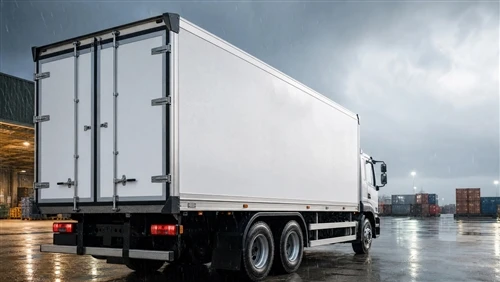
Dry freight box bodies are designed to protect cargo from external conditions while providing a structured loading compartment for commercial transportation. They are widely used for packaged food, consumer goods, industrial products, spare parts, tools, electrical equipment, agricultural products, and general cargo. Unlike open truck beds, an enclosed box body provides continuous protection against rain, dust, road debris, sunlight, and unauthorized access.
When a dry freight box body is supplied through a CKD (Completely Knocked Down) model, the body is divided into individual structural components and subassemblies before international shipment. The components are then assembled at the destination market, either by a local truck body manufacturer, distributor, fleet operator, or dedicated vehicle assembly facility.
This production model becomes particularly valuable in harsh environments. Trucks operating in tropical regions, coastal areas, deserts, mining zones, construction sites, and poorly maintained road networks face substantially higher structural and environmental loads than vehicles operating on controlled urban roads. Moisture, salt, dust, sand, UV radiation, temperature variation, vibration, impact, and repeated loading can all affect body service life.
A durable CKD dry freight box body therefore needs to be engineered as a complete system. Structural strength alone is not enough. The floor, side walls, roof, doors, mounting brackets, fasteners, coatings, seals, drainage paths, and assembly interfaces must work together to maintain cargo protection and structural integrity throughout repeated fleet operation.

Understanding the CKD Dry Freight Box Body Concept
A CKD dry freight box body is supplied in a disassembled configuration rather than as a fully assembled truck body.
Depending on the design, a kit may contain:
Floor frame
Floor panels
Side wall panels
Front wall
Roof panels
Corner posts
Rear door frame
Rear door leaves
Hinges
Locking rods
Door handles
Latches
Mounting brackets
Reinforcement members
Sealing materials
Fasteners
External accessories
The supplier manufactures and inspects these components before packing them for transportation.
At the destination, the components are assembled according to predefined drawings and procedures.
The production flow can therefore be summarized as:
Engineering → Component manufacturing → Surface treatment → Quality inspection → CKD packing → International transportation → Local assembly → Chassis integration → Final inspection
This approach separates component manufacturing from final body assembly.
For regions seeking local assembly capability, this can be useful because the destination facility does not necessarily need to manufacture every structural component from raw materials. Instead, it receives engineered components and focuses on assembly and vehicle integration.
Why Harsh Environments Change the Body Specification
A dry freight body used in a mild urban environment may not require the same specification as one used in a coastal, desert, mining, or tropical environment.
The environmental conditions can affect several parts of the body simultaneously.
Moisture
Continuous humidity and rainfall can accelerate corrosion, particularly around joints, welds, fasteners, and exposed steel edges.
Salt
Coastal environments introduce chloride ions that can accelerate corrosion of unprotected steel surfaces and affect certain material interfaces.
Dust and Sand
Fine particles can enter door gaps and mechanical components. Abrasive dust can increase wear on hinges, locks, rollers, and other moving parts.
UV Radiation
Long-term exposure to sunlight can degrade certain coatings, seals, plastics, and composite materials.
Temperature Variation
Large temperature differences between daytime and nighttime can create repeated thermal expansion and contraction of panels and joints.
Vibration
Poor roads, construction sites, and mining areas can impose continuous dynamic loads on the body structure.
Therefore, the body specification should be based on the operating environment and duty cycle, not simply the nominal cargo capacity.
Structural Architecture of a Durable Box Body
The primary load-bearing architecture generally consists of:
Floor structure + corner posts + side walls + front wall + roof + rear door frame
The floor transfers cargo loads toward the chassis mounting points. The side walls and roof form the enclosed cargo compartment. Corner posts connect major structural sections, while the rear door frame provides a large structural opening.
A robust design should provide predictable load paths.
For example, cargo weight should be transferred through the floor cross members and longitudinal members rather than being concentrated at isolated panel connections.
Similarly, rear-door loads should be transferred through a reinforced door frame instead of relying solely on thin wall panels.
This distinction becomes particularly important when the vehicle operates on rough roads. Dynamic loading can magnify stresses at structural discontinuities.
Floor Design for General and Heavy Cargo
The floor is normally one of the most heavily loaded areas of the box body.
Cargo can create different loading patterns depending on the application.
A truck carrying cartons may experience relatively distributed loading. A palletized logistics truck may experience concentrated loads under pallet feet. A body loaded using a forklift may experience localized wheel loads.
Therefore, floor design should consider both:
Distributed cargo loading
Concentrated loading
Typical floor construction may include longitudinal rails, cross members, floor sheets, reinforcement plates, and chassis mounting interfaces.
For heavy-duty applications, reducing the spacing between cross members can increase floor stiffness. Additional reinforcement can also be provided in forklift traffic zones or high-load areas.
Material selection should consider both strength and weight.
Steel offers high structural stiffness and impact resistance, while aluminum can reduce tare weight. Composite flooring may provide corrosion resistance and lower weight for applications where structural requirements permit its use.
The correct design is therefore not simply "thicker is stronger." It is a controlled combination of material grade, section geometry, reinforcement distribution, and load path.
Side Wall Construction and Impact Resistance
Side walls protect cargo and help define the overall box structure.
Common material choices include:
Painted steel
Galvanized steel
Aluminum
Composite panels
Sandwich panels
Steel panels are suitable where impact resistance and structural strength are important. Aluminum panels can reduce vehicle weight and improve payload efficiency. Composite panels can provide corrosion resistance and low weight.
For harsh applications, another important consideration is repairability.
A truck operating in construction or mining areas may suffer localized side-wall impact. If the wall is constructed as a modular system, a damaged panel can potentially be replaced without dismantling the complete body.
This reduces vehicle downtime and makes maintenance more predictable for fleet operators.
The panel connection method should also be selected according to the expected vibration level. Fasteners, rivets, adhesives, and welded connections each have different structural and maintenance characteristics.
Roof Design for Rain, Heat, and Dust
The roof is continuously exposed to environmental conditions.
In tropical regions, the primary concern may be heavy rainfall and water penetration. In desert climates, high solar radiation and dust are more significant.
A durable roof should provide:
Structural stiffness
Water resistance
UV resistance
Controlled drainage
Secure panel connections
Long-term joint sealing
Roof joints should be designed so that water cannot easily enter the cargo compartment.
At the same time, drainage should be provided so that water does not remain trapped around structural interfaces.
This is important because a sealed joint without proper drainage can still create corrosion problems if water becomes trapped inside a closed structural section.
In hot climates, roof construction can also influence internal cargo temperatures. Although a dry freight body is not a refrigerated body, suitable roof materials and reflective exterior finishes can reduce heat accumulation inside the cargo compartment.
Rear Door Systems in Fleet Applications
The rear door is both a structural opening and a frequently operated mechanical system.
A fleet vehicle may open its rear doors many times every day. This means that hinges, locking rods, handles, latches, and seals experience repeated cycles.
A durable rear door assembly normally includes:
Reinforced door frame
Door leaves
Heavy-duty hinges
Locking rods
Handles
Latches
Rubber or polymer seals
Reinforcement members
Door alignment is critical.
If the rear opening becomes distorted, the consequences may include increased closing force, poor sealing, difficulty engaging the locks, and accelerated hinge wear.
For harsh environments, seals should also be selected according to the expected exposure to dust, water, temperature, and UV radiation.
Wear components should ideally be replaceable without replacing the entire door structure.
Corrosion Protection for Harsh Operating Conditions
Corrosion is one of the main causes of long-term degradation in steel truck bodies.
Potentially aggressive environments include:
Coastal roads
Tropical climates
Industrial areas
Agricultural regions
Mining sites
Salt-exposed roads
High-humidity environments
Several protection methods can be combined.
Galvanized Steel
A zinc coating provides sacrificial corrosion protection and can be used for panels and selected structural components.
Powder Coating
Powder coating provides a relatively durable surface finish when the substrate preparation and curing process are properly controlled.
Primer and Topcoat Systems
Multi-layer paint systems can be selected according to environmental exposure and appearance requirements.
Sealants
Sealants help protect joints from water penetration.
Drainage
Drainage holes and appropriate structural design reduce the risk of water accumulation.
However, coating alone does not solve every corrosion problem. Cut edges, weld areas, fastener interfaces, crevices, and enclosed sections also require attention.
A complete corrosion-control strategy therefore combines material selection, surface treatment, joint design, drainage, sealing, and maintenance.
Dust and Sand Protection
Desert and industrial environments introduce fine particles that can penetrate very small openings.
Common entry points include:
Rear door gaps
Side access doors
Cable openings
Floor joints
Roof interfaces
Hardware mounting points
Dust can contaminate cargo and increase wear in mechanical components.
Door seals should therefore be selected according to the actual environmental conditions.
However, the design should not simply attempt to seal every opening. Water drainage and pressure equalization may also be necessary.
A practical body design balances:
Dust exclusion + water management + mechanical accessibility
This is particularly important for trucks that operate in regions where periodic washing is necessary to remove accumulated dust and mud.
Vibration and Fatigue Resistance
Harsh-road operation creates repeated dynamic loads rather than one-time structural loads.
Over thousands of operating cycles, fatigue can become more important than static strength.
Potential fatigue-sensitive areas include:
Welded joints
Floor cross-member connections
Chassis brackets
Corner posts
Rear door frames
Roof connections
Reinforcement transitions
Good structural design attempts to minimize stress concentrations.
Abrupt section changes should be avoided where they create localized stress. Weld geometry should be appropriate for the expected load. Bolted connections should maintain adequate clamping force.
For a CKD body, the quality of component interfaces is particularly important because assembly occurs after transportation. A structurally sound component can still create problems if hole positions, mating surfaces, or bracket dimensions are inconsistent.
Chassis Mounting and Body Flexibility
The truck chassis is not a perfectly rigid platform.
When the vehicle travels over uneven roads, the chassis can experience torsional movement.
The body mounting system must therefore be designed to transfer vertical and longitudinal loads while accommodating the required chassis movement.
Critical design parameters include:
Mounting bracket position
Bracket geometry
Fastener grade
Bolt diameter
Hole position
Mounting clearance
Chassis frame dimensions
The mounting system should be matched to the actual chassis model.
Using an inappropriate mounting configuration can transfer excessive loads into the body structure and lead to fatigue or deformation.
For fleet programs using multiple chassis models, a modular mounting bracket system can help standardize the main body while adapting the chassis interface.
Material Selection According to the Environment
Different operating environments require different material priorities.
| Operating Environment | Primary Challenge | Key Design Priority |
|---|---|---|
| Coastal | Salt and humidity | Corrosion protection |
| Tropical | Rain and high humidity | Sealing and drainage |
| Desert | Dust, sand, heat | Dust control and UV resistance |
| Mining | Vibration and impact | Structural reinforcement |
| Construction | Impact and rough roads | Floor and wall durability |
| Industrial | Corrosive contaminants | Coating and material compatibility |
| Cold climate | Low temperature and moisture | Sealing and material toughness |
The selection should also consider local repair capabilities.
A material that performs extremely well but cannot be repaired or sourced locally may create long-term maintenance difficulties.
For CKD projects, this consideration is particularly important because the destination market may have different welding, machining, coating, and spare-parts capabilities.
CKD Assembly Process for Dry Freight Bodies
The body should be engineered around a defined assembly sequence.
A typical process can include:
Component receiving → Incoming inspection → Floor assembly → Floor panel installation → Front wall installation → Side wall installation → Roof installation → Rear door installation → Sealing → Chassis mounting → Final inspection
The sequence should reduce unnecessary handling and avoid situations where later components block access to earlier connections.
For larger production volumes, assembly fixtures can be introduced.
Fixtures help control:
Body width
Body length
Corner position
Wall verticality
Door opening dimensions
Roof alignment
This is important because CKD assembly transfers part of the manufacturing responsibility to the destination facility.
The supplier must therefore make the design sufficiently repeatable that different trained operators can achieve similar assembly results.
Dimensional Accuracy in CKD Production
Dimensional accuracy is critical because the body is divided into multiple components before shipment.
Important control dimensions can include:
Floor length
Floor width
Diagonal dimensions
Wall height
Corner post position
Door opening width
Door opening height
Mounting hole location
Roof alignment
For rectangular structures, comparing the two diagonal dimensions provides a practical indication of squareness.
If the floor frame is not square, errors can propagate into wall alignment and rear-door installation.
The purpose of tolerance control is not to eliminate all variation. Instead, critical functional interfaces should receive tighter tolerances while non-critical dimensions can use wider manufacturing tolerances.
This approach controls manufacturing cost without compromising assembly performance.
Packaging CKD Components for International Transportation
Packaging is an important part of the CKD system because the components may travel long distances before assembly.
Large panels can be susceptible to:
Bending
Scratching
Edge damage
Surface contamination
Moisture exposure
Small components can be lost or mixed between assemblies.
Therefore, packaging should include:
Protective separators
Edge protection
Moisture protection
Component labels
Hardware boxes
Controlled stacking
Forklift access
Components should be packed according to the assembly process wherever practical.
For example, hardware required for the rear door can be grouped and labeled separately from floor-frame fasteners.
This reduces the amount of sorting required at the assembly facility.
Quality Control at Two Production Stages
CKD production creates two major quality-control points.
Supplier Factory
Before shipment, the supplier should inspect:
Material specification
Component dimensions
Hole positions
Weld quality
Surface treatment
Component identification
Quantity
Packaging condition
Local Assembly Facility
After assembly, the destination facility should verify:
Overall body dimensions
Squareness
Wall alignment
Door operation
Locking mechanism
Sealing
Chassis mounting
Surface condition
The inspection records should ideally be traceable by production batch or vehicle identification.
This makes it easier to identify whether a problem originated from component manufacturing, transportation, or local assembly.
Maintenance and Repairability
Harsh-environment truck bodies inevitably require maintenance.
The goal should be to minimize downtime and make common repairs straightforward.
Potential wear components include:
Door seals
Hinges
Locking rods
Handles
Latches
Floor panels
Side panels
Fasteners
Protective trims
A modular design allows damaged components to be replaced individually.
For fleet operators, this can be more valuable than maximizing initial structural integration.
For example, replacing one damaged side panel is generally more practical than replacing a complete wall assembly.
The CKD supplier should therefore provide a component coding system and spare-parts list that correspond to the production drawings.
Application of CKD Dry Freight Bodies in Different Industries
A durable dry freight box can support a wide range of fleet applications.
Logistics and Distribution
Distribution fleets require high loading frequency, reliable doors, durable floors, and easy maintenance.
Construction
Construction fleets require stronger panels, reinforced floors, and resistance to vibration, mud, and accidental impact.
Mining Support
Mining-related vehicles can encounter severe dust, vibration, and uneven terrain. Structural reinforcement and corrosion protection are particularly important.
Agriculture
Agricultural transportation may involve moisture, mud, fertilizer exposure, and frequent cleaning. Corrosion resistance and washable surfaces become important.
Municipal Services
Municipal fleets may require customized storage compartments, service doors, electrical equipment, and tool mounting systems.
Industrial Distribution
Industrial products may require reinforced floors, secure locking systems, and specialized internal restraint systems.
The basic CKD architecture can remain standardized while application-specific components are added according to the fleet requirement.
How to Select a CKD Dry Freight Box Body Supplier
Supplier evaluation should cover the complete production process.
Engineering Capability
The supplier should be able to develop detailed drawings, component interfaces, mounting systems, and assembly procedures.
Manufacturing Capability
The supplier should demonstrate consistent fabrication quality across repeated batches.
Material Control
Material grades, thicknesses, coatings, and surface treatments should be controlled and traceable.
Assembly Support
The supplier should provide assembly drawings, component identification, and technical instructions.
Packaging Capability
The supplier should understand container loading and international transportation requirements.
Customization
The body should be adaptable to different chassis, dimensions, payloads, and environmental conditions.
After-Sales Support
Replacement components and technical support should remain available after initial delivery.
A supplier that provides only fabricated panels but cannot support the complete assembly process may create additional work for the destination factory.
From Prototype to Fleet-Level CKD Production
A CKD dry freight body project should ideally move through controlled development stages.
Stage 1: Application Definition
The customer defines:
Chassis
Body dimensions
Payload
Cargo type
Loading method
Road conditions
Climate
Expected operating cycle
Stage 2: Engineering Development
The supplier develops the structural design, materials, interfaces, component breakdown, and assembly sequence.
Stage 3: Prototype Kit
A limited number of CKD kits are produced and shipped to the target market.
Stage 4: Assembly Validation
The local team assembles the body and identifies issues involving tolerances, tools, component identification, or assembly sequence.
Stage 5: Engineering Optimization
The supplier modifies the design based on practical assembly results.
Stage 6: Pilot Fleet
A controlled production batch is placed into actual service.
Stage 7: Mass Production
After validation, regular CKD production can begin.
This process is especially valuable for harsh environments because laboratory assumptions cannot completely replace field operating data.
Conclusion
A CKD dry freight box body designed for harsh environments is a complete structural and production solution rather than a collection of disassembled truck panels.
Its performance depends on the interaction of floor strength, wall construction, roof protection, rear-door durability, chassis mounting, corrosion control, sealing, fatigue resistance, dimensional accuracy, packaging, and local assembly quality.
The environmental specification should be determined by actual operating conditions. Coastal fleets may prioritize corrosion resistance, tropical fleets may require stronger moisture management, desert vehicles may need improved dust protection and UV resistance, while mining and construction fleets may require reinforced structures and greater fatigue resistance.
The CKD model adds another layer of engineering responsibility. Components must not only function correctly after assembly; they must also be dimensionally compatible, clearly identified, efficiently packaged, protected during international transportation, and supported by practical assembly documentation.
For fleet operators and local truck assemblers, the most effective CKD dry freight body is therefore one designed around the entire lifecycle of the vehicle. It should be strong enough for the intended duty cycle, protected against the target environment, straightforward to assemble, practical to repair, and standardized enough to support spare-parts management across multiple vehicles.
When these requirements are integrated into the design from the beginning, CKD dry freight box bodies can provide a reliable way to combine centralized component manufacturing with local truck body assembly while maintaining consistent quality and adapting the final vehicle to demanding regional operating conditions.