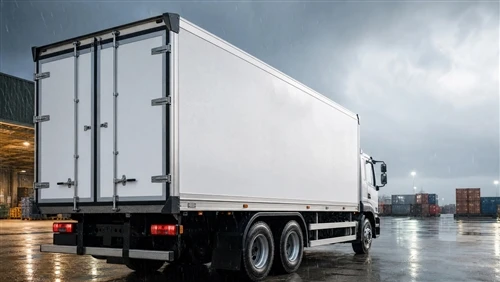
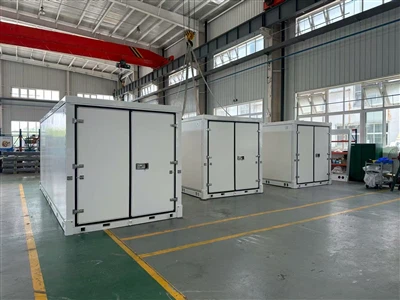
CKD, or Completely Knocked Down, truck body kits are increasingly used in local truck assembly projects where importing fully built truck bodies is inefficient, expensive, or restricted by local regulations. Instead of shipping a complete truck body, manufacturers supply the body as a set of disassembled components or subassemblies. These components are packed for international transportation and then assembled, fitted, finished, and inspected in the destination market.
A CKD truck body kit is therefore more than a collection of replacement parts. It is a production-oriented solution that connects an experienced truck body manufacturer with a local assembly operation. The supplier controls component design, material selection, tooling, fabrication, dimensional accuracy, surface treatment, and packing, while the local partner performs final assembly and, depending on the project, painting, electrical installation, interior fitting, and vehicle integration.
This model is particularly relevant to truck importers, body builders, fleet operators, distributors, government procurement projects, and manufacturers establishing local assembly capacity. It can support different body configurations, including cargo bodies, refrigerated bodies, box bodies, service bodies, mobile workshops, and other commercial vehicle structures.
The technical value of a CKD solution lies in how well the components are designed to become a complete body after transportation. Correct hole positioning, standardized interfaces, controlled dimensions, corrosion protection, assembly sequence, and packaging density all directly affect the final production cost.
What Is a CKD Truck Body Kit?
A CKD truck body kit is a truck body supplied in a disassembled form for local assembly. Instead of transporting a finished body mounted on a vehicle chassis, the supplier separates the body into manageable structural and functional components.
A typical kit may include:
Floor frame or floor panels
Side wall panels
Front wall assembly
Rear door assembly
Roof structure or roof panel
Cross members
Longitudinal members
Corner posts
Door frames
Door hinges and locking systems
Fenders and external accessories
Mounting brackets
Fasteners
Sealing materials
Electrical components where required
Assembly drawings and installation documentation
The exact content depends on the truck model, body type, target market, and degree of local production.
For example, a basic cargo body project may use a steel floor frame, aluminum or galvanized side panels, steel corner posts, rear doors, and mechanical locking components. A refrigerated truck body requires a different construction approach because thermal insulation, panel bonding, door sealing, refrigeration interfaces, and internal hygienic surfaces become important.
Therefore, CKD design should begin with the final vehicle application, rather than simply dividing an existing finished truck body into separate parts.
Why CKD Assembly Is Used in Local Truck Manufacturing
One of the primary reasons for adopting CKD assembly is to change the logistics structure of the project.
Shipping a completed truck body consumes considerable container volume because the body has a large external envelope but relatively low packing density. A properly engineered CKD kit allows multiple components to be nested, stacked, or packaged together.
This can improve:
Container utilization
International freight efficiency
Local assembly capability
Customization flexibility
Replacement-part availability
Localization of production
For markets with import duties or policies favoring local manufacturing, CKD assembly can also provide a pathway toward higher local content.
The economic model can be divided into two manufacturing stages:
Centralized component production → International transportation → Local assembly → Final vehicle integration
The centralized supplier handles processes requiring specialized equipment or established production capabilities, while the destination facility performs operations that are easier to localize.
This is especially useful when the destination market has sufficient labor and workshop infrastructure but lacks specialized tooling for producing truck body components at consistent quality.
CKD Is Different from SKD
CKD and SKD are often discussed together, but their assembly requirements are different.
SKD, or Semi Knocked Down, normally involves larger preassembled modules. The supplier may ship major assemblies such as completed side walls, roof modules, doors, or floor structures.
CKD, by contrast, generally involves a higher degree of disassembly. The local factory receives individual components and smaller subassemblies and performs a larger proportion of the final assembly.
| Item | CKD | SKD |
|---|---|---|
| Degree of disassembly | High | Medium |
| Local assembly workload | Higher | Lower |
| Packing efficiency | Generally higher | Moderate |
| Local labor requirement | Higher | Lower |
| Customization at destination | High | Moderate |
| Local manufacturing potential | Higher | Moderate |
| Initial assembly complexity | Higher | Lower |
| Suitable for localization | Strong | Moderate |
The correct model depends on local production capacity, labor cost, import regulations, available tooling, and expected production volume.
A CKD project should not be selected simply because it provides better packing efficiency. The local facility must have the technical ability to complete the assembly accurately.
Main Components of a Truck Body CKD Kit
The structure of the kit should be defined according to the load path and assembly sequence.
Floor Structure
The floor is one of the most important structural sections because it transfers cargo loads into the chassis mounting system.
Depending on the application, the floor may contain:
Longitudinal rails
Cross members
Floor panels
Mounting brackets
Chassis connection points
Reinforcement plates
Steel is commonly used where high structural strength is required. Aluminum can be selected where weight reduction is important.
The supplier should control flatness, hole position, weld dimensions, and mounting interfaces because errors in the floor structure can propagate into the side walls and rear doors.
Side Wall System
Side walls can be constructed from steel sheets, aluminum sheets, composite panels, or sandwich panels.
The selection depends on:
Payload requirements
Corrosion environment
Thermal requirements
Weight targets
Surface appearance
Local repair capability
For general cargo transportation, lightweight panel systems can reduce vehicle tare weight. For heavy-duty applications, reinforced steel structures may provide better resistance to impact and deformation.
Front Wall
The front wall closes the cargo compartment and must maintain dimensional stability under vehicle vibration and cargo movement.
Depending on the body design, it may include reinforcement profiles and additional impact-resistant structures.
Rear Door
The rear door is a functional component that experiences repeated opening and closing cycles. A commercial truck body kit may include:
Door leaves
Hinges
Lock rods
Locking handles
Latches
Seals
Door frames
Reinforcement members
Door alignment is particularly important because dimensional errors can cause uneven sealing, excessive closing force, or water ingress.
Roof Structure
The roof can be manufactured from metal sheets, aluminum panels, composite panels, or insulated sandwich panels.
For refrigerated applications, the roof becomes part of the thermal envelope and must maintain continuity of insulation and sealing.
Material Selection for CKD Truck Bodies
Material selection directly affects the weight, strength, corrosion resistance, fabrication method, and assembly cost of the body.
Common materials include:
Carbon Steel
Carbon steel provides high structural strength and relatively low material cost. It is suitable for heavy-duty structural components such as frames, posts, brackets, and reinforcement members.
However, corrosion protection is necessary, particularly for vehicles operating in humid, coastal, or tropical environments.
Galvanized Steel
Galvanized steel provides improved corrosion resistance through its zinc coating. It can be advantageous for panels and structural components exposed to moisture.
Aluminum
Aluminum offers a lower density than steel and can reduce body weight. This is useful where payload capacity and fuel efficiency are important.
However, aluminum requires appropriate joining methods and must be carefully considered at interfaces with steel components to reduce the risk of galvanic corrosion.
Composite Materials
Composite panels can combine relatively low weight with corrosion resistance and good surface quality. Sandwich construction can also provide thermal insulation.
This makes composite construction particularly relevant for refrigerated and temperature-controlled truck bodies.
Engineering the Kit for Assembly
The most important technical issue in a CKD project is not simply component fabrication. It is assembly compatibility.
Each component must be designed with a clear interface.
For example:
Floor frame → side walls → front wall → roof → rear door → chassis mounting
The sequence should minimize rework and prevent previously installed components from blocking access to later fastening points.
Engineering documentation should normally define:
Component numbers
Assembly sequence
Fastener specifications
Torque requirements
Welding requirements
Adhesive specifications
Sealant application
Hole positions
Reference dimensions
Inspection points
A well-designed kit should allow trained technicians to understand which components connect together without relying on trial-and-error fitting.
Dimensional Accuracy and Tolerance Control
Dimensional control becomes particularly important when components are manufactured in one country and assembled in another.
A finished truck body may involve hundreds of interfaces. If several components each contain small dimensional deviations, the accumulated error can become significant.
Critical dimensions should therefore be identified during engineering.
Typical control items include:
Overall body length
Overall body width
Body height
Floor diagonal
Door opening dimensions
Mounting hole position
Corner post verticality
Panel flatness
Frame squareness
For example, controlling the diagonal dimensions of a rectangular floor structure helps verify squareness. If the two diagonals differ significantly, subsequent wall and roof installation may become difficult.
The objective is not to eliminate every manufacturing tolerance. Instead, tolerances should be allocated according to functional requirements.
Surface Treatment and Corrosion Protection
Truck bodies are frequently exposed to rainwater, road salt, mud, dust, UV radiation, and cleaning chemicals.
Therefore, surface treatment should be specified according to the operating environment.
Common processes include:
Galvanizing
Powder coating
Electrophoretic coating
Primer and topcoat systems
Anodizing for aluminum components
Protective sealants
For export CKD kits, corrosion protection also matters during transportation. Components may remain packed inside containers for extended periods and may encounter condensation caused by temperature changes.
Packaging should therefore protect treated surfaces from abrasion and trapped moisture.
Packaging and Container Loading
One major advantage of CKD assembly is the ability to reduce transportation volume.
However, compact packing must not damage components.
Packaging engineering should consider:
Component stacking direction
Maximum package weight
Forklift access
Moisture protection
Edge protection
Surface protection
Fastener organization
Identification labels
Small components such as hinges, brackets, fasteners, locks, and seals should be packed in clearly identified accessory boxes rather than mixed into larger packages.
For international projects, component identification should remain consistent with the assembly drawings.
For example:
TB-FR-001 → Front frame
TB-SW-L-001 → Left side wall
TB-RD-001 → Rear door
Such coding reduces the possibility of assembly mistakes when the destination facility receives thousands of components.
Local Assembly Requirements
A CKD project does not necessarily require a highly automated factory.
A basic assembly facility may require:
Covered workshop space
Lifting equipment
Assembly tables
Torque tools
Drilling equipment
Riveting tools
Welding equipment where applicable
Sealant application tools
Electrical tools
Inspection gauges
The required equipment depends on how much work is performed locally.
For a bolt-and-rivet-based body design, local assembly can be relatively straightforward. If significant welding, panel fabrication, or machining is required, the facility needs additional equipment and trained personnel.
This creates an important distinction between assembly localization and manufacturing localization.
A project may initially use CKD components manufactured overseas and gradually introduce local production of brackets, panels, floor components, or accessories.
Quality Control Across Two Production Locations
CKD projects involve at least two quality-control environments:
Supplier factory → Destination assembly facility
The supplier must control component quality before shipment, while the local assembly plant must verify the completed body.
Incoming inspection may include:
Quantity verification
Component identification
Surface condition
Critical dimensions
Hole position
Fastener quantity
Packaging condition
Final inspection may include:
Body dimensions
Door operation
Locking mechanism operation
Panel alignment
Chassis mounting
Water sealing
Surface condition
Electrical function where applicable
This two-stage quality system prevents the destination factory from discovering component problems only after assembly has started.
CKD Solutions for Different Truck Applications
The technical configuration of a CKD kit changes according to vehicle application.
Cargo Trucks
Cargo bodies prioritize structural strength, payload capacity, ease of loading, and resistance to impact.
Refrigerated Trucks
Refrigerated bodies require insulated panels, thermal bridges control, sealed joints, insulated doors, and compatible refrigeration equipment interfaces.
Mobile Workshops
Mobile workshop bodies need stronger internal mounting systems for tools, generators, compressors, cabinets, and other equipment.
Service Trucks
Service bodies may require customized compartments, drawers, racks, electrical systems, and external access doors.
Special-Purpose Vehicles
Emergency response, municipal service, construction support, and utility vehicles may require project-specific structures.
For these applications, CKD should be treated as a configuration platform, allowing the same basic manufacturing system to support different body layouts.
How to Evaluate a CKD Truck Body Supplier
Buyers should evaluate more than the price of the component package.
Important technical criteria include:
Engineering capability
Material traceability
Dimensional control
Welding quality
Surface treatment
Assembly documentation
Packaging engineering
Spare-part support
Customization capability
Production consistency
A supplier capable of producing a single prototype is not necessarily capable of supporting a long-term CKD assembly program.
For commercial projects, buyers should examine whether the supplier can maintain consistent component geometry across repeated production batches.
From Prototype to Mass CKD Production
A reliable CKD project normally develops through several stages.
Stage 1: Vehicle and Body Definition
The buyer specifies the chassis, payload, dimensions, application, local regulations, and required body configuration.
Stage 2: Engineering Development
The supplier develops drawings, component structures, interfaces, materials, and assembly procedures.
Stage 3: Prototype Kit
A limited number of kits are manufactured and assembled at the destination facility.
Stage 4: Assembly Validation
Technicians identify installation problems, tolerance issues, missing tools, and unclear instructions.
Stage 5: Engineering Modification
Components and assembly documentation are adjusted based on practical assembly feedback.
Stage 6: Pilot Production
A controlled batch is produced to verify manufacturing consistency and logistics.
Stage 7: Mass Production
Once the process is stable, regular CKD kits can be supplied according to the agreed production schedule.
This staged approach reduces the risk of scaling an unvalidated design.
Conclusion
A CKD truck body kit is fundamentally a distributed manufacturing solution. The body components are manufactured and prepared at a specialized supplier facility, transported efficiently in knock-down form, and converted into finished truck bodies through local assembly.
Its effectiveness depends on several interconnected factors: structural design, material selection, dimensional tolerance, component identification, assembly sequence, corrosion protection, packaging density, and local workshop capability.
For importers and manufacturers developing local truck assembly projects, the key question is therefore not simply whether a supplier can provide truck body parts. The more important question is whether the supplier can deliver a complete, assembly-ready production system in which every component, interface, document, and packaging unit is designed for efficient local integration.
When properly engineered, the CKD model can reduce transportation volume, support local assembly, facilitate product customization, and create a practical transition from imported truck bodies toward localized commercial vehicle production. For markets seeking to balance international component sourcing with domestic assembly capability, CKD truck body systems provide a scalable approach to commercial vehicle body manufacturing.