Mobility Is Redefining Structural Materials
Across transportation, modular construction, emergency infrastructure, and special-purpose vehicles, one trend is increasingly visible: structures are no longer static. They are designed to move, to be relocated, to be assembled and disassembled, and to operate under constant dynamic loading.
This shift fundamentally changes what "good material" means.
For decades, solid boards-plywood, MDF, aluminum plates, steel sheets-were the default solution for walls, floors, partitions, and load-bearing panels. Their logic was simple: more thickness equals more strength. In stationary buildings, this approach worked well enough.
Mobile structures operate under a very different logic. They experience vibration, acceleration, braking forces, cornering stress, wind pressure, thermal cycling, and repeated loading and unloading. In these conditions, material performance is not defined by thickness alone, but by how efficiently structure, geometry, and material work together.

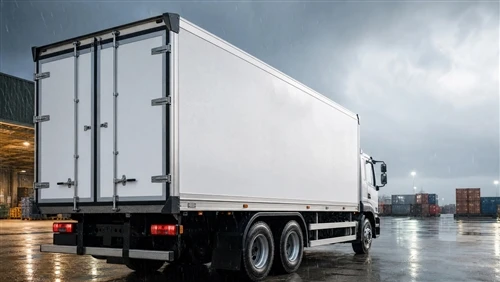
Mobile Storage Container
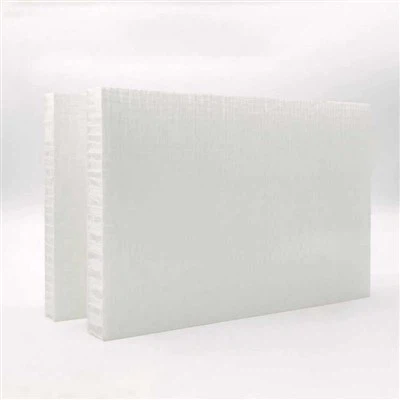
HolyPan®

Portable Toilet Trailer Body
Strength from Geometry, Not Mass
Solid boards rely on material volume to resist bending and deformation. If a panel bends too easily, the common solution is to make it thicker or denser. This increases stiffness, but it also increases weight in direct proportion.
Honeycomb panels use a different principle. They separate the structural roles:
- Face sheets handle tensile and compressive stress
- The honeycomb core resists shear and stabilizes the faces
- The overall geometry creates high bending stiffness with minimal material
This layered structure means that stiffness is not tied linearly to weight. By increasing core thickness without significantly increasing material mass, honeycomb panels achieve high flexural rigidity at a fraction of the weight of solid boards.
In mobile structures, where every kilogram affects energy consumption, payload, and regulatory limits, this structural efficiency becomes a decisive advantage.
Instead of asking "How thick should the board be?" designers begin asking "How should the structure work?"
Weight as a Design Constraint, Not a Side Effect
In mobile engineering, weight is not a secondary parameter. It is one of the primary design constraints.
Every additional kilogram:
Increases fuel or energy consumption
Reduces available payload
Affects braking distance and handling
Accelerates wear on suspension and chassis systems
Solid boards contribute directly to what engineers often call "dead weight"-mass that provides structure but no functional output.
Honeycomb panels, by contrast, shift the weight-to-performance relationship. They deliver structural performance with significantly lower mass. This allows:
Higher payload within the same gross weight limit
Improved driving stability due to lower inertia
More freedom to integrate insulation, equipment, or interior systems
In mobile architecture, lighter structures do not just save fuel-they enable better overall system design.
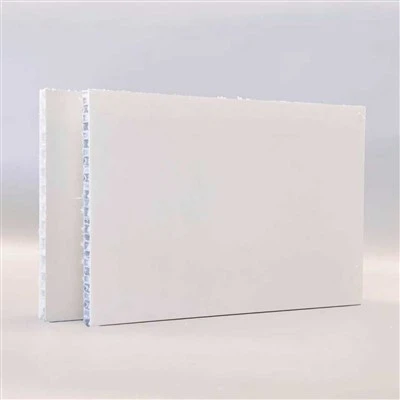
UDPan®

HexMetal
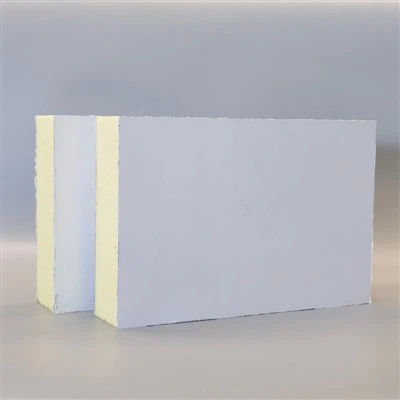
CFRT XPS Panel
Designing for Motion, Not Stillness
Mobile structures live in motion. Even when parked, they are often subject to wind, vibration from nearby traffic, and temperature variation. When moving, they face:
Continuous road vibration
Shock loads from uneven surfaces
Torsion during cornering
Long-term fatigue from cyclic stress
Solid boards tend to distribute stress across the entire material volume. Over time, this can lead to:
Warping and permanent deformation
Microcracks that grow under repeated stress
Loss of flatness affecting assembly and sealing
Honeycomb panels behave differently. Their internal structure breaks large stresses into many smaller load paths. The core stabilizes the face sheets, limiting local deformation and distributing shear forces across a wider area.
This makes honeycomb panels particularly well-suited to dynamic load environments, where durability is not just about maximum strength, but about how a structure survives millions of small stresses.
Fatigue Resistance and Long-Term Stability
Fatigue is often the hidden enemy of mobile structures. A panel may meet all static strength requirements and still fail after years of vibration and cyclic loading.
Solid boards often show fatigue through:
Progressive bending
Edge cracking
Loss of stiffness near fastening points
Honeycomb panels reduce these risks through structural separation of functions:
The face sheets carry bending stress
The core absorbs shear and stabilizes geometry
Local damage is less likely to propagate across the entire panel
This results in more stable long-term geometry. In applications like vehicle bodies, mobile cabins, and container-based systems, maintaining dimensional stability is essential for:
Door and window alignment
Sealing and insulation performance
Modular interface accuracy
Fatigue resistance becomes not just a safety issue, but a functional requirement.
Manufacturing and Assembly Logic in Mobile Systems
Mobile structures are often built under constraints very different from traditional buildings:
Limited assembly space
Need for modularization
Frequent customization
Time-sensitive installation
Honeycomb panels align well with these realities.
They are:
Easier to handle due to lower weight
Faster to position and fix
Compatible with adhesive bonding, riveting, and mechanical fastening
Suitable for CNC cutting, routing, and edge treatment
Solid boards, especially in thick formats, increase labor intensity. Handling requires more manpower or lifting equipment, and installation precision becomes harder as panel size and weight increase.
In modular mobile systems-such as container houses, mobile clinics, and special vehicles-lighter panels reduce assembly time and lower the risk of installation errors.
Transportation and Logistics Implications
Material choice affects not only the final structure but also the supply chain behind it.
When using solid boards:
Fewer panels can be loaded per truck
Transport costs increase per square meter
Handling damage risk rises due to weight and rigidity
Honeycomb panels improve logistics efficiency:
Higher volume per shipment
Lower fuel consumption per delivered unit
Easier loading and unloading
For manufacturers serving international or remote markets, logistics efficiency directly affects competitiveness. Material that is structurally efficient is also logistically efficient.
Environmental and Energy Performance
Mobile structures increasingly operate in environments where energy efficiency is critical:
Electric vehicles
Off-grid mobile units
Emergency shelters with limited power supply
Weight reduction improves energy performance across all these scenarios.
Honeycomb panels also allow better integration of insulation layers and functional skins. Their structure makes it easier to combine:
Structural performance
Thermal insulation
Acoustic control
Fire-resistant or weather-resistant surfaces
Solid boards, while strong, often require additional layers to meet thermal or acoustic requirements, increasing both weight and complexity.
The layered logic of honeycomb panels fits naturally into multi-functional wall and floor systems.
Adaptability to Complex Design Requirements
Mobile structures rarely follow simple rectangular logic. They often include:
Curved walls or roofs
Tapered sections
Integrated equipment cavities
Access panels and service openings
Honeycomb panels are more adaptable to these requirements. They can be:
CNC-machined into complex shapes
Combined with composite skins
Reinforced locally where needed
Customized in thickness and core type
Solid boards resist such flexibility. Complex shaping increases waste, processing time, and material cost. Heavy panels also limit design freedom, as every curve and angle increases handling difficulty.
Designers of mobile structures increasingly prioritize materials that support design, rather than constrain it.
Maintenance, Repair, and Lifecycle Behavior
Maintenance is a major cost driver in mobile systems.
Solid boards often fail in ways that are difficult to repair:
Warped panels require full replacement
Cracks often spread through the material
Water damage affects the entire board
Honeycomb panels tend to localize damage:
Surface damage can be repaired without replacing the core
Local core crushing can be reinforced without removing the whole panel
Edge repairs restore structural function effectively
This localized repairability aligns with the operational reality of mobile units, which are often serviced in the field under time pressure.
Lifecycle performance is not only about initial strength, but about how easily a structure can be kept functional over years of use.
Typical Applications Driving the Shift
The adoption of honeycomb panels is visible across multiple mobile structure sectors:
Recreational vehicles and caravans
Truck bodies and trailers
Container-based housing
Mobile medical and laboratory units
Emergency and disaster-relief shelters
Special-purpose vehicles and equipment cabins
In each case, the design priorities are similar:
Low weight
High stiffness
Durability under motion
Ease of assembly and repair
Solid boards still appear in some low-cost or low-performance segments, but as performance expectations rise, honeycomb structures increasingly become the standard.
Engineering Language Is Changing
One of the most telling signs of this transition is in how engineers and designers talk about materials.
Traditional language focused on:
Thickness
Density
Hardness
Modern mobile-structure engineering focuses on:
Strength-to-weight ratio
Bending stiffness per kilogram
Fatigue life under cyclic load
Structural efficiency
Honeycomb panels fit naturally into this newer language. They are not defined primarily by how heavy or thick they are, but by how efficiently they turn material into performance.
This shift in language reflects a deeper shift in design philosophy: from static to dynamic, from mass-based strength to structure-based strength.
From Static Construction to Mobile Architecture
Mobile structures are no longer treated as temporary or secondary buildings. They are used as:
Long-term housing
Commercial spaces
Medical facilities
Industrial workstations
As their roles expand, their engineering standards rise. Materials once acceptable for simple, stationary use are now being re-evaluated under dynamic conditions.
Honeycomb panels represent not just a new material option, but a new way of thinking about structure in motion. They embody the idea that performance comes from intelligent design, not just from adding more material.