Thermal Exposure as a Structural Design Constraint
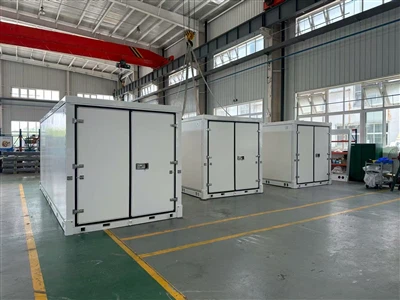
In many engineered systems, thermal conditions are no longer secondary environmental factors but primary design constraints. Honeycomb core materials used in composite sandwich panels are increasingly deployed in applications where temperature variation, heat flux, and long-term thermal exposure directly influence structural performance. Transport bodies, mobile units, industrial enclosures, energy systems, and logistics equipment all experience complex thermal profiles that challenge the dimensional stability and mechanical reliability of core materials.
Thermal stability, in this context, refers not only to resistance against melting or degradation at elevated temperatures, but also to the ability of a honeycomb core to maintain geometry, mechanical properties, and interfacial integrity under sustained or cyclic thermal loading. As lightweight structures replace traditional solid constructions, understanding how honeycomb cores behave under thermal stress becomes essential for safe, durable, and predictable design.

Defining Thermal Stability in Honeycomb Core Systems
Thermal stability in honeycomb core materials encompasses multiple interrelated performance aspects rather than a single material property. From an engineering perspective, it can be evaluated across several dimensions:
Dimensional stability under steady-state and transient temperature changes
Retention of mechanical properties such as shear modulus and compressive strength
Resistance to creep, relaxation, and long-term deformation
Compatibility with face sheets and adhesive systems under thermal expansion mismatch
Stability of cell geometry under thermal gradients
Unlike monolithic materials, honeycomb cores rely heavily on geometry to deliver performance. As a result, even modest thermal distortion at the cell level can propagate into macroscopic panel deformation or bonding stress concentrations.
Heat Transfer Characteristics of Honeycomb Structures
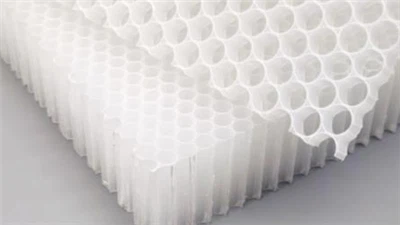
Honeycomb cores exhibit distinct thermal behavior due to their cellular architecture. The presence of air-filled or gas-filled cells significantly alters heat transfer mechanisms compared to solid cores.
Key characteristics include:
Reduced through-thickness thermal conductivity due to trapped air
Directional heat flow influenced by cell orientation
Localized thermal gradients across cell walls
These properties are advantageous in applications requiring thermal insulation, but they also introduce non-uniform temperature distribution within the core. Under rapid heating or cooling, differential expansion between cell walls and enclosed air can induce localized stresses that challenge structural stability.
Understanding heat transfer pathways within the honeycomb is therefore a prerequisite for predicting thermal deformation and long-term reliability.
Material Classes Used in Honeycomb Cores
Thermal stability varies significantly depending on the base material used for the honeycomb structure. Common material categories include:
Thermoplastic Honeycomb Cores
Thermoplastic materials such as polypropylene (PP), polyethylene terephthalate (PET), and polycarbonate (PC) are widely used due to their processability and impact resistance. Their thermal behavior is characterized by:
Moderate heat resistance relative to metals
Gradual softening rather than abrupt failure
Sensitivity to long-term exposure near glass transition temperatures
While thermoplastics offer resilience against thermal shock, prolonged exposure to elevated temperatures can reduce stiffness and accelerate creep, particularly under load.
Thermoset-Based Honeycomb Cores
Thermoset materials provide higher thermal resistance and dimensional stability but are less tolerant of impact and cyclic deformation. Their rigid molecular networks resist softening, yet they can be more susceptible to microcracking under thermal cycling.
Metallic Honeycomb Cores
Aluminum and stainless-steel honeycomb cores exhibit excellent high-temperature performance and minimal creep within operational limits. However, their high thermal conductivity and thermal expansion mismatch with polymer face sheets introduce integration challenges in composite panels.


Dimensional Stability and Thermal Expansion Behavior
Thermal expansion is a critical parameter in honeycomb core design. Unlike solid materials, expansion in honeycomb cores is influenced by both material properties and cell geometry.
Factors affecting thermal expansion include:
Cell wall material coefficient of thermal expansion (CTE)
Cell size and wall thickness
Bonding constraints from face sheets
In constrained sandwich panels, the honeycomb core cannot expand freely. This restraint leads to internal stress accumulation, particularly at the skin-core interface. Over time, repeated thermal cycling can degrade adhesive bonds or initiate microbuckling in thin cell walls.
Designers must therefore evaluate effective CTE at the panel level rather than relying solely on bulk material data.
Thermal Cycling and Fatigue Effects
Many honeycomb core applications involve repeated temperature fluctuations rather than constant exposure. Transport bodies, for example, experience daily heating and cooling cycles driven by ambient conditions, solar radiation, and operational heat sources.
Thermal cycling introduces fatigue mechanisms that differ from mechanical fatigue:
Progressive loss of shear stiffness
Accumulation of micro-deformation at cell junctions
Gradual degradation of adhesive layers
Honeycomb cores with stable geometry and consistent cell wall thickness tend to distribute thermal strain more evenly, reducing localized damage. Conversely, irregular or poorly controlled cell structures can amplify thermal fatigue effects over time.
Creep and Long-Term Thermal Deformation
At elevated temperatures, especially near the softening range of thermoplastic materials, creep becomes a dominant concern. Creep in honeycomb cores manifests as gradual cell wall deformation under sustained load, leading to panel thickness reduction and loss of stiffness.
Key contributors to thermal creep include:
Sustained compressive or shear loads
Prolonged exposure to moderately elevated temperatures
Insufficient core density or wall thickness
In sandwich panels used for floors, walls, or roofs, creep-induced deformation can compromise dimensional tolerances and lead to secondary issues such as surface waviness or joint misalignment.
Proper material selection and conservative design margins are essential in applications where long-term thermal exposure is unavoidable.
Interaction Between Honeycomb Core and Face Sheets
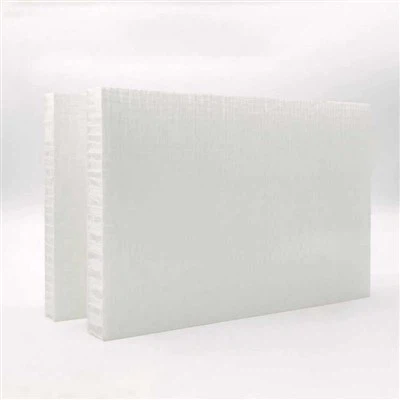
Thermal stability cannot be assessed in isolation from the face sheets bonded to the honeycomb core. Composite panels behave as integrated systems, and mismatches in thermal expansion or stiffness can significantly influence performance.
Potential interaction challenges include:
Differential expansion causing interfacial shear stress
Face sheet warping due to asymmetric heating
Delamination driven by cyclic thermal strain
Face sheet material selection, thickness balance, and adhesive flexibility all play critical roles in accommodating thermal movement without structural degradation.
Influence of Manufacturing Quality on Thermal Performance
Manufacturing precision directly affects the thermal stability of honeycomb cores. Variations in cell size, wall thickness, or bonding quality can lead to uneven thermal response across the panel.
Key manufacturing-related factors include:
Consistency of cell geometry
Uniform bonding between cell walls and skins
Control of residual stresses introduced during processing
High-quality honeycomb cores exhibit predictable thermal behavior, enabling engineers to model and manage thermal effects with greater confidence.
Environmental Factors and Combined Thermal Stress
Thermal stability is often challenged by combined environmental factors such as moisture, UV exposure, and chemical contact. Elevated temperatures can accelerate moisture diffusion or chemical reactions within polymer-based cores, compounding degradation mechanisms.
In logistics and transport applications, for instance, panels may be exposed simultaneously to heat, humidity, and mechanical vibration. Honeycomb core materials must therefore maintain stability under multi-factor stress environments rather than isolated thermal conditions.
Design Strategies for Enhancing Thermal Stability
Engineers employ several strategies to improve the thermal stability of honeycomb core systems:
Selecting core materials with appropriate glass transition or melting temperatures
Optimizing cell geometry to balance stiffness and compliance
Designing symmetric panel layups to minimize warping
Incorporating adhesives with sufficient thermal flexibility
These strategies emphasize system-level optimization rather than reliance on a single high-temperature material solution.
Expanding Role of Honeycomb Cores in Thermally Demanding Applications
As lightweight composite structures expand into more thermally demanding environments, honeycomb core materials are being engineered with increasingly refined thermal performance profiles. Advances in polymer chemistry, hybrid core designs, and precision manufacturing continue to push the operational limits of these materials.
Rather than being viewed as passive fillers, honeycomb cores are now recognized as active structural elements whose thermal behavior directly influences the reliability, durability, and performance of composite panels. In applications where weight efficiency must coexist with thermal resilience, the stability of the honeycomb core remains a defining factor in overall system success.