Acoustic and Vibrational Challenges in Modern Engineered Structures
Noise and vibration management has become a critical engineering discipline across transportation, logistics equipment, mobile structures, and industrial enclosures. As systems become lighter, faster, and more modular, traditional mass-based noise suppression strategies-such as thick steel plates or solid wood boards-are increasingly misaligned with performance, energy, and durability requirements.
In vehicles, transport bodies, mobile units, and containerized systems, unwanted noise and vibration originate from multiple sources: engine excitation, road-induced vibration, aerodynamic flow, mechanical resonance, and structural coupling between components. These excitations propagate through panels, frames, and joints, often amplifying rather than attenuating sound and vibration when structural design is not optimized.
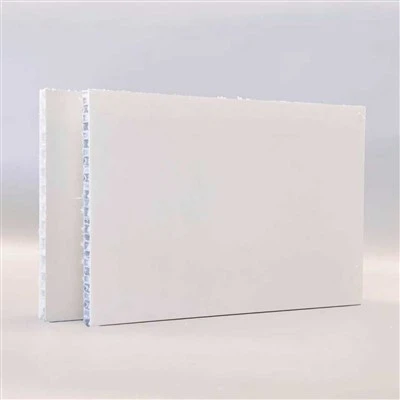
Composite sandwich panels, particularly those incorporating honeycomb or cellular cores, have emerged as an effective structural-acoustic solution. Rather than relying on mass alone, these panels address noise and vibration through material architecture, internal damping, and impedance mismatch, offering a fundamentally different control mechanism compared to monolithic materials.
UDPan®
FRP XPS Panel

Structural-Acoustic Interaction in Panel Systems
Noise and vibration control cannot be treated as separate phenomena. In most engineered structures, vibration is the transmission mechanism by which noise is generated, radiated, and amplified. Panels act as both structural load-bearing elements and acoustic radiators.
When a panel vibrates, it converts mechanical energy into airborne sound. The efficiency of this conversion depends on several parameters:
Panel stiffness and bending behavior
Mass distribution across the panel thickness
Internal damping characteristics
Boundary conditions and mounting interfaces
Solid panels tend to exhibit well-defined resonance frequencies. Once excited near these frequencies, vibration amplitudes increase significantly, resulting in pronounced noise radiation. Increasing thickness or mass can shift these resonances, but often at the cost of higher weight and reduced system efficiency.
Composite sandwich panels introduce a different dynamic response. By separating structural skins with a lightweight core, they alter bending stiffness, modal distribution, and energy dissipation pathways in ways that are highly favorable for noise and vibration mitigation.
Composite Sandwich Panel Architecture and Its Acoustic Implications
A typical composite sandwich panel consists of two high-stiffness face sheets bonded to a lightweight core. While this configuration is often discussed in terms of strength-to-weight ratio, its acoustic and vibrational behavior is equally significant.
Key architectural features influencing noise and vibration control include:
Skin-core separation, which increases bending stiffness without proportional mass increase
Core shear compliance, which absorbs and redistributes vibrational energy
Interface bonding layers, which introduce viscoelastic damping
Material heterogeneity, which disrupts coherent wave propagation
In contrast to solid panels that transmit vibration as relatively uniform bending waves, sandwich panels cause partial reflection, attenuation, and mode splitting within the structure. This reduces the efficiency with which mechanical vibration is converted into airborne noise.
Honeycomb and Cellular Cores as Vibration Modifiers
Among composite cores, honeycomb and cellular structures play a particularly important role in vibration control. Their geometry introduces controlled anisotropy and distributed compliance, which affects both structural dynamics and acoustic radiation.
From a vibration standpoint, honeycomb cores:
Reduce panel-level resonance amplification by increasing modal density
Convert bending energy into shear deformation within the core
Limit long-range vibration transmission across large panel surfaces
Unlike foam cores, which rely primarily on material damping, honeycomb cores combine geometric energy dispersion with material-level dissipation. This makes them especially effective in applications where low-frequency vibration is a concern, such as transport vehicles and mobile platforms.
The cell size, wall thickness, and orientation of the honeycomb structure can be tuned to target specific vibration frequency ranges, allowing engineers to design panels that suppress problematic resonances without over-engineering the system.
Damping Mechanisms in Composite Panel Systems
Damping is central to effective noise and vibration control. Composite panels inherently provide multiple damping mechanisms that are absent or limited in solid materials.
These mechanisms include:
Interfacial Damping
The adhesive layers bonding skins to the core act as viscoelastic interfaces. Under cyclic loading, these layers dissipate energy through internal friction, reducing vibration amplitude over time.
Core Shear Damping
As the panel bends, the core experiences shear deformation. This deformation consumes energy, particularly in thermoplastic or hybrid core systems where polymer behavior contributes to loss factors.
Material Mismatch Damping
Differences in stiffness, density, and wave impedance between skins and core create partial wave reflections, preventing efficient energy transmission across the panel thickness.
Together, these effects produce a broadband damping response that is difficult to achieve with homogeneous materials, especially under varying operational conditions.
Noise Radiation Reduction Through Structural Design
Noise reduction is often approached through absorptive linings or added insulation. Composite panels provide an alternative strategy: reducing noise radiation at the source by controlling panel vibration.
Key advantages include:
Lower surface velocity under excitation, reducing sound radiation efficiency
Reduced coincidence frequency effects, which often cause noise spikes in thin solid panels
Improved acoustic isolation between compartments in multi-zone structures
In logistics vehicles, for example, composite panels used in sidewalls and roofs can significantly reduce interior noise levels caused by road vibration and airflow, without requiring additional acoustic liners that add weight and complexity.
Application-Specific Benefits in Transport and Mobile Systems
Noise and vibration control using composite panels is particularly valuable in mobile and transport-related applications, where structural efficiency and operational comfort must coexist.
Commercial Transport Bodies
In dry freight and refrigerated vehicles, composite panels reduce structure-borne noise while maintaining thermal performance. Lower vibration transmission also protects sensitive cargo and reduces fatigue damage to mounted equipment.
Special-Purpose Vehicles
Emergency vehicles, mobile laboratories, and command units benefit from quieter interiors, improved communication clarity, and reduced operator fatigue, all enabled by structurally integrated noise control.
Containerized and Modular Units
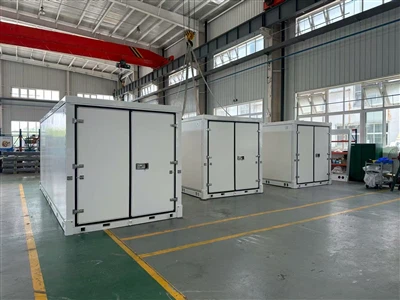
In containerized power systems, shelters, and offshore modules, composite panels limit vibration coupling between machinery and enclosure walls, improving both acoustic comfort and structural longevity.
Influence of Boundary Conditions and Panel Integration
The noise and vibration performance of composite panels is strongly influenced by how they are integrated into the overall structure. Edge treatments, mounting systems, and joint design can either enhance or undermine the inherent advantages of composite construction.
Improperly constrained edges can introduce localized resonances, while overly rigid connections may bypass panel damping by transmitting vibration directly through frames. Optimized integration strategies include:
Elastic or semi-isolated mounting interfaces
Reinforced but damped edge closures
Distributed fastening systems that avoid point loading
When panel design and system integration are treated as a unified engineering problem, composite panels become an active element of vibration control rather than a passive enclosure.
Long-Term Performance Under Cyclic Loading
Noise and vibration control is not only a matter of initial performance. In real-world operation, panels are exposed to millions of vibration cycles, temperature variations, and environmental stresses.
Composite panels demonstrate strong long-term stability in this context due to:
Reduced stress concentration compared to solid panels
Lower susceptibility to fatigue cracking
Stable damping properties over extended service life
By minimizing vibration-induced damage accumulation, composite panels indirectly improve noise performance over time, as structural integrity and bonding quality are preserved.
Design Trade-Offs and Engineering Considerations
While composite panels offer clear advantages, effective noise and vibration control requires careful engineering choices. Core selection, skin material, thickness ratios, and bonding systems must be aligned with the dominant excitation frequencies and operational environment.
Over-stiff panels may shift resonance into problematic frequency ranges, while overly compliant designs may compromise structural requirements. The most effective solutions emerge from a balanced approach that integrates structural analysis, acoustic modeling, and real-world testing.
Evolving Role of Composite Panels in NVH Engineering
Noise, Vibration, and Harshness (NVH) engineering is increasingly shaping material selection and structural design across industries. Composite sandwich panels are no longer viewed solely as lightweight structural elements, but as multifunctional systems that simultaneously address strength, durability, thermal control, and acoustic performance.
As regulations, user expectations, and operational demands continue to rise, the role of composite panels in integrated noise and vibration control strategies is expected to expand further, particularly in transport, logistics, and mobile infrastructure sectors.
Rather than adding noise control as an afterthought, composite panel technology enables engineers to embed acoustic performance directly into the structural DNA of modern systems.