Why Procurement Engineers Often Compare the Wrong Parameters
When requesting quotations for fiberglass sheets, buyers frequently specify only panel dimensions and thickness. For example: 2440 mm × 1220 mm × 5 mm, White surface, Flat sheet. However, these specifications describe geometry rather than laminate construction.
Two fiberglass sheets with identical dimensions can differ significantly in weight, stiffness, chemical resistance, and fabrication behavior because the internal reinforcement structure and manufacturing process are different.
Before evaluating price, procurement engineers should understand how fiberglass sheet manufacturing determines the final material properties.

A Fiberglass Sheet Is Not a Single Material
Unlike steel plate or aluminum sheet, a fiberglass sheet is a composite structure built from multiple materials. Each component performs a different function, and material properties are created by the interaction between these components rather than by a single raw material.
A typical laminate contains:
The First Manufacturing Decision: Fiber Architecture
The internal arrangement of fiberglass determines how forces travel through the laminate. This is one of the largest differences between low-cost and engineered fiberglass sheets.
Random Fiber Structure
Chopped strand mat contains short fibers distributed randomly in multiple directions.
*Applications: Equipment covers, utility panels, and non-structural housings. Distributes loads evenly but limits maximum stiffness.
Woven Fiber Structure
Woven roving aligns fibers into organized patterns, allowing forces to travel along continuous fiber paths.
*Applications: Transportation panels, machinery covers, and structural wall panels where load support is required.
Multi-Axial Structure
Fabrics place fibers at multi-directional orientations including 0°, 90°, +45°, and -45° positions.
*Applications: Large composite panels where distributing bending and torsional loads is critical to maintaining dimensional stability.
The Second Manufacturing Decision: Resin Selection
The same fiberglass reinforcement can behave differently depending on the resin used to bind it. The resin fills spaces between fibers and forms the continuous phase of the laminate.
Polyester Resin
Commonly selected for rain exposure, humidity, and mild industrial contamination. Typical applications include wall cladding and equipment enclosures.
Vinyl Ester Resin
Specified when panels encounter sulfuric acid vapor, chloride-rich environments, or wastewater treatment chemicals. It significantly slows chemical penetration.
Epoxy Resin
Used when the laminate must support structural loads while maintaining dimensional stability. Found in vehicle body structures, composite machine components, and structural panels.
Why Manufacturing Method Changes Mechanical Properties
Fiberglass sheets are formed by impregnating reinforcement with liquid resin and then curing the structure. How well this process occurs determines final laminate quality.
Hand Lay-Up
The operator manually places fiberglass layers and distributes resin. Offers excellent sizing and dimensional flexibility with a low tooling investment, though minor variations in thickness consistency can occur.
Vacuum Infusion
Vacuum pressure pulls resin uniformly through dry reinforcement layers. The vacuum effectively removes trapped air and optimizes fiber wet-out, making it ideal for low-void industrial components.
Compression Molding
The laminate cures under controlled pressure inside a closed mold system. This structural compression strictly compacts reinforcement layers, establishing reliable thickness repeatability.
Material Properties Are Created During Manufacturing
Many buyers treat material properties as fixed values. In reality, manufacturing dynamics form those exact properties:
Flexural Strength & Water Absorption
Flexural Strength: Depends on fiber orientation, content, and laminate thickness. Increasing thickness alone does not guarantee structural performance.
Water Absorption: Moisture enters laminates via micro-pathways. Imperfect fiber wet-out or incomplete curing cycles can accelerate long-term migration.
Surface Hardness & Impact Resistance
Surface Hardness: Linked to resin chemistry, exact curing cycles, and the integrated surface layer design parameters.
Impact Resistance: Structural loads must transfer evenly across fibers and resin. A brittle system risks cracking even when reinforcement remains sound.
Why Weight Can Reveal Manufacturing Quality
Experienced procurement engineers often request laminate weight details before requesting pricing arrays. Weight provides information regarding resin content, fiber volume fraction, and structural filler deployment.
For example, two 10 mm fiberglass sheets may present completely different weight metrics. The heavier panel does not automatically provide greater mechanical strength.
Additional weight can originate from unoptimized resin buildup or structural fillers rather than load-bearing reinforcement layers. Understanding total weight ratios allows buyers to compare actual construction quality instead of simple geometric envelopes.
Questions Buyers Should Ask Before Requesting a Quote
Instead of asking a general sizing question like "What is the price of a 5 mm fiberglass sheet?", a more useful engineering inquiry outlines exact system environments:
How HolyCore Designs Fiberglass Sheets Around Project Requirements
At HolyCore, fiberglass sheet development begins with operating conditions rather than standard stock specifications. Engineering teams closely evaluate panel span limitations, custom installation methods, environmental exposure risks, load conditions, and target weights.
Advanced Composite Optimization:
Based on these inputs, HolyCore determines the optimal reinforcement architecture, resin system selection, laminate thickness profiles, and surface construction strategies.
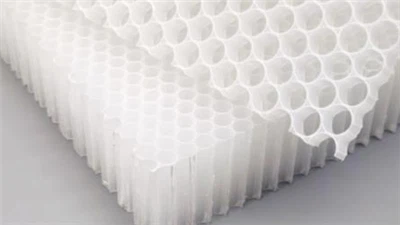
For projects requiring reduced weight, fiberglass skins can be combined with PP honeycomb cores. In this configuration, the fiberglass laminate transfers surface loads while the honeycomb core separates the skins and increases bending stiffness. This approach allows panel structures to be engineered around actual project conditions instead of relying on a single laminate design for every application.
Conclusion
Fiberglass sheet performance is not determined by thickness alone. Manufacturing decisions such as fiber architecture, resin selection, curing method, and laminate construction directly influence strength, weight, chemical resistance, dimensional stability, and service life. For procurement engineers, understanding these relationships helps prevent inaccurate supplier comparisons and allows fiberglass sheets to be specified according to operating requirements rather than basic dimensions. The most useful quotation is not generated from thickness alone but from a complete understanding of how the panel will function within the final system.