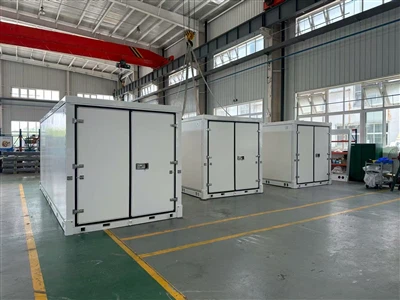
Honeycomb composite panels have become one of the most important lightweight structural materials used across modern industries. Originally developed for aerospace engineering, honeycomb structures are now widely adopted in transportation, logistics, construction, marine engineering, industrial manufacturing, and modular structures. Their popularity stems from a unique ability to deliver high strength, excellent stiffness, and low weight simultaneously, making them ideal for applications where performance and efficiency are critical.
Unlike traditional solid materials such as steel plates, plywood boards, or solid plastic panels, honeycomb composites rely on a sandwich-structure design that maximizes structural efficiency while minimizing material usage. The honeycomb core creates a cellular internal framework that supports outer structural skins, enabling panels to withstand significant loads while remaining lightweight.
Today, manufacturers and engineers increasingly rely on honeycomb composite panels to solve structural challenges across a wide range of industrial environments. This article explores real-world applications of honeycomb composite panels, highlighting how these advanced materials improve performance, durability, and operational efficiency in different sectors.
Understanding Honeycomb Composite Panel Technology
Before exploring specific applications, it is useful to understand how honeycomb composite panels function structurally.
A typical honeycomb composite panel consists of three main layers:
Top structural skin
Honeycomb core
Bottom structural skin
The honeycomb core is composed of a network of hexagonal cells made from lightweight materials such as aluminum, polypropylene, aramid fiber, or thermoplastic composites. This cellular structure acts as a rigid internal framework that maintains separation between the two outer skins.
The outer skins, often made from materials like fiberglass reinforced plastic (FRP), aluminum sheets, or thermoplastic composites, provide tensile and compressive strength.
Together, these layers form a structure that behaves similarly to an I-beam, where the skins resist bending forces while the core distributes shear loads and stabilizes the structure.
This configuration delivers several key benefits:
extremely high strength-to-weight ratio
excellent bending stiffness
strong impact resistance
reduced material consumption
improved energy absorption
These characteristics explain why honeycomb composite panels are increasingly used across many industrial sectors.
Transportation and Commercial Vehicles
One of the most widespread uses of honeycomb composite panels is in the transportation industry. Commercial vehicles such as trucks, trailers, and specialized logistics equipment require materials that combine durability with lightweight performance.
Honeycomb panels are commonly used in:
truck body sidewalls
trailer panels
cargo compartment floors
interior partitions
vehicle roofs
By replacing heavier materials such as steel sheets or plywood panels, honeycomb composite structures significantly reduce vehicle weight. This weight reduction improves fuel efficiency and payload capacity, allowing transport companies to carry more cargo without exceeding weight limits.
In addition, honeycomb panels provide strong resistance to vibration, impact, and moisture, which are common challenges during long-distance transportation.
Refrigerated transport vehicles also benefit from honeycomb composite panels integrated with insulation materials, helping maintain stable temperatures for cold-chain logistics.
Logistics and Cargo Containers
Another major industrial application of honeycomb panels is in logistics infrastructure and cargo handling systems.
Shipping containers, cargo enclosures, and transport equipment require materials that are strong enough to protect goods while remaining lightweight to optimize transport efficiency.
Honeycomb composite panels are frequently used for:
cargo container walls
logistics storage units
transport crates and protective packaging
modular logistics shelters
equipment enclosures used in shipping operations
The structural strength of honeycomb panels ensures cargo protection during transportation, while their low weight helps reduce overall shipping costs.
Additionally, thermoplastic honeycomb cores provide excellent moisture resistance, preventing structural damage in humid or marine environments.
Modular Construction and Building Systems
In recent years, honeycomb composite panels have gained popularity in modular construction and prefabricated building systems.
Modern modular architecture requires materials that are both lightweight and structurally reliable. Honeycomb panels are well suited for this purpose because they offer high stiffness while reducing the structural load on building frameworks.
Typical construction applications include:
interior wall systems
partition panels
prefabricated modular units
architectural cladding panels
lightweight flooring structures
These panels simplify installation because large prefabricated sections can be assembled quickly on-site, reducing construction time and labor requirements.
Additionally, honeycomb composite panels can be manufactured with decorative surfaces, allowing them to function as both structural and aesthetic building elements.
Marine and Offshore Engineering
The marine industry has long adopted honeycomb composite materials due to their excellent resistance to corrosion and water exposure.
Traditional marine construction materials such as steel and solid wood often suffer from corrosion, water absorption, and structural degradation over time. Honeycomb composite panels address these issues by providing durable structures that resist moisture and saltwater exposure.
Common marine applications include:
boat interior structures
yacht cabin panels
marine flooring systems
offshore platform enclosures
ship interior partitions
Because honeycomb panels are lightweight, they also contribute to improved vessel performance by reducing overall weight, which can improve fuel efficiency and maneuverability.
Aerospace and Aviation
Honeycomb composite technology was originally developed for the aerospace industry, where weight reduction and structural efficiency are critical.
Aircraft manufacturers rely heavily on honeycomb structures to reduce mass while maintaining strength.
Applications in aviation include:
aircraft interior panels
cargo compartment floors
cabin partitions
overhead storage compartments
structural reinforcement panels
In aerospace engineering, even small weight reductions can significantly improve fuel efficiency and flight performance. Honeycomb composite panels provide an ideal solution because they maintain high stiffness while minimizing structural mass.
Industrial Equipment and Machinery Enclosures
Heavy-duty industrial equipment often requires protective enclosures that are strong enough to withstand impacts while remaining lightweight for easy installation and maintenance.
Honeycomb composite panels are widely used in industrial manufacturing for:
machinery housings
equipment enclosures
industrial control cabinets
safety barriers and protective panels
machine guard structures
These panels protect equipment from environmental damage while providing strong resistance to vibration and mechanical stress.
Additionally, composite panels can be engineered with sound-dampening properties, helping reduce noise levels in industrial facilities.
Furniture and Interior Design
Although honeycomb composite panels are commonly associated with heavy-duty industries, they are also widely used in furniture and interior design.
Furniture manufacturers increasingly use honeycomb panels to produce lightweight yet strong structural components such as:
office desks
cabinet panels
shelving systems
exhibition displays
retail fixtures
The lightweight nature of honeycomb panels allows designers to create large surfaces without excessive weight, making furniture easier to transport and install.
Decorative surface finishes can also be applied to composite skins, enabling designers to achieve a wide range of aesthetic styles.
Renewable Energy and Infrastructure
Another emerging application area for honeycomb composite panels is in renewable energy systems and infrastructure projects.
These panels are used in:
wind turbine component structures
solar panel mounting platforms
protective enclosures for energy equipment
lightweight structural elements in renewable installations
Because honeycomb panels resist corrosion and environmental exposure, they perform well in outdoor environments where energy systems must operate reliably for long periods.
Advantages That Drive Industrial Adoption
The widespread adoption of honeycomb composite panels across industries can be attributed to several key advantages.
High Strength-to-Weight Ratio
Honeycomb structures provide exceptional stiffness with minimal material mass, making them ideal for lightweight engineering.
Excellent Impact Resistance
The cellular structure distributes mechanical forces across many cells, improving resistance to impact damage.
Moisture and Corrosion Resistance
Thermoplastic and aluminum honeycomb materials resist water absorption and corrosion, ensuring durability in harsh environments.
Thermal and Acoustic Performance
Honeycomb structures can improve insulation and sound absorption when combined with appropriate skins and core materials.
Manufacturing Efficiency
Large composite panels simplify assembly processes and support modular construction techniques.
Future Trends in Honeycomb Composite Applications
As industries continue to prioritize efficiency, sustainability, and lightweight engineering, honeycomb composite panels are expected to become even more widely used.
Future developments may include:
recyclable thermoplastic composite panels
integrated smart materials with embedded sensors
hybrid composite cores combining foam and honeycomb structures
improved fire-resistant honeycomb materials
These innovations will further expand the role of honeycomb panels in advanced industrial engineering.
Conclusion
Honeycomb composite panels have evolved from specialized aerospace materials into versatile structural solutions used across numerous industries. Their unique combination of lightweight construction, high strength, impact resistance, and environmental durability makes them ideal for applications ranging from transportation and logistics to construction, marine engineering, industrial equipment, and furniture manufacturing.
As engineering challenges continue to demand stronger yet lighter materials, honeycomb composite technology will remain a key component of modern industrial design. By enabling efficient structures that reduce weight while maintaining performance, honeycomb panels are helping industries build more sustainable, cost-effective, and innovative solutions for the future.