The transport and logistics industry has undergone significant transformation in recent years as manufacturers and operators seek solutions that improve efficiency, durability, and operational performance. Lightweight construction, energy efficiency, structural reliability, and thermal management have become central priorities for modern transport equipment. As a result, advanced composite materials-particularly honeycomb sandwich panels-are increasingly replacing traditional materials such as plywood, steel sheets, and solid plastics.
Among the companies contributing to this technological shift, Holycore Composite Materials has developed a range of engineered honeycomb panel solutions designed specifically for transport and logistics applications. By combining thermoplastic honeycomb core technology with reinforced composite skins and specialized panel structures, Holycore panels deliver a unique balance of strength, lightweight performance, durability, and environmental resistance.
This article examines the key characteristics that make Holycore panels well suited for transport and logistics systems, highlighting the structural advantages, material properties, and practical benefits that these composite panels offer across a wide range of applications.
The Growing Importance of Lightweight Structural Materials
Weight reduction has become one of the most important goals in transportation engineering. Whether for long-haul trucks, refrigerated transport vehicles, cargo trailers, or logistics containers, reducing structural mass can significantly improve operational efficiency.
Traditional construction materials often present limitations. Steel provides strength but increases weight. Plywood is relatively lightweight but can suffer from moisture damage and limited durability. Solid plastic panels offer corrosion resistance but lack the structural stiffness required for many heavy-duty applications.
Honeycomb composite panels address these limitations through a sandwich structure design that maximizes strength while minimizing weight. This structural principle has made honeycomb panels widely used in aerospace, automotive engineering, and increasingly in logistics equipment.
Holycore has adapted this technology for transport and logistics applications by developing composite panel systems optimized for durability, insulation, and structural performance.
Advanced Honeycomb Core Structure
One of the most defining features of Holycore panels is the thermoplastic honeycomb core that forms the internal structure of the panel.
The honeycomb structure consists of a network of hexagonal cells made from lightweight thermoplastic materials, typically polypropylene (PP). These cells create a rigid internal framework that maintains separation between the outer skins of the panel.
This geometry provides several mechanical advantages.
First, the honeycomb structure distributes loads across many interconnected cells, preventing stress from concentrating in a single point. This improves structural integrity under both static and dynamic loads.
Second, the core structure allows panels to maintain high bending stiffness while using minimal material. By increasing the distance between the outer skins, the panel gains structural rigidity without significantly increasing weight.
Finally, the honeycomb configuration offers excellent energy absorption properties, helping panels withstand impact forces and vibrations commonly encountered during transport operations.
These structural characteristics are essential in logistics systems where materials must endure constant loading, unloading, road vibration, and environmental exposure.
Lightweight Construction and Improved Payload Efficiency
One of the primary reasons transport manufacturers choose honeycomb composite panels is their exceptional strength-to-weight ratio.
Holycore panels provide structural performance comparable to traditional materials while significantly reducing overall mass. For commercial transport vehicles, this weight reduction translates directly into operational benefits.
Lighter vehicle structures allow operators to:
Increase payload capacity within legal weight limits
Reduce fuel consumption for long-distance transport
Improve acceleration and braking performance
Lower operating costs over the vehicle's lifetime
These advantages are particularly important for logistics companies that operate large fleets of vehicles, where even small improvements in efficiency can result in substantial cost savings.
In electric transport platforms, lightweight construction becomes even more critical because reducing vehicle mass can extend battery range and improve energy efficiency.
Excellent Impact Resistance and Structural Durability
Transport and logistics environments expose materials to significant mechanical stress. Panels must withstand vibration during long-distance travel, sudden impacts during cargo handling, and repeated loading cycles.
Holycore panels are designed to provide strong impact resistance and structural durability.
The combination of reinforced composite skins and honeycomb core structure allows panels to absorb mechanical energy while distributing stress across the panel surface. This prevents localized damage and reduces the likelihood of structural failure.
In addition, thermoplastic honeycomb cores demonstrate good resilience under repeated loading conditions. The cellular structure can absorb shocks and vibrations without losing structural integrity.
This durability is particularly valuable for applications such as:
truck body panels
cargo trailer walls
logistics container structures
equipment enclosures used in transportation
By maintaining structural strength over extended periods of use, honeycomb composite panels help reduce maintenance costs and extend the service life of transport equipment.
Moisture Resistance and Environmental Stability
Transport systems frequently operate in harsh environmental conditions. Materials may be exposed to rain, humidity, road salt, temperature fluctuations, and chemical cleaning agents.
Unlike wood-based materials such as plywood, thermoplastic honeycomb panels do not absorb water. The polypropylene core structure is inherently resistant to moisture, preventing issues such as swelling, rot, or structural degradation.
Additionally, composite skins used in Holycore panels provide further protection against environmental exposure. These skins can resist corrosion, chemicals, and UV radiation depending on the selected material formulation.
This environmental durability makes honeycomb panels well suited for outdoor transport equipment and logistics structures that must maintain performance under demanding conditions.
Thermal Insulation Performance
Another important requirement in logistics is thermal management, particularly in refrigerated transport systems and cold-chain logistics.
Honeycomb panels can contribute to thermal insulation due to the air trapped within their cellular structure. Air has low thermal conductivity, which helps reduce heat transfer across the panel.
Holycore further enhances thermal performance by integrating insulation materials such as foam cores or insulating layers into composite panel designs. These hybrid panels combine structural reinforcement with high thermal resistance.
Applications that benefit from this capability include:
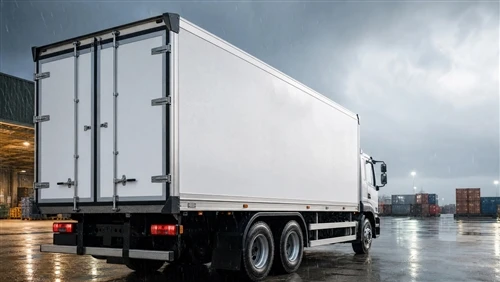
refrigerated truck bodies
cold-chain shipping containers
temperature-controlled storage units
insulated logistics enclosures
Maintaining stable internal temperatures is essential for transporting perishable goods, pharmaceuticals, and temperature-sensitive products. Honeycomb composite panels provide the structural support needed while helping to preserve thermal efficiency.
Design Flexibility and Customization
Another advantage of Holycore panels is their design flexibility. Because honeycomb composite panels can be manufactured with different core densities, skin materials, thicknesses, and surface finishes, they can be tailored to meet specific engineering requirements.
Customization options may include:
varying panel thickness to achieve desired stiffness
selecting different skin materials for impact resistance or appearance
integrating insulation layers for thermal applications
adding decorative or protective surface finishes
This flexibility allows transport equipment manufacturers to design panels that meet both structural and aesthetic requirements.
For example, certain logistics vehicles or modular transport units may require panels with interior decorative finishes or easy-to-clean surfaces. Honeycomb composite technology makes these combinations possible without compromising structural performance.
Simplified Manufacturing and Assembly
Honeycomb composite panels also contribute to manufacturing efficiency.
Because panels can be produced as large prefabricated components, they simplify assembly processes for transport equipment manufacturers. Large structural surfaces such as vehicle sidewalls or container panels can be installed quickly, reducing fabrication time and labor costs.
Panelized construction also enables modular design approaches. Transport equipment can be assembled from standardized composite panels that integrate structural support, insulation, and surface finishes into a single component.
This integration reduces the number of separate materials required in construction and simplifies maintenance or repair operations.
Sustainability and Environmental Benefits
Sustainability considerations are becoming increasingly important in transportation and manufacturing industries.
Thermoplastic honeycomb panels offer several environmental advantages.
First, the lightweight nature of composite panels helps reduce fuel consumption in transport vehicles, which lowers greenhouse gas emissions over time.
Second, many thermoplastic materials used in honeycomb cores are recyclable, supporting circular material strategies and reducing waste.
Third, the long service life of durable composite panels reduces the need for frequent replacements, minimizing material consumption across the lifecycle of transport equipment.
These environmental benefits make honeycomb composite panels an attractive option for companies seeking to meet sustainability goals while maintaining high performance standards.
Applications Across the Transport and Logistics Industry
Because of their versatility, Holycore honeycomb panels are used in a wide range of transport and logistics applications.
Typical uses include:
truck body panels and trailer walls
cargo container structures
refrigerated transport systems
logistics equipment enclosures
modular transport units
protective interior panels for transport vehicles
In each of these applications, the combination of lightweight strength, durability, and insulation performance provides significant operational advantages.
Conclusion
The growing demand for lightweight, durable, and efficient materials has made honeycomb composite panels an essential solution for the transport and logistics industry. Through advanced thermoplastic honeycomb core technology and engineered composite panel designs, Holycore provides panel systems that address the key challenges faced by modern transportation equipment.
Holycore panels combine several critical advantages, including lightweight construction, high structural strength, impact resistance, environmental durability, and thermal insulation performance. These characteristics allow manufacturers and logistics operators to improve efficiency, reduce operating costs, and extend the service life of their equipment.
As transportation systems continue to evolve-driven by electrification, sustainability goals, and increasing global logistics demands-advanced composite materials like honeycomb panels will play an even greater role in enabling next-generation transport solutions.