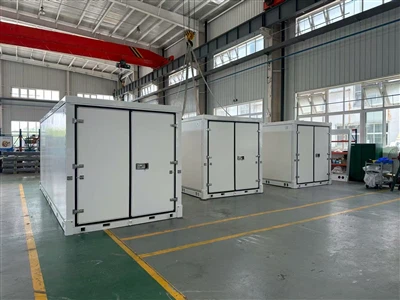
Lightweight composite structures have become a defining element of modern engineering across transportation, logistics, construction, and industrial manufacturing. As industries continue to pursue higher structural efficiency, improved thermal management, and greater durability, advanced composite materials-particularly honeycomb sandwich panels-have emerged as a key solution. Among the manufacturers contributing to this technological evolution, Holycore Composite Materials has developed a wide range of honeycomb panel systems designed to enhance both thermal insulation performance and impact resistance in demanding applications.
By integrating advanced thermoplastic honeycomb cores with engineered skin materials and specialized composite structures, Holycore solutions offer a balanced combination of lightweight strength, structural stability, and environmental resilience. These characteristics make honeycomb panels increasingly valuable in applications such as refrigerated transport vehicles, logistics equipment, modular building systems, industrial enclosures, and heavy-duty fabrication.
This article explores how Holycore's composite technologies improve thermal performance, structural durability, and impact resistance, while also highlighting the design principles and material advantages that make honeycomb panels suitable for high-performance engineering environments.
The Growing Demand for High-Performance Composite Panels
Modern engineering projects often require materials that simultaneously meet several demanding criteria:
High mechanical strength
Lightweight construction
Thermal insulation capability
Impact resistance
Long-term environmental durability
Cost-efficient manufacturing
Traditional materials such as plywood, steel sheets, and solid plastics often struggle to meet all of these requirements simultaneously. For example, steel offers strength but adds weight, while foam panels provide insulation but lack structural stiffness.
Honeycomb composite panels address these limitations through their sandwich-structure design, allowing manufacturers like Holycore to deliver multifunctional material systems that combine strength, insulation, and durability.
Understanding Honeycomb Composite Structures
Honeycomb composite panels consist of three fundamental structural components:
Top structural skin
Honeycomb core
Bottom structural skin
The honeycomb core acts as a lightweight internal framework, maintaining separation between the two skins. This configuration dramatically increases bending stiffness while keeping overall material weight low.
The structural principle is similar to an I-beam, where the skins carry tensile and compressive loads while the core stabilizes the structure and distributes shear forces.
Key advantages of honeycomb panel construction include:
High strength-to-weight ratio
Excellent energy absorption capability
Effective thermal insulation when combined with insulating materials
Reduced material usage and structural mass
Improved dimensional stability
Holycore has refined this structural concept through advanced thermoplastic honeycomb technology and specialized composite panel designs.
Holycore Thermoplastic Honeycomb Technology
Holycore focuses on thermoplastic honeycomb core systems, particularly those based on polypropylene (PP) materials. Thermoplastic honeycomb structures offer several benefits compared with traditional metal honeycomb cores:
Lightweight Structural Efficiency
Polypropylene honeycomb cores provide excellent stiffness while maintaining extremely low density. This makes them ideal for applications where structural strength must be achieved without increasing system weight.
Moisture and Chemical Resistance
Unlike wood-based panels or certain foam materials, thermoplastic honeycomb cores resist water absorption and chemical degradation. This durability is particularly valuable in transportation and industrial environments where exposure to humidity, cleaning agents, or chemicals is common.
Recyclability and Sustainability
Thermoplastic materials can often be recycled, supporting circular manufacturing strategies and reducing environmental impact.
Process Flexibility
Thermoplastic honeycomb cores can be integrated with various skin materials, insulation layers, and surface treatments, enabling customized panel solutions tailored to specific performance requirements.
Improving Thermal Performance with Holycore Panels
Thermal insulation is a critical factor in many engineering applications, especially those involving temperature-controlled environments such as refrigerated transport, cold storage logistics, or insulated modular structures.
Holycore enhances thermal performance through several key design approaches.
Honeycomb Structure and Air Entrapment
The cellular geometry of honeycomb cores naturally traps air within its hexagonal cells. Since air is a poor thermal conductor, this structure contributes to improved thermal resistance compared with solid materials.
Multi-Layer Composite Construction
Holycore panels can incorporate insulation materials such as:
XPS (extruded polystyrene)
PET foam
other thermoplastic insulation cores
These materials are combined with honeycomb reinforcement layers to create panels that provide both structural strength and high insulation performance.
Reduced Thermal Bridging
Traditional metal frames or solid materials often allow heat to transfer easily through structural connections. Honeycomb composite panels reduce this effect by minimizing continuous conductive pathways through the panel structure.
Applications Requiring Thermal Performance
Holycore honeycomb panels are widely used in environments where thermal stability is essential, including:
refrigerated truck bodies
cold-chain transport containers
insulated logistics enclosures
modular building systems
equipment housings requiring temperature control
In these applications, maintaining a consistent internal temperature while preserving structural strength is critical for operational efficiency.
Enhancing Impact Resistance in Composite Panels
Impact resistance is another important performance requirement for industrial and transport applications. Panels may experience sudden mechanical shocks during handling, loading operations, road transport, or industrial usage.
Holycore composite panels improve impact resistance through several structural characteristics.
Energy Absorption of Honeycomb Geometry
The honeycomb core structure distributes impact forces across multiple cell walls, allowing the panel to absorb energy rather than transmitting concentrated stress to a single point.
This energy absorption capability reduces the likelihood of catastrophic structural failure.
Reinforced Skin Materials
Holycore panels often incorporate reinforced skins such as fiberglass-reinforced thermoplastic sheets. These skins provide high surface toughness and protect the underlying honeycomb structure from damage.
Improved Load Distribution
When external forces strike the panel surface, the skins spread the load across the honeycomb core. This prevents localized crushing and enhances the panel's ability to withstand repeated mechanical stresses.
Structural Recovery and Durability
Because thermoplastic honeycomb structures exhibit good elasticity, they can tolerate certain levels of deformation without permanent damage. This characteristic contributes to long-term durability in dynamic environments.
Holycore Panel Solutions for Industrial Applications
Holycore offers several product categories designed to enhance thermal and impact performance across different industries.
HolyPan Structural Honeycomb Panels
HolyPan panels combine polypropylene honeycomb cores with fiberglass-reinforced skins to create strong, lightweight structural panels.
Key features include:
high bending stiffness
moisture resistance
strong impact tolerance
corrosion resistance
long service life
These panels are commonly used in transportation equipment, truck bodies, trailer panels, and modular structures.
Insulated Composite Honeycomb Panels
Holycore also manufactures composite panels integrating insulation layers with honeycomb cores.
These panels provide:
structural reinforcement
thermal insulation capability
lightweight construction
dimensional stability
Typical applications include refrigerated logistics equipment, cold-storage facilities, and insulated industrial enclosures.
Decorative and Functional Honeycomb Panels
In addition to structural panels, Holycore produces honeycomb panels with specialized surface finishes designed for interior applications.
Examples include panels with:
wood-grain surfaces
metallic decorative finishes
stone-like composite textures
These panels allow manufacturers to combine structural performance with aesthetic surface treatments, particularly in high-end vehicles, modular interiors, or architectural structures.
Benefits for Transport and Logistics Systems
The transport and logistics industry increasingly relies on honeycomb composite panels to improve operational efficiency.
Holycore solutions contribute to:
Vehicle Weight Reduction
Lighter structural panels reduce overall vehicle weight, improving fuel efficiency and increasing payload capacity.
Improved Cold-Chain Performance
Insulated honeycomb panels maintain consistent internal temperatures in refrigerated transport vehicles.
Enhanced Durability
Resistance to moisture, corrosion, and impact helps transport equipment withstand demanding operational environments.
Simplified Assembly
Panelized structures allow faster manufacturing and maintenance compared with traditional construction materials.
Sustainability Advantages
In addition to performance benefits, thermoplastic honeycomb panels offer environmental advantages.
Reduced Material Consumption
Because honeycomb structures use minimal material to achieve high stiffness, they reduce raw material requirements.
Recyclable Thermoplastic Materials
Many thermoplastic components can be recycled at the end of their service life.
Lower Transportation Emissions
Lightweight transport structures reduce fuel consumption and associated carbon emissions.
These factors make honeycomb composite panels attractive to industries pursuing sustainable manufacturing strategies.
Future Developments in Honeycomb Composite Technology
As advanced composite materials continue to evolve, honeycomb panel systems are expected to play an even larger role in engineering applications.
Emerging trends include:
hybrid composite sandwich structures
integration of smart sensors within panels
improved fire resistance technologies
enhanced recycling methods for thermoplastic composites
lightweight solutions for electric transport platforms
Manufacturers like Holycore are actively exploring these developments to expand the capabilities of honeycomb composite materials.
Conclusion
Honeycomb composite panels offer a powerful combination of lightweight strength, thermal insulation, and impact resistance, making them highly suitable for modern engineering applications. Through advanced thermoplastic honeycomb technology and engineered composite structures, Holycore provides panel solutions that address the demanding requirements of transportation, logistics, modular construction, and industrial fabrication.
By enhancing both thermal performance and structural durability, Holycore honeycomb panel systems help manufacturers reduce weight, improve energy efficiency, and extend the service life of equipment and structures. As industries continue to prioritize high-performance materials, honeycomb composite solutions will remain an essential component of next-generation lightweight engineering systems.