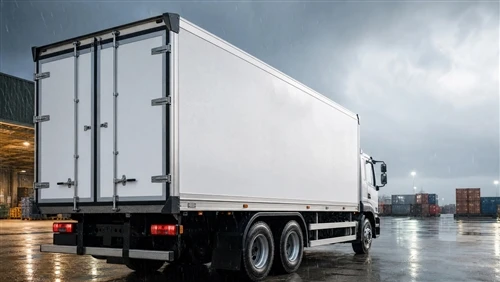
Transport Bodies Under Pressure to Become Lighter
Across logistics, public transport, construction vehicles, and special-purpose fleets, transport body design is facing a structural turning point. Rising fuel costs, stricter emission regulations, electric vehicle range limits, and increasing payload expectations are all forcing manufacturers to rethink how weight is distributed and justified.
Traditionally, transport bodies-truck boxes, trailers, containers, service vehicles, and mobile equipment units-were built around conservative safety margins. Extra thickness, heavier frames, and dense materials were used to "guarantee strength." This logic worked in a time when fuel was cheap and regulatory pressure was low.
Today, every kilogram is audited. Weight is no longer an invisible engineering variable; it is a business variable that affects operating cost, legal compliance, system reliability, and even market competitiveness.
Lightweight engineering has therefore become a core design philosophy, not an optional optimization step.
Weight as a System-Level Design Parameter
In transport engineering, weight affects more than just fuel consumption. It directly influences:
Payload capacity
Acceleration and braking distance
Tire and suspension wear
Energy use in electric and hybrid vehicles
Structural fatigue of frames and joints
A heavier body increases the load on every supporting system. Brakes work harder, suspension cycles more aggressively, frames experience higher stress ranges, and powertrains operate under higher demand.
Lightweight engineering does not simply reduce material usage. It reduces stress across the entire system. This is why modern transport body design treats weight as a system-level parameter rather than a local material choice.
From Material Thickness to Structural Logic
Older design methods relied heavily on material thickness as the main control of strength. If a wall panel flexed too much, it was thickened. If a floor felt weak, another layer was added.
This approach is simple but inefficient. It increases mass linearly while increasing stiffness only proportionally.
Lightweight engineering focuses instead on:
Load paths
Structural geometry
Separation of functional layers
Use of sandwich and composite concepts
By separating the roles of tension, compression, and shear into different layers or components, engineers can achieve higher stiffness with much less material.
This shift from "more material" to "smarter structure" defines modern transport body design.
Structural Layout and Load Path Optimization
Transport bodies are not uniform structures. Different zones carry very different loads:
Floors carry concentrated wheel or cargo loads
Side walls handle racking forces during turning
Roofs resist wind pressure and snow load
Frames absorb torsion from uneven roads
Lightweight engineering begins by mapping these load paths. Instead of designing every panel to the same conservative standard, each area is tuned to its actual structural role.
This allows:
Higher-density materials only where needed
Lighter panels where loads are low
Local reinforcement instead of global thickening
Such load-path-driven design reduces overall weight without sacrificing safety or durability.
The Rise of Sandwich and Composite Structures
One of the most important tools in lightweight transport design is the sandwich structure.
A typical sandwich panel consists of:
Two thin, strong face sheets
A lightweight core that resists shear and stabilizes spacing
This structure offers high bending stiffness with low mass because stiffness increases with the square of the distance between face sheets.
In transport bodies, sandwich structures are used for:
Floors
Side walls
Roof panels
Doors and partitions
Compared with solid metal or wood boards, sandwich panels deliver:
Higher stiffness per kilogram
Better fatigue behavior under vibration
Easier integration of insulation and functional layers
Their adoption marks a major step in lightweight engineering.
Frame and Body Integration
Traditional transport body design separates the chassis frame and the body structure. The frame carries most of the load, while the body is treated as a non-structural enclosure.
Lightweight engineering increasingly blurs this boundary. Bodies are now designed to contribute structurally:
Side walls act as shear panels
Floors participate in torsional stiffness
Roofs stabilize the overall box structure
By allowing the body to share structural work, designers can:
Reduce frame weight
Lower overall center of gravity
Improve torsional rigidity without extra mass
This integration requires precise structural analysis, but it significantly improves system-level weight efficiency.
Material Strategy in Lightweight Transport Design
Lightweight engineering is not about using one "magic material." It is about using the right material in the right place.
Common materials include:
High-strength steel for critical load points
Aluminum for large structural panels
Fiber-reinforced composites for high stiffness-to-weight needs
Thermoplastics for impact resistance and recyclability
Honeycomb or foam cores for sandwich panels
Instead of uniform material use, modern designs combine materials based on function:
Metal where concentrated loads occur
Composites where stiffness matters most
Polymers where impact and environmental resistance are needed
This multi-material logic is central to lightweight transport body design.
Vibration, Fatigue, and Lightweight Structures
Reducing weight changes how a structure behaves dynamically.
Lighter structures:
Have different vibration frequencies
Experience different stress ranges under the same loads
React more sensitively to road excitation
Lightweight engineering therefore includes vibration and fatigue analysis from the earliest design stages.
Designers must ensure:
Natural frequencies avoid resonance with road or engine frequencies
Stress cycles remain within fatigue limits
Joints and interfaces handle repeated micro-movements
Lightweight does not mean fragile, but it does require more precise control of dynamic behavior.
Lightweight Floors
The floor of a transport body is one of the heaviest components. It must support:
Forklift loads
Point loads from pallets
Rolling loads from carts or vehicles
Dynamic loads during braking and turning
Traditional floors relied on thick steel or heavy plywood. Lightweight engineering introduces:
Sandwich floors with reinforced skins
Local hard points for wheel loads
Core materials tuned for shear and compression
This allows large weight savings while maintaining load ratings. Because floors are large-area components, even small thickness reductions translate into significant mass reduction.
Doors, Roofs, and Secondary Structures
Secondary components often escape weight scrutiny, but collectively they add significant mass.
Lightweight engineering addresses:
Door panels using sandwich or composite skins
Roofs using thin metal or composite skins with lightweight cores
Internal partitions designed as structural elements rather than fillers
Reducing weight in these areas improves:
Center of gravity
Vehicle stability
Ease of operation for manual doors and panels
Small savings across many components create large system-level gains.
Manufacturing Implications of Lightweight Design
Lightweight engineering changes manufacturing logic.
It often requires:
More precise forming and cutting
Adhesive bonding in addition to welding or bolting
Tighter quality control on geometry and alignment
While this increases technical complexity, it often reduces:
Total material consumption
Transport cost of components
Assembly labor due to lighter parts
Manufacturing efficiency becomes part of lightweight efficiency.
Logistics and Transport of Transport Bodies
Even before a vehicle is delivered, its components must be transported from factory to assembly site or customer.
Lighter bodies and panels:
Reduce shipping cost
Allow more units per load
Lower handling risk during loading and unloading
In large-scale production or export markets, these logistics advantages significantly affect total cost.
Lightweight Engineering in Electric and Hybrid Vehicles
Electric and hybrid transport systems are especially sensitive to weight.
Battery systems are heavy, and every additional kilogram:
Reduces driving range
Increases charging frequency
Requires larger or more expensive battery packs
Lightweight body design allows:
Smaller battery packs for the same range
Better acceleration with limited motor power
Lower energy consumption per kilometer
In electric transport, lightweight engineering is not optional; it is fundamental.
Maintenance and Lifecycle Behavior
Weight also affects maintenance:
Heavier bodies stress hinges, mounts, and frames
Fatigue damage accumulates faster under higher mass
Repairs require more labor for heavy components
Lightweight structures:
Reduce stress on interfaces
Are easier to handle during repair
Often allow modular replacement of damaged sections
Lifecycle cost is therefore closely linked to structural weight.
Regulation and Compliance
Many regions impose:
Maximum gross vehicle weight limits
Axle load limits
Emission targets linked to energy consumption
Lightweight bodies help manufacturers and fleet operators:
Stay within legal limits
Increase usable payload
Meet environmental standards
Regulation has become one of the strongest drivers of lightweight engineering.
Typical Applications Driving Lightweight Design
Lightweight transport body engineering is visible in:
Long-haul trucks and trailers
Urban delivery vehicles
Refrigerated transport bodies
Construction service vehicles
Mobile workshops and laboratories
Public transport vehicles
Each of these sectors faces strong pressure to reduce weight while maintaining durability and safety.
Design Culture Is Changing
The language of transport body design has shifted.
Older design conversations focused on:
Thickness
Material grade
Safety margin
Modern discussions focus on:
Stiffness per kilogram
Load-path efficiency
Fatigue life
Energy use per ton-kilometer
This change reflects a deeper shift in engineering culture-from static thinking to dynamic, system-level optimization.
Lightweight Engineering as a Competitive Tool
Manufacturers that master lightweight design gain advantages in:
Vehicle performance
Operating cost for customers
Regulatory compliance
Market differentiation
In many markets, customers now ask directly about weight, payload, and energy efficiency before asking about appearance or optional features.
Lightweight engineering has become part of the value proposition.
From Heavier Tradition to Lighter Systems
Transport body design is no longer about building the strongest structure possible. It is about building the most efficient structure possible.
Efficiency here means:
Enough strength, not excess
Enough stiffness, not mass
Enough durability, not over-design
Lightweight engineering transforms transport bodies from heavy shells into optimized structural systems that work with the vehicle, not against it.
As transport systems continue to evolve-toward electrification, automation, and modularization-the role of lightweight engineering will only become more central in shaping how bodies are designed, built, and used.