Moisture as a Structural Design Variable
In composite sandwich panels used for transport bodies, marine structures, modular buildings, refrigerated vehicles, and outdoor enclosures, moisture is not an accidental side effect. It is a constant environmental condition that must be managed deliberately.
Rain, humidity, condensation, washing processes, temperature cycling, and accidental leaks all introduce moisture into service environments. If moisture is not controlled, it affects not only appearance but also structural integrity, thermal performance, and service life.
Moisture management therefore becomes a structural design variable, not just a material selection issue.
How Moisture Enters Sandwich Panels
Moisture does not need large openings to become a problem. It can enter composite panels through:
Cut edges that are not sealed
Fastener holes and penetrations
Microcracks in face sheets
Imperfect adhesive joints
Damage during transport or installation
Vapor diffusion through skins
Once inside, moisture can be trapped by the closed geometry of sandwich structures, making evaporation slow and unpredictable.
The internal environment of a sandwich panel can become a long-term moisture reservoir if not properly designed.
Effects of Moisture on Panel Performance
Moisture affects different parts of a sandwich panel in different ways.
Face sheets may experience:
Loss of surface finish quality
Reduced fatigue performance in some composites
Freeze–thaw damage in cold climates
Core materials may experience:
Swelling or dimensional change
Loss of shear strength
Softening under long-term exposure
Microbial growth in organic-based cores
Adhesive layers may experience:
Reduced bond strength
Hydrolysis in some resin systems
Loss of long-term durability
These effects are often slow and progressive, which makes them difficult to detect before performance is already compromised.
Core Material Choice and Moisture Behavior
The core is usually the most moisture-sensitive part of a sandwich panel.
Different core types behave very differently:
Paper or wood-based cores absorb water and lose strength rapidly
Foam cores vary widely depending on chemistry and cell structure
Thermoplastic honeycomb cores show low water absorption
Aluminum cores resist water but are vulnerable to corrosion in some environments
Moisture management begins with understanding how the chosen core interacts with water, humidity, and temperature changes.
Low water absorption is not enough. Designers must also consider:
How fast water enters
How fast it can leave
How moisture affects long-term mechanical behavior
Edge Sealing as the First Line of Defense
Most moisture problems begin at the edges.
Cut edges expose the core directly to the environment. If they are not sealed properly, they act as capillary channels drawing in water.
Effective edge sealing involves:
Resin or polymer sealing compounds
Edge caps or profiles
Coating systems compatible with face sheets
Multi-step sealing for critical environments
Edge design must also consider mechanical damage. Even well-sealed edges can fail if they are frequently impacted or abraded.
In mobile and modular structures, edge protection is not cosmetic-it is structural protection.
Penetrations and Interfaces
Fasteners, cable entries, pipe penetrations, and mounting brackets all create pathways for moisture.
Design strategies include:
Using sealed inserts instead of drilling directly into the core
Potting holes with resin before inserting fasteners
Using gaskets and sealing washers
Designing mounting points that avoid penetrating the core when possible
Each penetration is a potential long-term leak path. Moisture management requires treating every interface as a controlled system, not an afterthought.
Vapor Diffusion and Condensation
Even if liquid water is kept out, water vapor can still enter panels.
Warm, moist air can diffuse through some face sheets and condense inside when it meets colder internal surfaces. This is common in:
Refrigerated vehicles
Cold-storage buildings
Marine environments
High-humidity climates
Condensation creates moisture inside panels even when there is no external leak.
Managing this requires:
Vapor barriers on warm sides
Proper selection of face sheet materials
Control of internal temperature gradients
Venting strategies in some designs
Moisture management is therefore also a thermal design issue.
Adhesive Systems and Moisture Resistance
The bond between face sheets and core is critical. Moisture can attack this interface chemically or physically.
Adhesives differ in:
Water absorption
Resistance to hydrolysis
Long-term durability in humid environments
Selecting adhesives for wet or humid service requires:
Testing under realistic environmental conditions
Compatibility with both face sheets and core
Resistance to temperature cycling in the presence of moisture
Bond durability under moisture exposure is just as important as initial bond strength.
Drainage and Drying Strategies
In some applications, it is unrealistic to expect zero moisture ingress. Instead, panels are designed to manage moisture by allowing it to leave.
This can include:
Drain channels at the bottom of panels
Vent holes in non-structural zones
Removable edge profiles for inspection and drying
Internal pathways that prevent water from being trapped
This approach accepts that moisture will enter but prevents it from becoming permanent.
Damage Tolerance and Moisture
Impact damage often creates hidden pathways for moisture.
A small crack in a face sheet may not reduce strength immediately, but it can allow moisture to enter and cause long-term degradation.
Designers therefore consider:
Toughened face sheets that resist cracking
Protective outer layers
Easy-to-inspect surfaces
Repair procedures that restore moisture barriers, not just strength
Moisture management is closely linked to damage tolerance.
Testing and Validation
Moisture management strategies must be validated through testing.
Common tests include:
Water immersion
High-humidity aging
Freeze–thaw cycling
Thermal cycling with humidity
Mechanical testing after environmental exposure
These tests reveal not only how much water is absorbed, but how moisture affects strength, stiffness, and bonding over time.
Testing under combined mechanical and environmental loads is especially important, because real structures experience both simultaneously.
Maintenance and Inspection
Moisture control does not end after manufacturing.
In service, panels should be:
Inspected for edge damage
Checked around penetrations
Monitored for surface cracks or blistering
Repaired with moisture-resistant materials
Maintenance procedures must include restoring moisture barriers, not just restoring appearance.
Without maintenance, even the best-designed panel will eventually allow moisture in.
Application-Specific Moisture Challenges
Different industries face different moisture risks.
In marine applications:
Saltwater corrosion
Continuous humidity
Splash and immersion
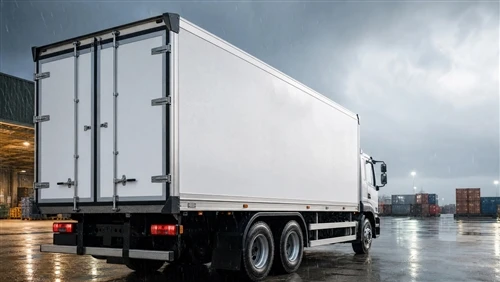
In refrigerated transport:
Condensation from temperature gradients
Frequent wash-downs
In modular buildings:
Rain exposure during transport and installation
Long-term weathering
In industrial enclosures:
Chemical exposure combined with humidity
Moisture management strategies must be adapted to the specific environment, not copied blindly from other sectors.
Materials Innovation in Moisture Control
Material development continues to improve moisture resistance.
Trends include:
Low-absorption thermoplastic cores
Toughened face sheets with better crack resistance
Adhesives with improved hydrolysis resistance
Integrated edge profiles produced during panel manufacturing
These innovations reduce dependence on secondary sealing operations and improve consistency.
Moisture as a Design Driver
Moisture management is often invisible when it works well. When it fails, the consequences appear years later as delamination, soft panels, corrosion, or loss of insulation performance.
Treating moisture as a core design variable changes how sandwich panels are engineered:
Edges become structural features
Interfaces become engineered systems
Materials are selected for long-term environmental behavior
Testing includes environmental aging, not just mechanical load
Moisture is not an accident in composite structures. It is a predictable factor that must be designed for from the first concept sketch to the last maintenance procedure.