Fire Resistance as an Engineering Requirement Rather Than a Material Attribute
In modern lightweight structures-particularly in transport bodies, modular enclosures, mobile cabins, and industrial sandwich constructions-fire resistance is no longer evaluated as a single material property. Instead, it is treated as a system-level engineering requirement shaped by material chemistry, panel architecture, joining methods, regulatory context, and service environment.
Thermoplastic composite panels occupy a unique position in this landscape. They offer clear advantages in terms of weight reduction, impact resistance, corrosion immunity, and recyclability. However, their fire resistance profile differs fundamentally from that of metals and thermoset composites. Unlike metals, thermoplastics are organic polymers with defined thermal transitions. Unlike thermosets, they soften and melt before decomposing, which introduces distinct challenges related to load retention, deformation, and fire-driven failure modes.
As a result, fire resistance in thermoplastic composite panels must be understood as the ability of a panel system to resist ignition, limit flame spread, control heat release, manage smoke and toxic gases, and maintain sufficient structural integrity under fire exposure for a defined period. This holistic perspective is essential for engineers working in regulated mobile and transport environments.
Thermoplastic Composite Fundamentals and Fire-Relevant Material Behavior
Thermoplastic Matrices in Structural Panels
Thermoplastic composite panels commonly employ matrices such as polypropylene (PP), polyethylene (PE), polyethylene terephthalate (PET), polyamide (PA), polyphenylene sulfide (PPS), or modified blends thereof. These polymers are reinforced with glass fibers, carbon fibers, or hybrid fabrics to achieve structural performance.
From a fire resistance standpoint, the defining characteristic of thermoplastics is their reversible thermal behavior. When heated:
The matrix softens above the glass transition temperature (Tg)
Melting occurs at the melting temperature (Tm)
Thermal decomposition follows at higher temperatures, producing combustible gases
This progression means that mechanical degradation precedes ignition, which has direct implications for structural fire resistance design.
Comparison with Thermoset Composites
Thermoset matrices (e.g., polyester, vinyl ester, epoxy) undergo irreversible crosslinking during curing. Under fire exposure, they typically char rather than melt, forming a rigid but brittle carbonaceous layer.
Thermoplastic composites, by contrast:
Do not form stable char layers unless modified
May lose stiffness earlier due to softening
Can redistribute stresses through ductile deformation
Fire resistance strategies for thermoplastic panels therefore emphasize controlled softening, delayed ignition, and system-level integrity, rather than relying on charring behavior.

Mechanisms Governing Fire Resistance in Thermoplastic Composite Panels
Fire resistance in thermoplastic composite panels arises from the interaction of several physical and chemical mechanisms. No single mechanism is sufficient on its own.
Heat Absorption and Thermal Inertia
Thermoplastic composites generally exhibit lower thermal conductivity than metals, which slows heat penetration through the panel thickness. In sandwich constructions, this effect is amplified by low-conductivity cores such as honeycomb or foam.
This thermal inertia:
Delays temperature rise on the unexposed face
Extends time to critical structural degradation
Improves fire separation performance in mobile enclosures
Softening-Controlled Deformation
As temperature increases, thermoplastic matrices soften rather than fracture. In properly designed panels, this allows for:
Stress redistribution rather than sudden failure
Progressive deformation instead of brittle collapse
Enhanced energy absorption under combined fire and mechanical load
From a fire resistance perspective, controlled deformation is often preferable to abrupt structural failure.
Volatile Release and Flame Interaction
Thermal decomposition of thermoplastics produces volatile gases that can feed combustion. Fire resistance strategies focus on:
Reducing volatile release rates
Diluting combustible gases
Interrupting flame propagation at the surface
These effects are typically achieved through flame-retardant formulations and surface protection layers.
Flame Retardant Technologies for Thermoplastic Composite Panels
Fire resistance in thermoplastic composite panels is heavily influenced by flame retardant (FR) systems integrated at the material level.
Mineral-Based Flame Retardants
Mineral fillers such as aluminum hydroxide (ATH) and magnesium hydroxide (MDH) are widely used due to their halogen-free nature.
Their fire resistance mechanisms include:
Endothermic decomposition that absorbs heat
Release of water vapor that dilutes flammable gases
Residual mineral layers that shield underlying material
However, high filler loadings can negatively affect:
Mechanical strength
Impact resistance
Processing flow during composite consolidation
Phosphorus-Based and Intumescent Systems
Phosphorus-containing flame retardants promote char formation and flame inhibition. In thermoplastic composites, intumescent systems can expand under heat, forming an insulating barrier at the surface.
These systems are particularly effective in:
Reducing heat release rate (HRR)
Limiting flame spread
Improving fire performance with moderate additive content
Reactive Flame Retardant Polymers
Advanced thermoplastic matrices incorporate reactive flame retardant groups into the polymer backbone. This approach offers:
Improved long-term fire resistance
Reduced additive migration
Better retention of mechanical properties
Such materials are increasingly used in high-performance transport and rail applications.
Fire Resistance in Sandwich Panel Configurations
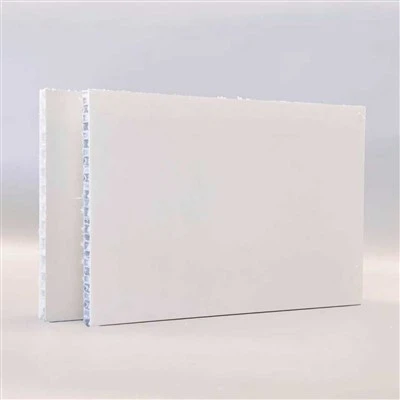
Thermoplastic composite panels are frequently used as sandwich structures, combining thin composite face sheets with lightweight cores.
Role of Face Sheets in Fire Exposure
The outer face sheet is the first line of defense against fire. Its composition determines:
Ignition resistance
Flame spread behavior
Surface heat release characteristics
Mineral-filled or flame-retardant-modified face sheets are often used to delay ignition and reduce surface flame propagation.
Core Contribution to Fire Resistance
The core material influences fire resistance in several ways:
Low thermal conductivity delays heat transfer
Structural geometry affects gas flow and collapse behavior
Material chemistry determines smoke and gas evolution
Thermoplastic honeycomb cores, when properly formulated, can maintain geometric stability longer than many foam cores, even as the matrix softens.
Interface and Bond Line Stability
Fire resistance is frequently limited by the weakest interface rather than the bulk materials. Adhesives or fusion bonds between skins and core must withstand elevated temperatures without premature failure.
Engineering solutions include:
Thermoplastic fusion bonding
High-temperature-resistant adhesives
Mechanical interlocking between skins and core
Structural Fire Resistance and Load-Bearing Performance
In transport and mobile structures, fire resistance is inseparable from structural performance under load.
Load Retention During Fire Exposure
As temperature increases:
Matrix stiffness decreases
Fiber-dominated load paths become critical
Core shear strength may degrade
Panel design must ensure that load-bearing capacity is maintained long enough to satisfy safety and evacuation requirements.
Failure Progression in Fire Conditions
Thermoplastic composite panels typically exhibit progressive failure under fire exposure:
Surface softening and discoloration
Local deformation of face sheets
Core shear degradation
Global panel deflection or collapse
Understanding and controlling this sequence is a key aspect of fire-resistant structural design.
Smoke Density and Toxic Gas Management
Fire resistance in enclosed mobile environments extends beyond flame behavior to include smoke and toxicity control.
Thermoplastic composites can generate:
Carbon monoxide (CO)
Hydrocarbons and aldehydes
Polymer-specific decomposition products
Fire-resistant panel systems therefore prioritize:
Low smoke density formulations
Halogen-free flame retardants
Compliance with transport fire standards
In many applications, smoke obscuration rather than flame spread is the primary life-safety concern.
Fire Testing and Certification Considerations
Fire resistance claims for thermoplastic composite panels must be validated through standardized testing. These tests evaluate different aspects of fire behavior, including:
Time to ignition
Flame spread index
Heat release rate
Smoke density
Structural integrity under heat
Importantly, fire resistance performance can vary significantly between small-scale material tests and full-scale panel assemblies. Edge sealing, joints, fasteners, and mounting orientation all influence test outcomes.
System-level fire testing is therefore essential for realistic performance assessment.
Application-Specific Fire Resistance Requirements
Fire resistance requirements vary widely across mobile and transport applications.
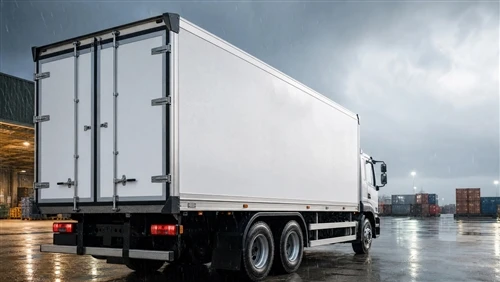
Truck and trailer bodies emphasize structural retention and limited flame spread.
Refrigerated transport panels prioritize insulation integrity and low smoke emission.
Rail vehicle interiors impose stringent smoke and toxicity limits.
Modular shelters and cabins balance fire resistance with rapid deployment and weight constraints.
Thermoplastic composite panels offer adaptability across these applications, provided fire resistance is engineered at the system level.
Fire Resistance and Sustainability Alignment
Thermoplastic composites are often selected for their recyclability and circular economy potential. Fire resistance solutions must therefore align with sustainability goals.
Current industry trends include:
Halogen-free flame retardant systems
Recyclable fire-resistant thermoplastic grades
Modular panel designs enabling material separation
Fire resistance is increasingly evaluated alongside environmental impact rather than in isolation.
Engineering Integration of Fire Resistance in Panel Design
Rather than treating fire resistance as a compliance afterthought, modern engineering practice integrates it into early-stage panel design through:
Material selection based on thermal-mechanical performance
Core geometry optimization for thermal stability
Multilayer fire protection strategies
Predictive thermal-structural simulation
This integrated approach allows thermoplastic composite panels to meet demanding fire resistance requirements while retaining their lightweight and manufacturing advantages.