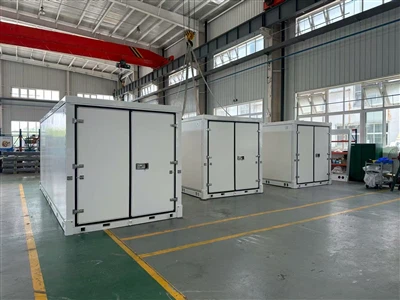
Fiber Reinforced Plastic (FRP) panels have become a core material category across construction, transportation, cold-chain logistics, industrial engineering, architectural interiors, modular buildings, and hygienic surface protection. Their appeal derives from a unique set of performance properties-lightweight structure, high mechanical strength, strong chemical resistance, corrosion resistance, water resistance, hygienic surfaces, customizable thickness, and long service life in harsh operating environments. As manufacturing technologies evolve, FRP panel systems continue to diversify, enabling engineers and product designers to select the most suitable structure for targeted projects.
Holycore, a specialized manufacturer of composite materials, provides a comprehensive portfolio of FRP panels developed for modern industrial demands. The company produces fiberglass-reinforced skins, thermoplastic composite cores, and various structural sandwich configurations, forming an integrated material system. The FRP products available include FRP sheets, FRP embossed sheets, FRP PP honeycomb sandwich panels, FRP PET honeycomb panels, FRP XPS sandwich panels, FRP plywood panels, and hybrid structures for refrigerated bodies and cleanroom environments. Each of these FRP panel types exhibits distinct material characteristics, manufacturing processes, and industry applications.
Structure, Features, and Application Scenarios
FRP flat sheets represent one of the most widely used fiberglass composite forms. These materials are typically manufactured using continuous production processes, where fiberglass mat is saturated with unsaturated polyester resin or other thermoset systems and then cured into a smooth, rigid, and durable planar sheet. The surface can be produced in high-gloss or matte finish, depending on downstream requirements.
Holycore's FRP flat sheets feature excellent dimensional stability, stable surface gloss, uniform thickness, and resistance to moisture, stains, chemicals, and UV exposure. Their rigidity-to-weight ratio is significantly higher than many traditional materials, making them suitable for environments requiring lightweight durability.
The application of FRP flat sheets spans many industries. They are frequently used as interior or exterior skins for truck and van bodies, commercial vehicle lining, cold-chain truck walls, trailer side panels, furniture surfaces, toilet partitions, cleanroom wall cladding, hospital wall protection boards, industrial equipment covers, and marine interior finishing. Their corrosion resistance makes them ideal for hygienic environments such as food-processing facilities or pharmaceutical rooms, where metal materials may corrode or wooden products absorb moisture.
Additionally, FRP flat sheets can serve as the skin layers in composite sandwich structures, bonding with honeycomb cores, foam cores, or thermoplastic cores for enhanced mechanical performance. When used as standalone cladding, they provide long-lasting durability without requiring frequent repainting or maintenance.
Anti-Slip and Decorative Composite Materials
Another key category of FRP panel solutions is embossed FRP sheets. Rather than a smooth finish, the surface of an FRP embossed sheet incorporates a textured pattern that enhances grip, slip resistance, and visual design. This structural feature makes embossed FRP sheets especially suitable for areas where safety, hygiene, and mechanical durability are required simultaneously.
Holycore's embossed sheets use advanced molding methods to create consistent, high-strength embossed patterns that remain intact under heavy traffic and harsh cleaning cycles. Their impact resistance, chemical resistance, and easy-to-clean surfaces allow them to function effectively in heavy-duty industrial environments. In addition, embossed textures help mask minor scratches and wear marks, enabling extended service life.
Typical applications include commercial trucks, cargo trailers, bus interiors, playground flooring, industrial workspaces, public restrooms, marine vessels, and cold storage rooms. Embossed FRP products are also frequently installed in livestock facilities due to their moisture resistance and durability against cleaning chemicals. As interior finishing elements, embossed sheets provide both functional and aesthetic advantages, offering enhanced safety without sacrificing surface longevity.
Lightweight Structure and High Mechanical Strength
Sandwich panels represent one of the most advanced categories of FRP composite systems. By combining strong FRP skins with a lightweight but rigid core, the sandwich configuration provides exceptional bending stiffness and compressive strength at a fraction of the weight of traditional building materials.
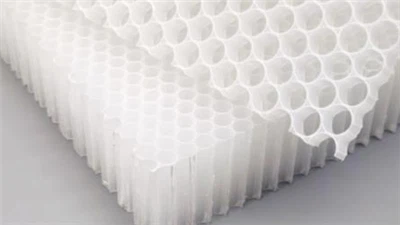
One of the most popular core materials in Holycore's lineup is polypropylene (PP) honeycomb. This material, produced from thermoformed PP film, features a cellular structure with high compression resistance, excellent fatigue strength, and intrinsic water resistance. Because PP does not absorb moisture and resists corrosion, it is suitable for long-term outdoor and industrial use.
Holycore integrates FRP skins with PP honeycomb cores using thermosetting resin bonding or hot-melt film lamination, resulting in a stable structural panel with minimal deformation under load. These FRP PP honeycomb panels provide excellent flatness, impact resistance, and high strength-to-weight ratio, making them suitable for demanding applications such as refrigerated truck bodies, dry cargo vans, prefabricated shelters, marine furniture, chemical-resistant equipment, sport trailers, and lightweight building components.
Their thermal insulation is not as high as foam-based cores, but their mechanical durability and water resistance make them preferable in situations requiring a balance of strength and longevity rather than pure thermal performance.
Recyclable Composite Solutions for Sustainable Manufacturing
PET (polyethylene terephthalate) honeycomb cores represent a newer category in Holycore's composite product family. PET cores offer recyclability, strong compression properties, and thermal stability, making them attractive for environmentally conscious engineering designs.
PET honeycomb materials maintain stable mechanical strength even at elevated temperatures and exhibit greater stiffness compared to certain foam cores. When paired with FRP skins through Holycore's lamination processes, PET honeycomb panels become ideal for applications requiring good mechanical loading capacity and eco-friendly material solutions.
Industries using FRP PET honeycomb sandwich panels include architectural partitions, modular housing, container structures, automotive interior modules, truck body floors, marine panels, and logistical packaging systems. Their superior dimensional stability provides long-term reliability, and their recycling potential aligns with the growing demand for green building materials.
High Thermal Efficiency and Structural Stability
Extruded Polystyrene (XPS) foam cores are known for their outstanding thermal insulation. FRP XPS sandwich panels produced by Holycore combine dense FRP outer skins with lightweight XPS cores, creating high-performance insulation solutions for temperature-sensitive industries.
FRP XPS panels exhibit excellent moisture resistance, low thermal conductivity, and strong structural rigidity. These panels are widely used in refrigerated trucks, chill rooms, mobile cold storage units, thermal insulation doors, and construction applications requiring lightweight thermal barriers.
Combined with FRP skins, XPS-based sandwich panels resist deformation, retain surface flatness, and maintain insulation performance across extended temperature cycles. Their consistent density distribution ensures stable performance regardless of orientation or installation angle.


Hybrid Structures for Heavy-Duty Load Applications
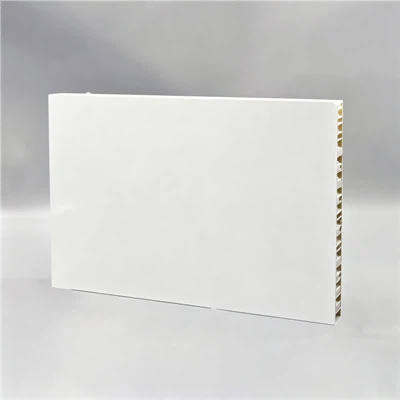
FRP plywood panels represent a hybrid composite structure that blends engineered wood's rigidity with FRP's moisture and corrosion resistance. Holycore laminates FRP skins onto plywood boards to create strong, stable, and durable construction panels suitable for harsh environments.
These panels are often installed as truck flooring, trailer side walls, container walls, and construction equipment surfaces. FRP protects the wooden core from moisture, chemicals, and surface abrasion, greatly extending the service life of plywood-based structures.
FRP Panels in Specialized Industrial Applications
Across diverse industries, FRP panels provide solutions to a wide range of engineering challenges. Examples include:
Transportation Industry
FRP sheets and sandwich panels are extensively used in truck bodies, bus interiors, rail transit components, boat cabins, deck panels, and trailer construction.
Cold-Chain Logistics
FRP XPS and FRP PP honeycomb systems provide thermal insulation and structural rigidity for refrigerated trucks, portable cold storage, and insulated containers.
Construction and Architectural Design
FRP flat sheets and sandwich panels serve as interior wall panels, exterior cladding, ceiling panels, partition walls, modular building components, and hygienic room finishing systems.
Industrial and Chemical Environments
Corrosion-resistant FRP materials are applied to chemical equipment housings, protective barriers, laboratories, washrooms, production lines, and humid environments where metal corrosion is a concern.
Marine and Offshore Structures
The lightweight, waterproof characteristics of FRP panels allow use in ship interiors, RV furniture, yacht cabins, and offshore facility modules.


Manufacturing Technology, Parameters, and Holycore Product Capabilities
Holycore utilizes advanced lamination, molding, thermosetting, and composite consolidation technologies to ensure consistency across all FRP product categories. Panel size, thickness, rigidity, and core type can be customized to meet specific engineering requirements.
Below is a general parameter range (values vary by specific product line):
Holycore FRP Panel Parameter Overview (Representative)
| Category | Thickness Range | Typical Width | Length | Surface Finish | Core Type |
|---|---|---|---|---|---|
| FRP Flat Sheet | 1–5 mm | ≤ 2600 mm | Custom | Gloss / Matte | None |
| FRP Embossed Sheet | 1–3 mm | ≤ 2600 mm | Custom | Embossed | None |
| FRP PP Honeycomb Panel | 10–50 mm | ≤ 2600 mm | Custom | Smooth / Embossed | PP Honeycomb |
| FRP PET Honeycomb Panel | 10–50 mm | ≤ 2600 mm | Custom | Gloss / Matte | PET Honeycomb |
| FRP XPS Sandwich Panel | 20–100 mm | ≤ 2600 mm | Custom | Smooth / Matte | XPS Foam |
| FRP Plywood Panel | 6–21 mm | ≤ 2600 mm | Custom | Gloss / Matte | Plywood |
These values are representative and can be adjusted based on project specifications.