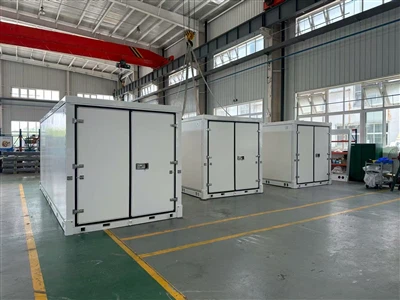
The Increasing Demand for FRP Sandwich Panels in Modern Industries
Selecting the right FRP sandwich panel has become a crucial decision for industries such as cold-chain logistics, truck and trailer body manufacturing, modular construction, cleanroom engineering, RV and caravan production, marine facilities, agricultural equipment, and architectural cladding. As the demand for lightweight, durable, corrosion-resistant, and energy-efficient composite materials continues to rise, fiberglass reinforced plastic (FRP) sandwich panels are replacing traditional building materials like steel sheets, aluminum plates, and wooden boards. Their ability to deliver high mechanical performance at significantly lower weight makes them essential for advanced industrial applications.
Holycore, a leading manufacturer of composite materials and FRP panel systems, provides a wide selection of core materials and surface laminates, including PP honeycomb panels, PET honeycomb sandwich panels, FRP XPS insulated boards, FRP plywood sandwich structures, and customizable GRP laminates. Understanding how to evaluate, compare, and select the best FRP sandwich panel is critical for ensuring performance, cost-efficiency, and long-term reliability. This article presents a comprehensive examination of the core materials, manufacturing methods, mechanical performance indicators, environmental resistance, insulation values, surface finishes, and application-specific requirements that influence the selection of FRP sandwich panels across industries.
With a commercial SEO-driven approach, the following sections integrate essential industry terms such as FRP sandwich panel, fiberglass reinforced panel, GRP composite board, honeycomb sandwich panel, insulated truck body panel, lightweight composite material, and high-strength laminated sheet, ensuring the article is discoverable by procurement engineers, industrial buyers, and sourcing managers searching for composite materials online.
Understanding the Structure of FRP Sandwich Panels
FRP sandwich panels consist of three primary layers: the reinforced fiberglass skin, the structural core, and the bonding adhesive system. Each of these layers plays a key role in determining the panel's strength-to-weight ratio, insulation properties, stiffness, impact resistance, corrosion resistance, and deformation behavior under load.
Fiberglass Skin Layers
The outer skins are manufactured using reinforced fiberglass materials impregnated with high-performance resin systems. These FRP sheets may vary in thickness from 0.8 mm to 3 mm or more, depending on the mechanical requirements. The reinforcement fabrics include:
Woven roving
Chopped strand mat (CSM)
Combined fabrics
Multiaxial fiberglass fabric
The choice of reinforcement influences tensile strength, bending modulus, crack resistance, and surface hardness. Holycore's fiberglass skins are produced using a continuous lamination process, ensuring uniform thickness, excellent adhesion, and superior surface finish for applications like truck body panels, refrigerated vehicles, cleanroom walls, modular housing panels, and marine interiors.
Core Materials
The core is responsible for reducing weight while increasing stiffness and insulation. Holycore provides several core options:
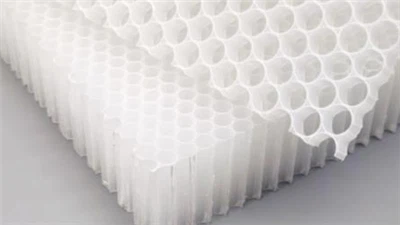
PP Honeycomb Core – a lightweight thermoplastic honeycomb with excellent impact resistance.
PET Honeycomb Core – a recyclable, eco-friendly option with high compression strength.
XPS Foam Core – best for thermal insulation and cold-chain applications.
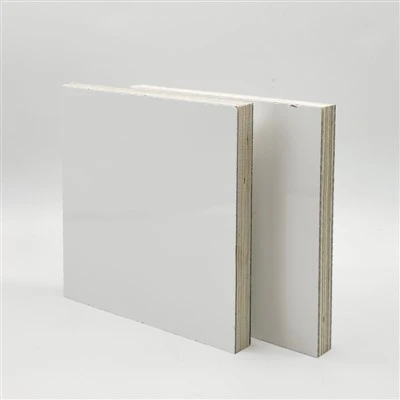
Plywood Core – used for heavy-duty floors and high-load structural areas.
Each core material offers distinct advantages, which will be thoroughly explored in later sections.
Bonding System
Structural adhesives such as polyurethane (PU) or modified epoxy are typically used to join fiberglass skins with the core materials. Holycore's lamination process ensures consistent adhesive penetration and superior bonding strength, making its panels suitable for the demanding mechanical stresses associated with logistics vehicles, marine cabins, and industrial buildings.
Understanding these three layers helps users make informed decisions about which panel structure delivers the ideal performance for specific industrial applications.


Comparison of Common FRP Sandwich Panel Core Materials
The core material is the foundation of an FRP panel's weight, rigidity, compressive strength, and thermal behavior. Each type of core used by Holycore offers unique benefits.
PP Honeycomb Core
PP honeycomb panels are among the most popular choices for lightweight applications due to their extremely low density, impressive compressive strength, and excellent moisture resistance. PP honeycomb is widely used in truck and trailer body construction, caravan furniture, ship cabin interiors, and modular building panels.
Key advantages include:
Ultra-lightweight design for transportation efficiency
High impact resistance, suitable for dynamic loading
Thermoplastic stability, enabling dimensional consistency
Excellent chemical resistance, ideal for food logistics and chemical transport
Moisture-proof performance, preventing panel deterioration
Holycore's PP honeycomb panels are produced using precision-extruded thermoplastic honeycomb sheets laminated with FRP skins, ensuring high peel strength and reliable mechanical performance.
PET Honeycomb Core
PET honeycomb is a structural core material known for its strength, environmental sustainability, and excellent resistance to fatigue. It is often chosen for modular buildings, cleanrooms, partition walls, façade panels, and marine deck structures.
Advantages of PET honeycomb include:
High compressive strength, ideal for load-bearing structures
Eco-friendly material, made from recyclable polymers
Superior dimensional stability, even at elevated temperatures
Good acoustic and thermal insulation
Structural rigidity for composite walls and architectural systems
Holycore's PET honeycomb FRP panels offer a balance between mechanical strength and sustainability, making them suitable for customers who prioritize environmental compliance.
XPS Foam Core
FRP XPS sandwich panels are designed for thermal insulation and moisture resistance, making them vital in cold-chain logistics, refrigerated truck bodies, cold storage units, and portable buildings requiring stable temperature control.
XPS features include:
Exceptional thermal insulation due to closed-cell foam structure
Low water absorption, preventing condensation problems
Lightweight but strong for refrigerated vehicle side walls
Smooth bonding with FRP skins
Long-term heat retention, reducing refrigeration energy loss
Holycore's FRP XPS sandwich panels are highly valued for refrigerated truck manufacturers and container builders seeking stable temperature management.
Plywood Core
Although heavier than the other core materials, plywood-core FRP panels offer excellent screw-holding capacity and high mechanical stability. They are widely used in:
Truck and bus flooring
Heavy-duty vehicle interiors
Cargo box floors
Loading ramps
Holycore supplies FRP plywood panels with anti-slip fiberglass surfaces or smooth exterior FRP skins for high-strength applications.
Key Criteria for Selecting FRP Sandwich Panels
Choosing the best FRP sandwich panel for industrial use requires evaluating multiple technical parameters and environmental conditions. The following sections outline the most important criteria.
Mechanical Strength and Load Capacity
Applications such as truck body manufacturing, trailer walls, commercial vehicle flooring, and industrial enclosures require panels with high tensile, compressive, and flexural strength.
Mechanical properties to evaluate include:
Tensile strength of fiberglass skins
Compressive strength of the core
Flexural modulus
Impact resistance
Shear strength
For example, PP honeycomb panels deliver excellent impact resistance, while PET honeycomb panels provide superior compressive strength for structural applications.
Thermal Insulation Performance
Thermal performance is critical for industries such as cold-chain logistics, refrigerated truck manufacturing, food transport, and cold-storage room construction.
XPS foam cores offer the highest insulation value due to their closed-cell structure, making FRP XPS panels the best choice for low-temperature environments.
Ensure factors like:
Thermal conductivity
Temperature stability
Moisture resistance
Condensation prevention
are considered during selection.
Environmental and Chemical Resistance
Industries such as marine transportation, chemical logistics, food transportation, and architectural construction require panels that resist:
Water and humidity
Chemical exposure
UV radiation
Corrosion
Cleaning agents
Holycore's fiberglass skins provide non-corrosive, moisture-proof protection for long-term exposure to harsh environments.
Weight Considerations
Lightweight materials are essential for transportation efficiency. In industries like truck trailer manufacturing, every kilogram saved directly improves fuel economy.
PP honeycomb offers the best weight-to-strength ratio
PET honeycomb provides structural rigidity at a moderate weight
XPS foam adds insulation with low density
Choose a core material that balances strength with weight reduction.
Fire Resistance Requirements
Depending on the region and application, FRP panels may need to meet fire-retardant standards. Holycore offers optional fire-resistant FRP skins and resin formulations to improve flame resistance.
Surface Finish Requirements
Different industries require different surface textures:
Gloss FRP surface for truck body exteriors
Matte FRP finish for interior walls
Embossed non-slip FRP for cargo flooring
Gel-coated FRP for UV and chemical resistance
Holycore allows customization for both appearance and functionality.
Installation and Production Considerations
Selecting the right FRP sandwich panel also involves evaluating how it integrates into production processes.
Adhesive Bonding
Composite adhesives such as polyurethane are commonly used for assembling truck bodies and cold storage panels. Bonding strength must be matched with the panel's surface energy for optimal assembly.
Edge Sealing
Proper edge sealing prevents moisture ingress, especially for XPS and honeycomb structures. Holycore provides sealed-edge options for panels used in refrigerated trucks or marine environments.
Mechanical Fastening
For floors, heavy cabinetry, or modular buildings, screws and mechanical fasteners require a core with strong screw-holding ability (e.g., FRP plywood).
Industry Recommendations for FRP Sandwich Panel Selection
Truck Body and Trailer Manufacturing
Best choice: PP honeycomb / XPS foam
Reason: Lightweight, rigid, corrosion-resistant, excellent appearance
Applications: Box trucks, refrigerated vehicles, side walls, doors
Cold-Chain Logistics
Best choice: FRP XPS sandwich panels
Reason: Efficient insulation, low thermal conductivity, moisture resistance
Modular Buildings and Cleanrooms
Best choice: PET honeycomb panels
Reason: Dimensional stability, eco-friendly, compressive strength
Marine and RV Applications
Best choice: PP or PET honeycomb
Reason: Water resistance, lightweight, easy fabrication
Industrial Flooring
Best choice: FRP plywood
Reason: High screw retention and structural load capacity