Introduction: Transportation Cost Drivers in Industrial Logistics
Transportation costs in industrial logistics are primarily driven by four core factors: payload weight, cargo volume, fuel consumption, and damage-related expenses. Industrial materials and components, such as traditional boards used in vehicle manufacturing, construction, and equipment packaging, often contribute to high transportation costs due to their heavy weight and inefficient use of cargo space. Traditional solid boards, plywood, and metal plates require substantial packaging, occupy large volumes, and add significant weight to transport vehicles, increasing fuel consumption and limiting the quantity of goods that can be shipped per trip. Additionally, these materials are prone to damage during transit, leading to replacement costs, delayed deliveries, and additional logistics expenses. Lightweight honeycomb sandwich panels address these pain points through their structural design and material properties, directly reducing transportation costs while maintaining the mechanical performance required for industrial applications. Hangzhou Holycore specializes in thermoplastic honeycomb sandwich panels under the HolyPan product line, optimizing their design to further enhance logistics efficiency and cost savings for industrial clients.
The Core Driver of Fuel and Payload Savings
Structural Design for Lightweight Performance
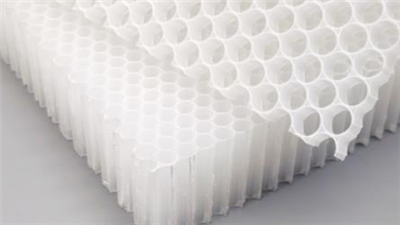
Honeycomb sandwich panels adopt a sandwich structure consisting of two rigid outer skins and a hollow hexagonal cellular core. This design eliminates the need for solid material throughout the panel, replacing it with a lightweight core that maintains structural integrity. The hexagonal cellular core distributes loads evenly across the panel surface, ensuring the panel can withstand the mechanical stresses of transportation and end-use applications without the excess weight of traditional solid boards. Unlike solid metal plates or thick plywood, which rely on material bulk to achieve strength, honeycomb sandwich panels leverage the efficiency of the cellular structure to deliver equivalent or superior strength at a fraction of the weight. Hangzhou Holycore's thermoplastic honeycomb panels use polypropylene for the core and fiberglass-reinforced thermoplastic for the outer skins, further optimizing weight reduction while ensuring durability. This lightweight design directly reduces the overall weight of cargo shipments, which translates to lower fuel consumption and higher payload capacity.
Fuel Consumption Reduction in Road and Rail Transport
Fuel consumption in transportation is directly proportional to the weight of the cargo being shipped. Heavier loads require more fuel to accelerate, maintain speed, and navigate inclines, increasing transportation costs per kilometer. Honeycomb sandwich panels reduce cargo weight significantly compared to traditional boards, leading to measurable fuel savings. For example, when used in the production of commercial vehicle bodies, honeycomb panels reduce the weight of the vehicle itself, lowering fuel consumption during operation. When shipped as raw materials, the lightweight nature of the panels allows transport vehicles to carry more units per trip, reducing the number of trips required to deliver the same quantity of material. Hangzhou Holycore's HolyPan panels, with their optimized weight-to-strength ratio, enable logistics companies to reduce fuel consumption by minimizing the overall cargo weight, cutting transportation costs while reducing environmental impact. This fuel savings is particularly significant for long-haul transportation, where even small weight reductions can lead to substantial cost savings over time.
Increased Payload Capacity and Shipment Efficiency
Transport vehicles have strict weight limits imposed by regulatory standards, which dictate the maximum payload they can carry. Traditional heavy boards consume a large portion of this weight limit, reducing the number of units that can be shipped per trip. Honeycomb sandwich panels, being lightweight, free up payload capacity, allowing more panels to be loaded onto a single vehicle. This increases shipment efficiency, as fewer trips are needed to deliver the same volume of material. For example, a truck loaded with traditional plywood may only carry a limited number of sheets due to weight constraints, while the same truck can carry significantly more honeycomb panels of equivalent size and strength. Hangzhou Holycore's standardized panel sizes are designed to fit efficiently into standard transport containers and truck beds, maximizing the use of available space while leveraging the weight advantage. This increased payload capacity reduces the number of trips required, cutting labor costs, toll fees, and other associated transportation expenses.
Reducing Shipping Space and Packaging Costs
Space-Efficient Design and Stackability
Honeycomb sandwich panels have a flat, uniform structure that allows for efficient stacking and space utilization during transportation. Unlike traditional boards, which may be irregular or prone to warping, honeycomb panels maintain consistent flatness, enabling tight stacking without wasted space between units. The rigid outer skins prevent the panels from bending or collapsing under the weight of stacked cargo, ensuring that more panels can be packed into a given volume. Hangzhou Holycore's panels are produced with precise dimensional control, ensuring that each panel fits together seamlessly during stacking. This space efficiency reduces the volume of cargo per unit, allowing transport vehicles and containers to carry more panels per trip. Additionally, the lightweight nature of the panels makes stacking easier and safer, reducing the risk of injury to logistics workers and minimizing damage during loading and unloading.
Reduced Packaging Requirements
Traditional boards require extensive packaging to protect them from damage during transit. Plywood and metal plates often need to be wrapped in plastic, padded with foam, or secured with wooden crates to prevent scratching, denting, or warping. This packaging adds weight, increases cargo volume, and raises packaging costs. Honeycomb sandwich panels are inherently durable and resistant to damage, reducing the need for excessive packaging. The rigid outer skins and strong core structure protect the panels from impact, abrasion, and moisture, eliminating the need for heavy crating or excessive padding. Hangzhou Holycore's thermoplastic honeycomb panels have a smooth, scratch-resistant surface that further reduces packaging needs. In many cases, the panels can be shipped with minimal packaging, such as a thin protective film, reducing packaging material costs and the weight and volume added by packaging. This not only cuts direct packaging expenses but also increases the available cargo space, further improving shipment efficiency.
Compatibility with Standard Shipping Containers
Honeycomb sandwich panels are designed to fit seamlessly into standard shipping containers and truck beds, maximizing the use of available space. Their uniform dimensions and flat structure allow for efficient loading, with no wasted space between panels. Unlike traditional boards, which may have irregular shapes or require custom handling, honeycomb panels can be easily arranged to fill the entire container volume. Hangzhou Holycore offers panels in standard sizes that align with common shipping container dimensions, ensuring that logistics companies can optimize their loading strategies. This compatibility reduces the need for custom shipping solutions, which are often more expensive. Additionally, the lightweight nature of the panels makes it easier to load and unload them from containers, reducing handling time and labor costs. By fitting more panels into each container, logistics companies can reduce the number of containers needed, cutting shipping costs and improving overall logistics efficiency.
Lowering Replacement and Delay Costs
Impact and Vibration Resistance During Transit
Transportation exposes cargo to significant impact and vibration, which can damage traditional boards. Plywood may crack or delaminate, while metal plates can dent or bend, rendering them unusable. Damaged cargo requires replacement, which adds costs and delays deliveries. Honeycomb sandwich panels are designed to absorb impact and vibration through their cellular core structure. The hexagonal cells act as a buffer, dissipating impact energy and reducing the transfer of vibration to the panel surface. This resistance to damage ensures that the panels arrive at their destination in good condition, reducing the need for replacement. Hangzhou Holycore's HolyPan panels use a thermoplastic core that is flexible yet strong, further enhancing impact resistance. The panels can withstand the bumps and vibrations of road, rail, and sea transport without sustaining damage, eliminating the costs associated with damaged cargo and delayed deliveries.
Moisture and Corrosion Resistance
Moisture and corrosion are common causes of damage to traditional boards during transit, particularly in sea transport or humid environments. Plywood absorbs moisture, leading to warping, rot, and mold growth, while metal plates corrode when exposed to saltwater or humidity. Damaged boards must be replaced, adding to transportation costs. Honeycomb sandwich panels resist moisture and corrosion through their material composition and sealed structure. The thermoplastic core and fiberglass-reinforced skins are non-porous, preventing moisture penetration. The sealed cellular structure eliminates gaps where moisture can accumulate, further protecting the panels from damage. Hangzhou Holycore's panels are designed to withstand harsh transportation environments, including saltwater spray and high humidity, ensuring that they remain intact and functional. This resistance to moisture and corrosion reduces replacement costs and eliminates delays caused by damaged cargo.
Reduced Handling Damage
Traditional heavy boards are difficult to handle, increasing the risk of damage during loading, unloading, and storage. The weight of the boards requires heavy lifting equipment, which can cause scratches, dents, or cracks if not operated carefully. Honeycomb sandwich panels are lightweight, making them easier to handle manually or with minimal equipment. This reduces the risk of handling damage, as the panels can be moved and positioned more easily without excessive force. Hangzhou Holycore's panels have smooth, rigid surfaces that resist scratching and abrasion, further reducing the risk of damage during handling. The reduced handling damage translates to fewer replacements, lower costs, and more efficient logistics operations. Additionally, the lightweight nature of the panels reduces the risk of injury to logistics workers, lowering labor costs associated with workplace accidents.
Long-Term Cost Savings Beyond Initial Shipping
Reusability and Durability
Honeycomb sandwich panels are highly durable and reusable, reducing long-term transportation costs. Unlike traditional boards, which may degrade after a single use or require frequent replacement, honeycomb panels can withstand multiple shipping cycles and end-use applications. Hangzhou Holycore's thermoplastic honeycomb panels are designed for long service life, maintaining their structural integrity even after repeated handling and transportation. This reusability reduces the need to ship new panels frequently, cutting transportation costs over time. For example, in packaging applications, honeycomb panels can be reused multiple times to ship delicate equipment, eliminating the need for single-use packaging materials and reducing the number of shipments required to replace packaging.
Reduced Maintenance and Replacement Cycles
Traditional boards require frequent maintenance and replacement, which involves additional transportation costs to ship new materials. Plywood may need to be treated for rot or warping, while metal plates require anti-rust treatments, and both may need to be replaced entirely after a short period of use. Honeycomb sandwich panels require minimal maintenance, as they are resistant to damage, moisture, and corrosion. Hangzhou Holycore's panels do not require anti-rust treatments or moisture-resistant coatings, reducing maintenance costs and the need for replacement. The long service life of the panels means that fewer replacements are needed, reducing the number of shipments required to deliver new materials. This long-term durability translates to significant cost savings over the lifecycle of the panels, beyond the initial transportation savings.
Conclusion
Honeycomb sandwich panels reduce transportation costs through a combination of weight reduction, volume optimization, damage reduction, and lifecycle efficiency. Their lightweight cellular structure lowers fuel consumption and increases payload capacity, allowing more panels to be shipped per trip and reducing the number of trips required. The space-efficient design and reduced packaging needs minimize cargo volume, further improving shipment efficiency. Their resistance to impact, vibration, moisture, and corrosion reduces damage-related costs and delays, while their durability and reusability deliver long-term cost savings beyond initial shipping. Hangzhou Holycore plays a key role in maximizing these cost savings through its HolyPan thermoplastic honeycomb panels, which are optimized for logistics efficiency and industrial performance. By replacing traditional boards with honeycomb sandwich panels, industrial companies and logistics providers can significantly reduce transportation costs, improve operational efficiency, and enhance sustainability. As global logistics costs continue to rise, honeycomb sandwich panels will remain a cost-effective solution for industrial transportation, with Hangzhou Holycore leading the way in design and innovation.