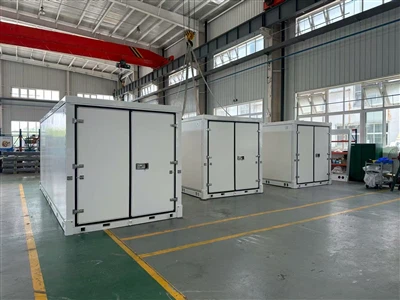
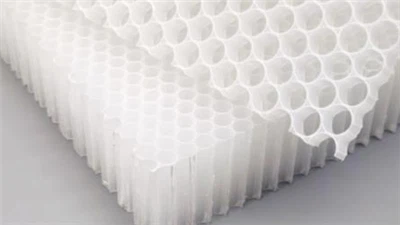
Thermoplastic composite sandwich honeycomb panels are rapidly becoming a preferred material in industries that demand lightweight strength, structural stability, thermal efficiency, and environmental responsibility. From transportation and logistics to building materials, modular construction, cold-chain applications, and industrial equipment, the shift toward thermoplastic sandwich structures represents a fundamental evolution in engineering materials.
Unlike traditional metal-based or thermoset composite panels, thermoplastic sandwich honeycomb panels combine mechanical performance, process efficiency, design flexibility, and sustainability within one engineered solution. Companies such as HOLYCORE have pushed this technology further through advanced products like HolyPan®, UDPan®, CFRT PET Panel, and CFRT XPS Panel, enabling manufacturers and end-users to access higher-performing and more cost-efficient composite solutions.
What Makes Thermoplastic Composites Different?
Thermoplastic composites are composed of reinforcement fibers-often glass or carbon fibers-embedded into a thermoplastic resin matrix such as polypropylene (PP), polyethylene terephthalate (PET), or polyamide (PA). Unlike thermoset resins, which chemically cure and cannot be remelted, thermoplastics can be reheated, reshaped, welded, and recycled.
Recyclability and Sustainability
Thermoplastic matrices can be reprocessed multiple times without significant material degradation. This makes products like HolyPan® and CFRT PET Panel desirable for companies aiming to reduce waste and adopt circular-economy models.
High Impact Strength
Thermoplastic composites typically exhibit higher impact resistance than thermoset alternatives. The molecular structure allows deformation and energy absorption without brittle failure.
Rapid Manufacturing Cycles
Thermoplastic panels can be thermoformed, hot-pressed, or welded at high production speeds. Technologies such as UDPan® (unidirectional fiber tapes reinforced with thermoplastic) contribute to automated, consistent, and scalable panel manufacturing.
Excellent Chemical Resistance
Thermoplastics resist corrosion, moisture, and chemical agents, making them ideal for harsh environments-marine, industrial, cold chain, or road-transport conditions.
These intrinsic material advantages form the foundation for the superior performance of thermoplastic sandwich honeycomb panels.
2025
2025
2025
2025
Understanding the Sandwich Honeycomb Structure
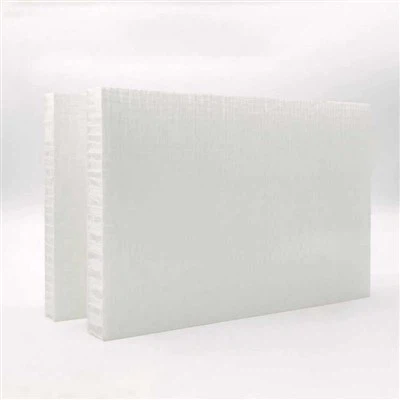
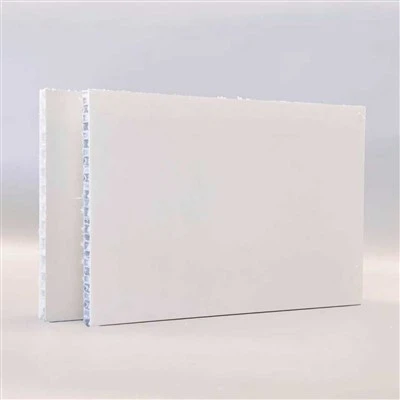
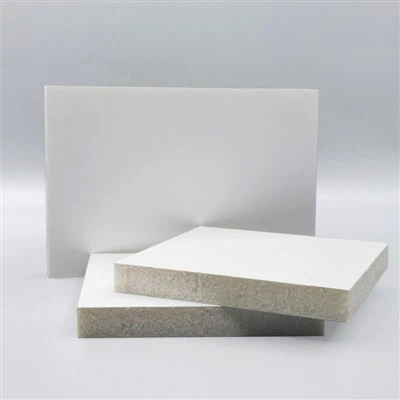
A sandwich panel consists of two strong outer skins bonded to a lightweight core. In thermoplastic composite panels, the skins generally use continuous-fiber reinforced thermoplastic (CFRT) sheets, while the core uses PP or PET honeycomb.
Why Honeycomb?
The honeycomb architecture creates an exceptional ratio of strength-to-weight.
Benefits include:
- High flexural rigidity
- Resistance to local denting
- Low density
- Enhanced insulation capability
- Stable mechanical performance under load
By pairing CFRT skins with a thermoplastic honeycomb core, manufacturers achieve structural efficiency impossible with solid materials of similar thickness.
Superior Bonding Through Fusion-Welding
One of the most significant advantages is thermoplastic fusion-welding. Because the entire structure shares a compatible polymer base, the core and skins can be thermally fused into a monolithic panel. This removes the need for chemical adhesives and eliminates risks such as delamination, moisture ingress, or VOC emissions.
This technology is used in HolyPan® and CFRT XPS Panel, providing excellent long-term durability.
Advantages of Thermoplastic Composite Sandwich Honeycomb Panels
Ultra-Light but Structurally Strong
A thermoplastic honeycomb panel can deliver the same stiffness as plywood, aluminum, or fiber-reinforced thermoset boards at a fraction of the weight.
This contributes to:
Fuel savings in transportation
Manual handling safety
Reduced structural load in buildings
Easier installation in modular units
Products such as HolyPan® demonstrate how lightweight solutions can still exceed industry mechanical requirements.
Moisture, Rot, and Corrosion Resistance
Unlike wood-based panels (OSB, plywood) or metal cladding, thermoplastic composite panels do not absorb water, swell, rot, or corrode.
They are ideal for:
- Cold-chain vehicles
- Marine panels
- Hygienic interior partitions
- RV and caravan manufacturing
- Refrigeration systems
The CFRT PET Panel especially performs well in moisture-prone environments due to its inherent hydrophobicity and chemical resistance.
Consistent Mechanical Performance
Thermoset panels are often influenced by curing conditions, humidity, and operator skill. Thermoplastic panels, manufactured through automated fusion processes, provide:
Stable dimensions
Uniform tensile and bending strengths
Predictable long-term durability
UD continuous fiber reinforcement (as in UDPan®) further enhances mechanical consistency due to aligned fiber orientation and homogeneous resin distribution.
Easy to Process, Modify, and Fabricate
Thermoplastic panels can be:
Thermoformed into curves
CNC-cut without fraying
Welded without adhesives
Mechanically fastened using standard tools
Surface-laminated with decorative films
This makes them suitable not only for industrial applications but also for custom-designed interior components in furniture, automotive interiors, and mobile homes.
Excellent Thermal and Acoustic Insulation
The honeycomb core naturally traps air inside its cells, acting as a thermal barrier. Thermoplastic materials also reduce resonance and vibration.
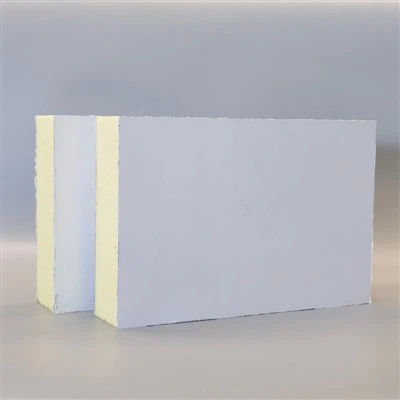
Therefore, CFRT XPS Panel, combining CFRT skins with extruded polystyrene (XPS) foam, becomes a highly effective thermal panel for:
Refrigerated vehicles
Cold rooms
Modular home insulation
Temperature-controlled equipment housing
VOC-Free, Formaldehyde-Free, and Odorless
Thermoplastic honeycomb panels contain no formaldehyde or styrene. This makes products like HolyPan® and CFRT PET Panel suitable for:
Cleanrooms
Medical equipment
Food and hygiene applications
Residential and commercial interiors
The absence of adhesives eliminates volatile organic compounds, improving indoor environmental quality.
Long-Term Durability and Fatigue Resistance
Thermoplastic composites exhibit excellent fatigue resistance under dynamic loads. This makes them superior for repetitive stress applications such as:
Truck floors
Trailer walls
RV structures
Modular building walls
Industrial partitions
Thermoplastic molecular mobility at the microscopic level contributes to their crack resistance and toughness over time.
Recycle-Friendly Material System
End-of-life composite materials are one of the largest environmental challenges in the composite industry. Thermoset panels cannot be melted down, but thermoplastic panels can.
Scraps from HolyPan®, UDPan®, and CFRT PET Panel can be remelted, reprocessed, or reused as reinforcement in other thermoplastic products. This aligns with global ESG standards and reduces disposal costs.
Applications of Thermoplastic Composite Sandwich Honeycomb Panels
The versatility of thermoplastic panels allows them to be integrated across numerous industries. Below are the most common sectors adopting products like HolyPan®, UDPan®, CFRT PET Panel, and CFRT XPS Panel.
Transportation and Automotive
Key uses:
Truck and trailer bodies
Dry cargo van walls
Floor systems
RV components
Interior ceiling and side panels
Cold-chain vehicle insulation
The lightweight design directly contributes to fuel efficiency and payload optimization.
Modular Construction & Prefabricated Buildings
Thermoplastic honeycomb panels are increasingly used for:
Lightweight interior walls
Prefab bathroom pods
Caravan interiors
Container houses
Foldable modular homes
Their strength, insulation, and easy-to-clean surface make them ideal for modern building systems.
Marine and Boats
Because thermoplastic composites resist corrosion and do not absorb water, they are used for:
Bulkheads
Flooring
Cabin panels
Furniture structures
Storage compartments
The PET-based CFRT panels deliver reliable long-term marine durability.
Industrial & Equipment Manufacturing
Applications include:
Machine enclosure panels
Industrial partition walls
Cleanroom panels
Chemical-resistant walls
Warehouse interior linings
Their dimensional stability and chemical resistance are major advantages.
Cold Chain Logistics
Panels such as CFRT XPS Panel are designed for:
Refrigerated storage
Cold transport bodies
Insulation doors
Temperature-controlled packaging
The honeycomb structure reduces thermal bridges and ensures energy efficiency.





Thermoplastic vs. Traditional Materials
| Property | Thermoplastic Composite Panels | Metals (Aluminum/Steel) | Wood-based Panels (OSB/Plywood) | Thermoset Panels |
|---|---|---|---|---|
| Weight | Very light | Medium | Medium | Medium to heavy |
| Recyclability | Excellent | Good | Limited (adhesives) | Poor |
| Moisture Resistance | Excellent | Corrosion risk | Poor | Good |
| Impact Resistance | High | Low–high | Medium | Medium |
| Chemical Resistance | High | Corrosion with chemicals | Low | Medium |
| Thermal Insulation | Excellent | Poor | Good | Good |
| Processing Flexibility | High | Medium | Low | Low |
| VOC-Free | Yes | Yes | No | No (styrene) |
Thermoplastic composite honeycomb panels outperform most alternatives in at least five major categories.
Spotlight on Key HOLYCORE Products
HolyPan®
A high-strength thermoplastic sandwich honeycomb panel for transportation, architecture, and industrial applications.
Features:
Fusion-welded skins and core
Lightweight but strong
Hydrophobic and corrosion-free
Ideal for trailer floors, modular buildings, trucks
UDPan®
UD continuous fiber tape creates a stable, linear reinforcement system.
Benefits:
Controlled fiber alignment
High tensile strength
Ideal for CFRT skin manufacturing
Supports automated production lines
CFRT PET Panel
Uses PET-based continuous fiber skins with a PP or PET honeycomb core.
Advantages:
Superior environmental resistance
High rigidity
Suitable for cleanrooms, marine, and high-humidity areas
CFRT XPS Panel
Combines CFRT skins with XPS foam.
Features:
Exceptional thermal insulation
Reduced heat transfer
Durable surface strength
Ideal for cold-chain and refrigeration structures.
Why Industries Are Switching to Thermoplastic Honeycomb Panels
The shift is driven by:
Global movement toward decarbonization
Need for lightweight transportation components
Demand for long-lasting modular building materials
Growing restrictions on VOC-containing products
Rising interest in recyclable materials
As lifecycle cost, sustainability, and mechanical performance take priority, thermoplastic honeycomb panels offer unmatched value.
The Future Belongs to Thermoplastic Composite Sandwich Panels
Thermoplastic composite sandwich honeycomb panels represent a new generation of lightweight, durable, and recyclable material solutions. With products such as HolyPan®, UDPan®, CFRT PET Panel, and CFRT XPS Panel, industries can now access:
- Superior strength-to-weight ratios
- Environmental durability
- Design flexibility
- VOC-free and formaldehyde-free solutions
- Improved energy efficiency
- Significant long-term cost savings
As industries evolve toward higher performance and sustainability, thermoplastic composite panels are set to play a central role in transportation, construction, cold-chain logistics, marine engineering, and industrial manufacturing. Their recyclability, structural efficiency, and technological versatility make them not just an alternative, but the future standard for engineered panel systems.