A Technical Look at Holycore's Core Technologies - PP Honeycomb with Non-Woven Fabric and Open-Cell PP Honeycomb Core, and How They Fit into a Broader Product Line
In the fast-evolving market for lightweight, recyclable structural materials, polypropylene (PP) honeycomb panels have become a go-to solution for designers and manufacturers who need high stiffness, low weight, and improved durability. Among the spectrum of PP honeycomb technologies, two core constructions have recently attracted concentrated industry attention: PP honeycomb with non-woven fabric and open-cell PP honeycomb core. Both cores deliver distinct mechanical and functional advantages that make them especially well-suited for targeted applications.
This article takes a focused, professional look at those two core types - explaining what they are, why they matter, and how Holycore integrates them into its broader family of thermoplastic sandwich panels. After that we briefly introduce other Holycore product types to show how the two PP core technologies coexist in a complete product ecosystem.
Why Core Architecture Matters In Honeycomb Panels
A honeycomb panel's performance is dominated by the structure and materials of its core. The core determines compressive strength, shear stiffness, energy absorption, moisture resistance, thermal behavior, and how the panel bonds to skins. By changing the core geometry or adding internal reinforcements - such as fabrics, perforations, or cell morphology changes - manufacturers can tune panels for different load paths and service environments.
Holycore, as a thermoplastic composite specialist, emphasizes engineered cores that meet real-world manufacturing and end-use demands. Two of its most strategically important PP core constructions are PP honeycomb reinforced with non-woven fabric and open-cell PP honeycomb.
PP Honeycomb With Non-woven Fabric - What It Is And Why It's Used
The structure
A PP honeycomb with non-woven fabric integrates a lightweight polypropylene honeycomb core with layers or strips of non-woven fabric bonded into the cell walls or applied between the core and skins. The non-woven is typically a polymeric material compatible with PP in processing and bonding. This design combines the core's low density and geometric stiffness with the non-woven's stabilizing and adhesive properties.
Performance advantages
Improved peel and interfacial strength. The non-woven layer acts as a mechanical tie between the core and face sheets, increasing resistance to peel and delamination under cyclical or point loads.
Enhanced through-thickness toughness. Non-woven reinforcement distributes stress across multiple cell walls, improving impact resistance and local damage tolerance.
Better adhesive surface for skins. Non-wovens create a more bondable substrate for thermoplastic skins or laminates, enabling lower processing temperatures and more consistent lamination quality.
Controlled energy absorption. In crash-safety or transport applications, the non-woven helps the core collapse in a more controlled manner, turning otherwise brittle failure into progressive energy dissipation.
Moisture management and filtration options. When engineered for permeability, the non-woven can provide capillary blocking or drainage layers that support cold-chain and wet-environment performance.
Open-cell PP honeycomb core - What It Is And Where It Excels
The structure
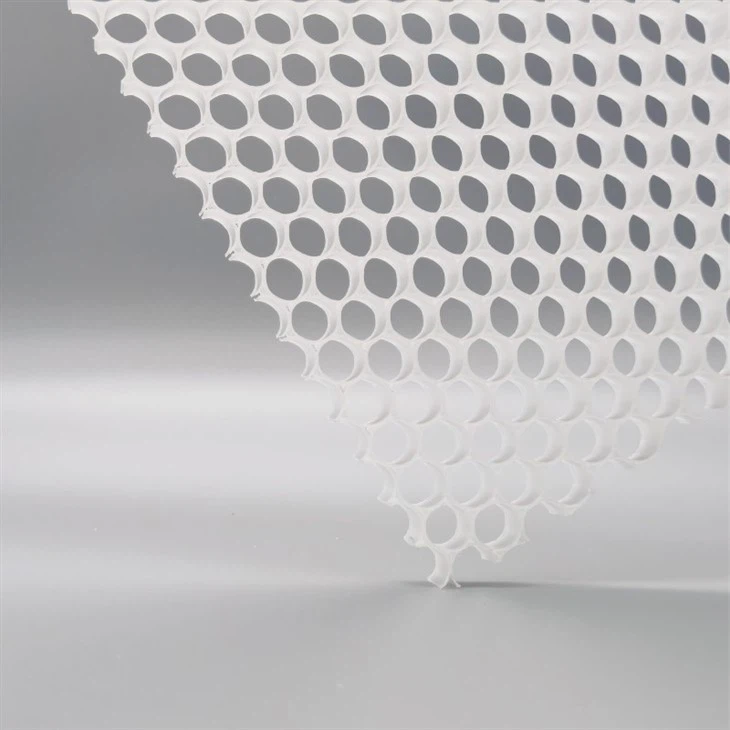
An open-cell PP honeycomb core modifies the conventional closed-cell honeycomb geometry to create interconnected internal passages or permeable walls. In practice, this can be achieved by selectively perforating or thinning cell walls during production, or by using a foam-like PP honeycomb that maintains open pathways. The result is a core that retains structural stiffness but allows controlled air or fluid movement through the core thickness.
Performance advantages
Breathability and moisture vapor transmission. Open-cell cores permit moisture vapor to pass through, reducing risk of trapped condensation behind skins in temperature-cycling environments.
Improved thermal equalization. Air movement through the core helps equalize temperature gradients, beneficial in refrigerated trucks and insulated boxes.
Acoustic damping. The open-cell pathways provide opportunities for sound absorption or tuned acoustic performance when combined with porous skins or absorptive inserts.
Weight-to-stiffness balance. Properly designed open-cell webs maintain high bending stiffness while enabling functional through-thickness properties not possible with sealed cores.
Filters and integrated channels. Open channels can be used for integrated drainage, wiring runs, or low-profile filtration within an assembly.

PP Honeycomb With Non-woven Fabric Typical applications
Holycore uses PP honeycomb with non-woven fabric where robust core-to-skin bonding and local impact resistance are critical. Key applications include:
Refrigerated vehicle walls and floors - where repeated loading, cleaning agents, and thermal cycling demand strong lamination.
Transport bulkheads and partitions - for van and bus interiors that require impact resistance and long fatigue life.
Protective panels in machinery - where localized knocks or tool strikes are likely.
Modular cleanroom modules - where the composite must keep integrity after repeated disassembly or cleaning.
Why manufacturers choose this core
For OEMs and fabricators, the non-woven hybrid core reduces rejection rates during lamination, shortens cycle times, and extends usable life under real service conditions. The tradeoff - a slight increase in core cost and complexity - is often offset by improved in-service reliability and lower life-cycle costs.
Open-cell PP honeycomb core Typical applications
Holycore's open-cell PP cores fit where transport, thermal management, or acoustic control are equally important as structural performance:
Thermo-regulated bodies and panels for refrigerated vehicles and cold-chain containers, where condensation control is essential.
Acoustic partitions in buses, trains, and architectural panels that combine sound control with lightweight structure.
Integrated service panels that require internal passageways for cables, fiber, or low-profile conduits without sacrificing surface flatness.
Applications requiring controlled permeability such as ventilated furniture panels or breathable claddings.
Why manufacturers choose this core
Open-cell PP cores enable designers to incorporate multi-functional behavior into a single structural part, saving assembly steps and material interfaces. The design flexibility makes open-cell cores attractive for systems engineering in vehicles, enclosures, and modular architecture.
How Holycore Integrates These Two Core Types Into Product Systems
Holycore positions both the PP honeycomb with non-woven fabric and the open-cell PP honeycomb core as core options within a larger portfolio of thermoplastic sandwich panels. The company's approach typically follows these steps:
Application analysis. Identify whether through-thickness permeability (open-cell) or enhanced bond/impact resistance (non-woven) best serves the product life cycle.
Core selection and customization. Adjust cell size, web thickness, non-woven specification, and core density to meet stiffness, weight, and bonding constraints.
Skin pairing. Choose thermoplastic skins - from standard PP facing to CFRT (continuous fiber-reinforced thermoplastic) skins - that match mechanical requirements and surface properties.
Prototyping and validation. Produce test panels and validate lamination, impact resistance, thermal cycling, and environmental exposure.
Volume production with QC. Maintain dimensional control, bonding integrity, and traceability during manufacture.
This systems approach lets Holycore supply panels that use the two PP core types where they perform best - rather than trying to force a single core into every application.
Other Holycore Product Types
After selecting the appropriate PP core architecture, Holycore offers a range of skin and panel systems that integrate the cores into engineered composites. Notable families include:
HolyPan® Thermoplastic Fiberglass Sandwich Panels. Balanced thermoplastic skins with fiberglass reinforcements, used where stiffness and surface quality are important.
UDPan® Continuous Fiber-Reinforced Thermoplastic Panels. Panels with unidirectional (UD) continuous fiber reinforcements that boost in-plane strength and impact resistance.
CFRT PET Panels. Continuous fiber-reinforced PET skins that combine good mechanical properties with recycling advantages.
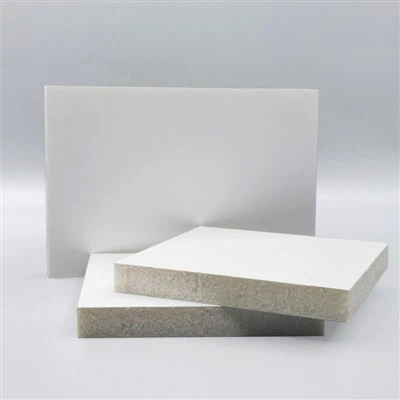
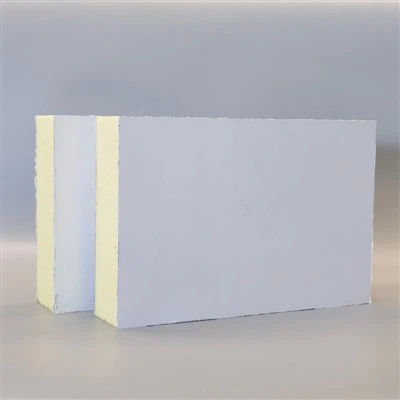
CFRT XPS and composite foam hybrids. Where designers require additional thermal insulation combined with structural skins.
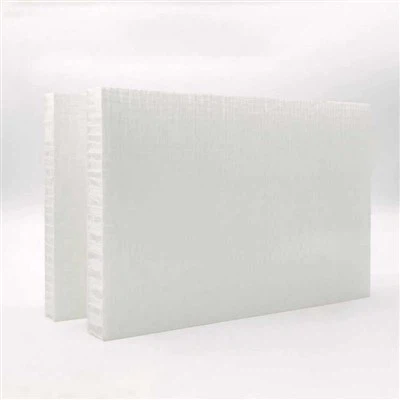
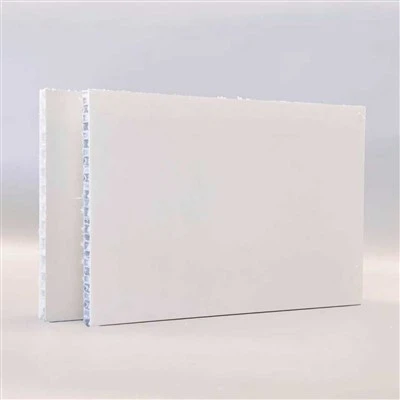
Each of these skin systems can be mated to a PP honeycomb with non-woven fabric, an open-cell PP core, or a conventional closed-cell core, depending on the specification.
Market Implications And Design Guidance
Design engineers should view PP honeycomb cores not as commodities but as design variables. Choosing between PP honeycomb with non-woven fabric and open-cell PP honeycomb core is a question of how the part must behave in service:
Choose non-woven hybrid cores for demanding lamination environments, higher point-load tolerance, or when minimizing delamination risk is crucial.
Choose open-cell cores where moisture management, thermal equalization, or integrated routing is required.
Combine both concepts in layered or graded cores for multifunctional parts (for example, open-cell inner layers for ventilation plus outer non-woven layers for bonding).
Holycore's role is to advise on these tradeoffs and supply validated panel systems that reduce development time while providing predictable in-field performance.
Final Words
PP honeycomb panels are more than lightweight fillers; they are highly tunable structural systems. Holycore's focused development of PP honeycomb with non-woven fabric and open-cell PP honeycomb core demonstrates how small, engineered changes to core architecture can unlock new capabilities - from improved bonding and impact resistance to controlled permeability and thermal performance.
By integrating these core options with a family of thermoplastic and CFRT skins, Holycore provides OEMs and fabricators with modular, recyclable, and application-specific panels that meet modern demands for lighter, longer-lasting, and more sustainable solutions. Whether you are engineering refrigerated transport, modular buildings, acoustic interiors, or lightweight furniture systems, understanding the specific benefits of core architecture - and choosing the right Holycore product combination - is essential for achieving optimal performance and lifecycle value.