Durability as a System-Level Performance Metric
Lightweight structural panels are increasingly deployed across transport bodies, modular buildings, industrial enclosures, and mobile systems where weight efficiency, energy performance, and modularity are critical. While initial strength and stiffness are often emphasized during design and procurement, long-term durability ultimately determines whether these panels deliver sustainable value over their service life.
Durability in this context extends beyond resistance to immediate failure. It encompasses the ability of a panel system to maintain mechanical integrity, dimensional stability, and functional performance under prolonged exposure to mechanical loading, environmental stressors, and operational wear. Lightweight panels must therefore be evaluated as integrated systems rather than isolated materials.

Sheet

PP Honeycomb
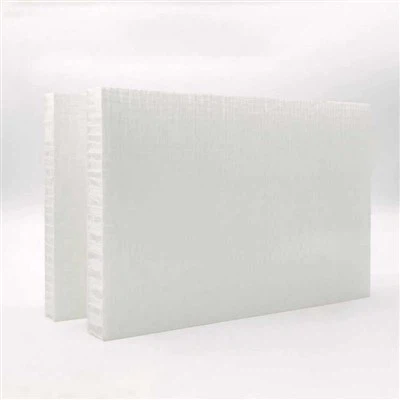
HolyPan®
Cyclic Mechanical Loading and Fatigue Behavior
One of the primary durability challenges for lightweight structural panels is fatigue under cyclic loading. Transport and mobile applications subject panels to millions of load cycles generated by vibration, acceleration, braking, and road-induced excitation.
Sandwich panel architectures distribute stress across face sheets, cores, and bonding interfaces, reducing peak stress concentrations. This distribution improves fatigue resistance compared to monolithic materials, provided that load paths are continuous and interfaces are properly engineered.
Durability under cyclic loading is strongly influenced by:
Core shear stability under repeated deformation
Adhesive bond integrity at skin-core interfaces
Resistance of face sheets to microcrack initiation
Panels designed with balanced stiffness and controlled compliance generally demonstrate superior fatigue performance over rigid, over-constrained constructions.
Environmental Exposure and Material Aging
Lightweight panels often operate in environments where temperature, humidity, UV radiation, and chemical exposure vary significantly over time. These factors interact with mechanical loading to accelerate material aging.
Thermoplastic and composite-based panels exhibit gradual changes in modulus and toughness as polymer chains respond to thermal and environmental stress. Honeycomb and foam cores may experience long-term dimensional changes if exposed to sustained heat or moisture ingress.
Durability-oriented designs mitigate environmental aging by:
Selecting materials with stable long-term properties
Sealing cut edges and interfaces to prevent ingress
Balancing thermal expansion across panel layers
Environmental resistance is therefore not solely a material attribute but a function of panel architecture and system integration.
Moisture Ingress and Internal Degradation Mechanisms
Moisture ingress remains a critical durability concern, particularly in mobile and outdoor applications. Once moisture enters a panel system, it can compromise core materials, adhesives, and face sheet interfaces.
Lightweight panels with open or poorly protected edges are particularly vulnerable. Over time, moisture can lead to:
Reduction in core shear strength
Adhesive degradation or debonding
Freeze–thaw damage in cold climates
Effective moisture management relies on edge treatments, compatible bonding systems, and material selection that limits water absorption. Panels designed with long-term durability in mind treat moisture control as a structural requirement rather than a secondary sealing issue.
Thermal Cycling and Dimensional Stability
Repeated thermal cycling imposes additional durability challenges on lightweight structural panels. Differential expansion between face sheets, cores, and adhesives generates internal stress even in the absence of external loading.
Over extended service periods, thermal cycling can cause:
Progressive loss of bond strength
Accumulation of micro-deformation in core structures
Warping or surface waviness affecting functional fit
Durable panel systems incorporate thermal compatibility across materials and allow controlled movement where necessary. Symmetric layups, flexible bonding layers, and stable core geometries contribute to long-term dimensional stability.
Impact Damage and Residual Structural Capacity
In real-world operation, lightweight panels inevitably experience impact events. Unlike catastrophic failures, durability is often defined by how well panels retain structural capacity after damage.
Composite sandwich panels typically localize damage, preserving surrounding structural integrity. This behavior supports continued safe operation and enables targeted repairs.
Residual strength after impact depends on:
Core material's ability to confine damage
Face sheet toughness and crack resistance
Bond line stability under localized deformation
Panels that maintain functional performance despite visible damage provide higher durability in operational terms than those requiring immediate replacement after minor incidents.
Creep and Long-Term Load Retention
In applications involving sustained loads, creep becomes a dominant durability factor. Lightweight panels used as floors, roofs, or load-bearing walls must maintain thickness and stiffness over long periods.
Creep behavior is influenced by:
Core material viscoelastic properties
Operating temperature relative to material limits
Magnitude and distribution of applied loads
Honeycomb and reinforced foam cores can offer improved creep resistance when properly specified. Long-term durability assessments must therefore consider time-dependent deformation alongside immediate strength metrics.
Interface Integrity and Joint Durability
Interfaces and joints often dictate the service life of lightweight structural panels. Even when panel materials remain intact, joint degradation can compromise system performance.
Durability-oriented design emphasizes:
Redundant load transfer paths at joints
Controlled stiffness transitions to reduce stress concentration
Accessible interfaces for inspection and maintenance
By treating joints as critical structural elements rather than secondary attachments, panel systems can maintain performance over extended operational periods.
Repairability as a Durability Multiplier
Durability is closely linked to repairability. Panels that can be repaired efficiently extend service life and reduce lifecycle costs, even if they experience periodic damage.
Lightweight composite panels designed for localized repair allow operators to restore structural function without full replacement. This approach shifts durability from an absolute property to a managed capability supported by design intent.
Repair-friendly designs typically feature:
Damage containment within defined zones
Compatible materials for secondary bonding
Clear repair guidelines and thresholds
Manufacturing Quality and Consistency Over Time
Long-term durability is strongly influenced by manufacturing consistency. Variations in bonding quality, core geometry, or material composition can lead to uneven aging and unpredictable performance.
High-quality manufacturing processes contribute to durability by:
Ensuring uniform stress distribution
Reducing residual stresses introduced during production
Enhancing repeatability across large panel volumes
Durability assessments must therefore account for process control and quality assurance, not just material specifications.
Lifecycle Perspective on Lightweight Panel Durability
Durability should be evaluated over the entire lifecycle of a lightweight structural panel system, from initial installation through years of operation, maintenance, and eventual refurbishment or replacement.
Panels that combine stable materials, robust interfaces, environmental resistance, and repairability often outperform heavier traditional constructions over extended service periods. Lightweight design, when executed as a system-level strategy, does not inherently compromise durability. Instead, it redefines durability as the ability to sustain performance through intelligent structural design, controlled degradation, and practical maintenance pathways.
In this lifecycle-oriented framework, long-term durability becomes a measurable engineering outcome rather than a conservative assumption, supporting the broader adoption of lightweight structural panels in demanding operational environments.