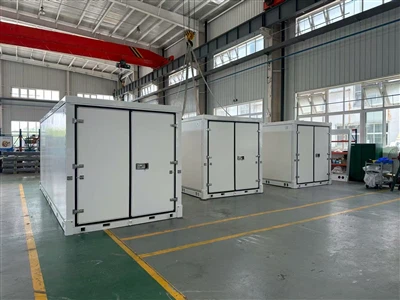
Modern manufacturing has moved beyond the traditional mindset of "stronger equals better." Today, success is defined by efficiency per unit of material, energy consumption, and total lifecycle cost.
Lightweight structural panels-especially composite solutions like honeycomb panels-have become essential because they address multiple industrial challenges simultaneously:
Reducing material usage
Improving energy efficiency
Enhancing product performance
Enabling scalable, modular production
Manufacturers such as Holycore are at the forefront of this shift, offering engineered lightweight panel systems that integrate structural performance with manufacturing practicality.

1. Reducing Material Consumption Without Sacrificing Strength
Traditional manufacturing often relies on bulk material to achieve structural performance. This leads to:
Overuse of raw materials
Increased production cost
Higher environmental impact
Lightweight panels replace this approach with engineered structures:
Thin, high-strength face sheets
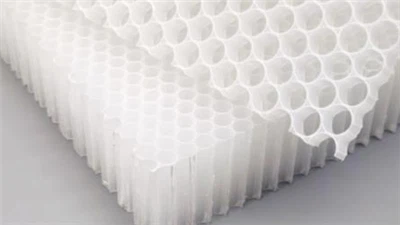
Lightweight core (e.g., honeycomb)
Optimized load distribution
Result:
Significant material savings
Comparable or superior structural performance
Holycore's honeycomb-based panels are designed to maximize material efficiency, helping manufacturers reduce both cost and resource consumption.
2. Improving Energy Efficiency Across the Lifecycle
Weight directly affects energy consumption-not just in transportation, but also during operation.
In manufacturing:
Lighter components require less energy to move and assemble
In end-use:
Vehicles consume less fuel
Machines operate with lower inertia
Systems require less power
Lifecycle impact:
Reduced operational costs
Lower carbon emissions
Holycore panels contribute to energy-efficient product design, aligning with global sustainability goals.
3. Enabling High-Performance Product Design
Lightweight structural panels allow engineers to design products that are:
Stronger relative to their weight
More durable under dynamic loads
Better optimized for specific applications
Key benefits:
Higher stiffness-to-weight ratio
Improved vibration control
Enhanced impact resistance
This is particularly important in industries such as transportation, industrial equipment, and automation.
Holycore supports this with customizable panel configurations, enabling precise performance tuning.
4. Supporting Modular and Scalable Manufacturing
Modern manufacturing increasingly relies on:
Modular design
Prefabrication
Scalable production systems
Lightweight panels are ideal for this approach because they are:
Easy to handle and assemble
Available in large formats
Compatible with automated processes
System-level advantage:
Faster production cycles
Reduced labor requirements
Improved consistency
Holycore's manufacturing capability supports large-scale, repeatable panel production for industrial clients.
5. Lowering Transportation and Logistics Costs
Heavy components increase:
Shipping costs
Handling complexity
Installation difficulty
Lightweight panels reduce these burdens:
Lower freight costs
Easier manual handling
Reduced need for heavy equipment
This is especially valuable for:
Export-oriented manufacturing
Modular construction systems
Distributed production models
Holycore panels are widely used in logistics-sensitive applications where weight reduction translates directly into cost savings.
6. Enhancing Equipment Performance and Longevity
In industrial machinery, weight affects performance in several ways:
Higher mass → greater wear on moving parts
Increased inertia → slower response times
More stress on structural components
Lightweight panels help:
Reduce mechanical stress
Improve system responsiveness
Extend equipment lifespan
Holycore's panels are engineered to maintain structural integrity while minimizing mass, improving overall equipment efficiency.
7. Integrating Multiple Functions into One Material
Traditional systems often require multiple layers:
Structural support
Insulation
Acoustic control
Lightweight composite panels integrate these functions:
Structural strength
Thermal insulation
Sound damping
Benefit:
Fewer components
Simplified assembly
Reduced total system weight
Holycore offers a range of panel types (aluminum, FRP, thermoplastic) to meet multi-functional requirements.
8. Supporting Sustainability and ESG Goals
Sustainability is now a core requirement in manufacturing.
Lightweight structural panels contribute by:
Reducing raw material consumption
Lowering energy use
Enabling recyclable material systems
Industry drivers:
Regulatory compliance
Carbon reduction targets
Customer demand for eco-friendly products
Holycore aligns with these trends by developing efficient, recyclable, and long-life composite solutions.
9. Increasing Design Flexibility
Lightweight panels give engineers more freedom to innovate:
Larger panel sizes without weight penalties
Complex geometries
Custom thickness and material combinations
This enables:
More efficient product architectures
Reduced component count
Improved aesthetics (in visible applications)
Holycore provides custom-engineered panel solutions, allowing designers to move beyond standard material limitations.
10. Reducing Total Cost of Ownership
While lightweight panels may have a higher upfront cost, they deliver lower total cost over time.
Cost savings come from:
Reduced material usage
Lower transportation costs
Faster installation
Reduced maintenance
Improved energy efficiency
Conclusion:
Lightweight panels are a long-term investment in efficiency, not just a material choice.
Holycore's balanced cost-performance approach makes these benefits accessible for industrial-scale adoption.
Industry Applications Driving Demand
Lightweight structural panels are now essential in:
Transportation
Vehicles, trailers, rail systems
Industrial Equipment
Machine enclosures, platforms
Construction
Facades, partitions, modular buildings
Logistics
Packaging, containers, pallets
Energy Systems
Equipment housings, structural components
Holycore supports all these sectors with application-specific panel solutions.
Why Holycore Is Relevant in Modern Manufacturing
Holycore's role goes beyond supplying materials-it enables efficient manufacturing systems.
Key strengths:
Integrated Production
Honeycomb core + composite panel manufacturing
Customization Capability
Tailored solutions based on application requirements
Scalable Output
Suitable for OEM and large industrial projects
Engineering Support
Assistance in material selection and structural optimization
This positions Holycore as a practical partner for manufacturers transitioning to lightweight solutions.
Conclusion
Lightweight structural panels are important for modern manufacturing because they address the core challenges of today's industrial environment:
Efficiency
Cost control
Sustainability
Performance optimization
They allow manufacturers to produce better products with fewer resources, while also improving operational and environmental outcomes.
With its advanced composite technologies and application-driven approach, Holycore is helping industries adopt lightweight structural panels as a standard, not an exception.
Final Insight
Modern manufacturing is not about using more material-it's about using material more intelligently.
Lightweight structural panels represent that intelligence in action.
And companies like Holycore are making it scalable, practical, and commercially viable.