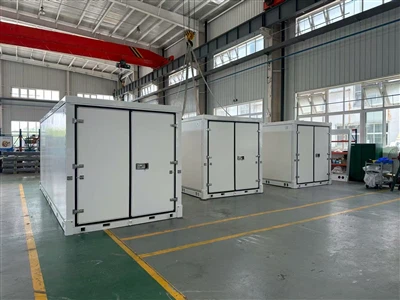
The strength of a honeycomb core panel is not defined by a single parameter. It is the result of a multi-variable system, where core geometry, material selection, bonding quality, and panel configuration all interact.
Unlike solid materials-where strength scales mainly with thickness-honeycomb panels rely on structural mechanics and material distribution. This makes them highly efficient, but also requires precise engineering.
Manufacturers like Holycore optimize these variables to deliver panels tailored for specific load conditions and industrial applications.

1. Core Material Type
The core material is the foundation of the panel's structural behavior.
Common materials:
Aluminum honeycomb → high strength, excellent fire resistance
Thermoplastic honeycomb (PP, PC) → lightweight, impact-resistant
Aramid (Nomex) → ultra-lightweight, aerospace-grade
Impact on strength:
Determines compressive strength and shear resistance
Influences durability and environmental performance
Holycore focus:
Primarily engineered aluminum honeycomb cores with consistent mechanical properties and high load-bearing capacity.
2. Cell Size (Honeycomb Geometry)
The size of the hexagonal cells directly affects strength.
Smaller cell size:
Higher density
Greater compressive and shear strength
Better load distribution
Larger cell size:
Lower weight
Reduced strength
Engineering trade-off:
Strength vs. weight optimization.
Holycore offers customizable cell sizes to match specific performance requirements.
3. Foil Thickness (Core Wall Thickness)
The thickness of the material forming the honeycomb cells is critical.
Thicker foil:
Higher strength and stiffness
Increased weight and cost
Thinner foil:
Lightweight
Lower load capacity
Design implication:
Foil thickness must align with expected loads and safety factors.
Holycore controls foil thickness precisely to ensure consistent structural performance.
4. Core Density
Core density combines cell size and foil thickness into a single parameter.
Higher density:
Increased compressive strength
Better shear resistance
Higher weight
Lower density:
Lightweight
Reduced mechanical strength
Key insight:
Density is one of the most direct indicators of core strength.
Holycore provides a wide density range, allowing engineers to balance performance and weight.
5. Panel Thickness (Overall Sandwich Structure)
Panel thickness plays a major role in bending strength.
Why it matters:
Increasing thickness increases moment of inertia
Leads to higher stiffness and load-bearing capacity
Important note:
Thickness increase in honeycomb panels adds minimal weight compared to solid materials
Holycore supports custom panel thicknesses to optimize structural performance for different applications.
6. Face Sheet Material and Thickness
The face sheets carry most of the tensile and compressive loads.
Common materials:
Aluminum
Steel
FRP (fiberglass-reinforced plastic)
Thicker/stronger face sheets:
Higher bending strength
Improved impact resistance
Weaker/thinner face sheets:
Lower load capacity
Risk of surface failure
Critical point:
Even a strong core cannot compensate for weak face sheets.
Holycore offers multiple skin options to ensure balanced panel performance.
7. Adhesive Bonding Quality
The bond between the core and face sheets is essential.
Poor bonding leads to:
Delamination
Reduced load transfer
Structural failure
High-quality bonding ensures:
Efficient stress distribution
Long-term durability
Holycore uses controlled bonding processes to maintain strong and reliable interfaces.
8. Load Type and Direction
Strength depends on how the load is applied.
Types of loads:
Compression
Tension
Shear
Bending
Key considerations:
Honeycomb cores excel in out-of-plane compression and shear
Face sheets handle in-plane tension and compression
Design implication:
Panels must be engineered based on actual load conditions-not just general strength values.
9. Edge Treatment and Reinforcement
Edges are often the weakest points in a honeycomb panel.
Without proper treatment:
Risk of crushing
Difficulty in fastening
Solutions:
Edge sealing
Inserts or framing
Reinforced borders
Holycore provides panel designs compatible with industrial assembly and fastening requirements.
10. Environmental Conditions
External conditions can affect strength over time.
Factors:
Temperature extremes
Moisture and humidity
Chemical exposure
Effects:
Material degradation
Reduced bonding strength
Structural weakening
Holycore offers material combinations designed for harsh industrial, marine, and outdoor environments.
11. Manufacturing Precision and Quality Control
Even with the right design, poor manufacturing can reduce strength.
Critical aspects:
Uniform cell geometry
Consistent bonding
Accurate panel thickness
Holycore maintains strict production standards to ensure repeatable and reliable performance across batches.
12. Safety Factors and Engineering Design
Strength is not just about maximum load-it's about safe operation under real conditions.
Designers must consider:
Safety margins
Fatigue over time
Unexpected loads
Holycore supports engineers with application-specific recommendations, helping optimize both performance and safety.
Key Factors Influencing Strength
| Factor | Impact on Strength |
|---|---|
| Core Material | Determines base mechanical properties |
| Cell Size | Smaller cells → higher strength |
| Foil Thickness | Thicker walls → stronger core |
| Core Density | Direct indicator of load capacity |
| Panel Thickness | Increases bending stiffness |
| Face Sheets | Carry primary loads |
| Bonding Quality | Ensures load transfer |
| Load Type | Defines performance requirements |
| Edge Design | Prevents local failure |
| Environment | Affects long-term durability |
Why Holycore Delivers Reliable Strength
Holycore's competitive advantage lies in system-level optimization, not just material supply.
Integrated Capability:
Core manufacturing + panel production
Custom Engineering:
Tailored designs for specific loads
Quality Assurance:
Consistent mechanical performance
Scalable Production:
Suitable for industrial and OEM applications
This ensures that strength is not theoretical-it is achieved in real-world applications.
Conclusion
The strength of a honeycomb core panel is determined by a combination of:
Material properties
Structural geometry
Manufacturing quality
Application-specific design
When these factors are properly engineered, honeycomb panels deliver exceptional strength with minimal weight, outperforming many traditional materials.
With its advanced manufacturing and engineering-driven approach, Holycore provides honeycomb panel solutions that are not only strong-but optimized, reliable, and scalable for modern industry.