Thermoplastic honeycomb panels are rapidly transitioning from specialized applications into mainstream industrial adoption. Engineers and OEMs across transportation, construction, packaging, and equipment manufacturing are increasingly evaluating these materials as alternatives to traditional metals, thermoset composites, and even aluminum honeycomb systems.
This growing attention is not accidental. It is driven by a combination of lightweighting demands, sustainability pressure, manufacturing flexibility, and cost efficiency.
Manufacturers such as Holycore are playing a key role in this shift by expanding their composite portfolio beyond conventional aluminum honeycomb to include thermoplastic-based solutions tailored for scalable industrial use.
What Are Thermoplastic Honeycomb Panels?
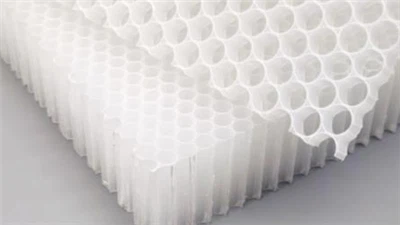
Thermoplastic honeycomb panels consist of:
Thermoplastic core (e.g., PP – polypropylene, PC – polycarbonate)
Thermoplastic or composite face sheets
Bonded into a lightweight sandwich structure
Unlike thermoset composites, thermoplastics can be:
Reheated and reshaped
Recycled and reprocessed
Welded instead of chemically bonded
This fundamental difference is what makes them increasingly attractive across industries.
Lightweight Performance with Cost Efficiency
Thermoplastic honeycomb panels offer excellent weight reduction comparable to aluminum honeycomb, but often at a lower cost.
Key advantages:
Low-density core structure
Reduced raw material cost
Lower transportation and handling expenses
Industrial impact:
Ideal for high-volume applications (automotive, packaging, logistics)
Cost-effective lightweighting solution
Holycore leverages optimized core geometries to ensure that weight reduction does not compromise mechanical stability.
Recyclability and Sustainability
Sustainability is one of the biggest drivers behind the rise of thermoplastic honeycomb panels.
Environmental benefits:
Fully recyclable materials (e.g., polypropylene cores)
No chemical curing process (unlike thermosets)
Reduced waste during manufacturing
Industry relevance:
Increasing regulatory pressure for recyclable materials
Corporate ESG and carbon reduction targets
Holycore's thermoplastic panel solutions align with global sustainability trends by offering eco-friendly composite alternatives.
Superior Impact Resistance and Toughness
Thermoplastic materials are inherently more ductile and impact-resistant than many traditional materials.
Performance characteristics:
High energy absorption
Resistance to cracking and brittle failure
Durability under repeated impact
Applications benefiting most:
Automotive interiors and cargo floors
Reusable packaging systems
Protective panels in industrial equipment
Holycore designs thermoplastic honeycomb panels to maintain structural integrity even under demanding mechanical conditions.
Moisture and Chemical Resistance
Unlike paper honeycomb or بعض composite materials, thermoplastics offer strong resistance to:
Water absorption
Humidity
Chemical exposure
Advantages:
No swelling or degradation in wet environments
Suitable for outdoor and marine use
Long service life in harsh conditions
Holycore's thermoplastic cores are particularly valuable in logistics, cold chain, and industrial environments.
Manufacturing Flexibility and Process Efficiency
One of the most significant reasons for industry attention is processing versatility.
Thermoplastic advantages:
Can be thermoformed into complex shapes
Compatible with automated production lines
Weldable (ultrasonic, heat welding)
Shorter production cycles
Compared to thermoset composites:
No curing time
Faster throughput
Lower production cost
Holycore supports OEM clients with custom panel configurations optimized for mass production and automated assembly.
Integration into Modular and Reusable Systems
Thermoplastic honeycomb panels are ideal for modular design and reusable systems.
Key use cases:
Returnable transport packaging
Modular flooring systems
Reconfigurable industrial structures
Benefits:
Long lifecycle
Easy repair and replacement
Reduced total cost of ownership
Holycore's solutions are widely applicable in industries transitioning toward circular economy models.
Electrical Insulation and Safety
Unlike metal-based honeycomb panels, thermoplastics provide:
Non-conductive properties
Improved electrical safety
Suitability for sensitive equipment environments
Applications:
Electrical enclosures
Battery systems (EV industry)
Cleanroom equipment
Holycore offers thermoplastic panel options that meet specific safety and insulation requirements.
Competitive Alternative to Aluminum Honeycomb
While aluminum honeycomb panels remain dominant in high-performance sectors, thermoplastic panels are gaining ground due to:
| Factor | Aluminum Honeycomb | Thermoplastic Honeycomb |
|---|---|---|
| Weight | Very low | Low |
| Strength | High | Moderate |
| Cost | Higher | Lower |
| Recyclability | Moderate | High |
| Impact Resistance | Moderate | High |
| Electrical Conductivity | Conductive | Non-conductive |
Conclusion:
Thermoplastic panels are not replacing aluminum entirely-but they are capturing a large share of cost-sensitive and high-volume applications.
Holycore addresses both segments by offering diversified honeycomb solutions, enabling clients to select the best material for their specific needs.
Expanding Application Scenarios
Thermoplastic honeycomb panels are gaining traction across multiple industries:
Automotive and Transportation
Interior panels
Cargo floors
Lightweight structural components
Logistics and Packaging
Reusable pallets
Returnable boxes
Protective transport systems
Construction
Lightweight partitions
Temporary structures
Industrial Equipment
Machine covers
Protective housings
Holycore's product portfolio supports these applications with customizable panel designs and scalable production capacity.
Alignment with Industry Megatrends
The rise of thermoplastic honeycomb panels aligns with several global trends:
Lightweighting
Essential for energy efficiency and cost reduction
Sustainability
Increasing demand for recyclable materials
Automation
Need for materials compatible with high-speed manufacturing
Cost Optimization
Pressure to reduce total system cost
Holycore's development strategy reflects these trends, positioning the company as a forward-looking composite materials provider.
Holycore's Role in Advancing Thermoplastic Honeycomb Solutions
While many suppliers offer thermoplastic materials, Holycore differentiates itself through:
Integrated Product Offering
Honeycomb cores + composite panels
Multiple material systems (aluminum, thermoplastic, hybrid)
Custom Engineering Capability
Application-specific design
Structural optimization support
Scalable Manufacturing
Suitable for mass production
Consistent quality control
Balanced Cost-Performance
Competitive pricing for industrial adoption
This combination allows Holycore to serve both high-performance and high-volume markets effectively.
Conclusion
Thermoplastic honeycomb panels are gaining industry attention because they address some of the most pressing challenges in modern engineering:
Reducing weight without excessive cost
Meeting sustainability requirements
Enabling faster and more flexible manufacturing
Delivering durable performance in demanding environments
They represent not just a material innovation, but a shift toward more efficient, adaptable, and sustainable design systems.
With its expanding portfolio and engineering-driven approach, Holycore is well-positioned to support industries adopting thermoplastic honeycomb technologies at scale.
Final Insight
The growing interest in thermoplastic honeycomb panels is not about replacing existing materials-it is about expanding the design toolbox.
And companies like Holycore are ensuring that this toolbox is not only advanced, but also practical, scalable, and ready for real-world industrial demands.