Structural Evolution Toward Lightweight Efficiency
Modern structural design is undergoing a fundamental shift. Across transportation, logistics, architecture, and industrial engineering, the emphasis is moving away from monolithic, mass-driven construction toward systems that maximize structural efficiency per unit weight. This evolution is not driven by a single factor, but by the convergence of energy efficiency requirements, payload optimization, modular construction trends, and lifecycle cost pressures.
Lightweight honeycomb panels have emerged as a critical enabling technology within this transition. Rather than relying on material mass for strength and stiffness, these panels leverage geometry, load path optimization, and composite material behavior to achieve performance levels that were previously associated only with solid or heavy constructions.
Honeycomb Geometry as a Structural Multiplier
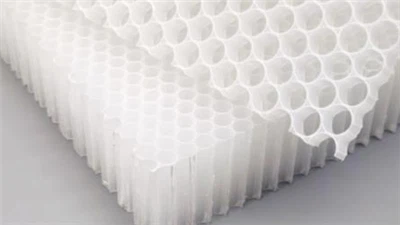
At the core of honeycomb panel performance lies geometry rather than material volume. The honeycomb cell structure creates a network of load-bearing walls arranged to efficiently distribute forces across the panel surface and thickness.
Hexagonal honeycomb geometries, in particular, provide near-isotropic in-plane stiffness while minimizing material usage. This configuration allows panels to resist bending, shear, and localized loads with a fraction of the mass required by solid boards or thick laminates.
From an engineering perspective, honeycomb geometry acts as a structural multiplier. By separating face sheets and stabilizing them against buckling, the core dramatically increases bending stiffness without contributing significant weight. This geometric advantage is a primary reason honeycomb panels outperform traditional solid materials in large-area structural applications.
Sandwich Construction and Load Path Optimization
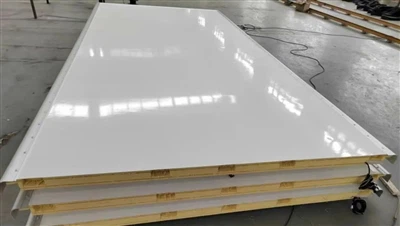
Lightweight honeycomb panels function as sandwich structures, where face sheets carry tensile and compressive stresses while the core manages shear loads and maintains separation between skins.
This division of structural roles enables highly efficient load path optimization. Under bending loads, stresses are concentrated in the face sheets, where high-modulus materials are most effective. The honeycomb core, positioned near the neutral axis, resists shear and prevents face sheet instability.
Unlike solid panels, where material throughout the thickness contributes marginally to bending resistance, sandwich panels ensure that nearly every gram of material actively participates in load transfer. This efficiency is central to their transformative impact on modern structures.
Weight Reduction as a System-Level Advantage
Weight reduction delivers benefits that extend far beyond material savings. In mobile structures such as vehicle bodies, trailers, rail cars, and modular transport units, lower structural weight directly translates into increased payload capacity, reduced energy consumption, and improved operational flexibility.
In architectural and modular construction contexts, lighter panels reduce foundation loads, simplify handling, and accelerate installation. These system-level advantages often outweigh the initial cost differences between honeycomb panels and traditional materials.
Importantly, lightweight honeycomb panels enable design possibilities that are impractical with heavy materials, including larger unsupported spans, modular assemblies, and relocatable structures.
Stiffness-to-Weight Performance in Large-Span Applications
One of the defining strengths of honeycomb panels is their ability to maintain high stiffness over large spans. In roofs, walls, floors, and vehicle side panels, deflection control is often more critical than ultimate strength.
Honeycomb cores resist shear deformation effectively, allowing panels to maintain flatness and dimensional stability under distributed loads. This property is particularly valuable in applications such as refrigerated truck bodies, cargo containers, and modular buildings, where structural deformation can compromise sealing, alignment, or insulation performance.
Compared to foam or solid cores, honeycomb structures provide superior stiffness retention at equivalent or lower weight levels, making them especially suitable for large-area panels.
Impact on Modular and Prefabricated Construction
The rise of modular and prefabricated construction has amplified the relevance of lightweight honeycomb panels. Modular systems demand materials that are strong, lightweight, dimensionally stable, and repeatable in manufacturing.
Honeycomb panels meet these requirements by offering consistent mechanical properties across large production volumes. Their low weight simplifies transportation and on-site assembly, while their stiffness ensures structural reliability once installed.
In mobile and temporary structures, honeycomb panels also support repeated assembly and disassembly cycles without significant loss of performance, reinforcing their role in flexible construction systems.
Durability and Fatigue Resistance in Mobile Structures
Modern structures are increasingly exposed to dynamic loading conditions, including vibration, cyclic bending, and repeated impacts. In transport and logistics environments, structural components must withstand years of mechanical fatigue without progressive degradation.
Honeycomb panels distribute dynamic loads across multiple load paths, reducing stress concentrations that can initiate fatigue damage. The cellular core absorbs energy and stabilizes face sheets, helping panels retain stiffness and strength under long-term service conditions.
When combined with thermoplastic composite face sheets, honeycomb panels demonstrate enhanced impact resistance and crack arrest behavior compared to brittle, monolithic materials.
Environmental Stability and Harsh-Service Performance
Lightweight honeycomb panels are increasingly specified for environments involving moisture, temperature extremes, and chemical exposure. Advances in core materials and face sheet technologies have expanded their suitability beyond controlled indoor applications.
Thermoplastic honeycomb cores resist moisture absorption and chemical attack, preserving shear properties even in humid or aggressive environments. Composite face sheets provide corrosion resistance and dimensional stability under thermal cycling.
This environmental resilience allows honeycomb panels to replace traditional materials such as plywood or metal in applications where durability and long-term performance are critical.
Manufacturing Scalability and Design Consistency
Another factor driving the transformation enabled by honeycomb panels is manufacturing scalability. Modern production techniques allow precise control over core geometry, bonding quality, and panel thickness.
This consistency supports predictable structural behavior and simplifies engineering validation. Designers can rely on repeatable material properties, enabling standardized panel systems across multiple projects or product lines.
Compared to traditional construction materials that exhibit natural variability, engineered honeycomb panels offer tighter tolerances and more reliable performance envelopes.
Integration with Advanced Bonding Technologies
The effectiveness of honeycomb panels depends heavily on the bonding interface between face sheets and core. Advances in adhesive systems and thermoplastic bonding technologies have significantly improved interfacial strength and durability.
Reliable bonding ensures efficient load transfer and prevents delamination under mechanical or environmental stress. This has expanded the use of honeycomb panels in high-load and safety-critical applications where earlier generations of bonded structures faced limitations.
Improved bonding performance also enhances repairability and recyclability, supporting evolving sustainability requirements.
Sustainability and Resource Efficiency Drivers
Sustainability considerations are increasingly influencing structural material choices. Lightweight honeycomb panels reduce raw material usage and lower operational energy consumption through weight reduction.
Thermoplastic-based honeycomb systems further support recyclability and material recovery, aligning with circular economy principles. Compared to solid boards or metal panels, honeycomb structures deliver equivalent or superior performance with a smaller environmental footprint.
This combination of resource efficiency and performance positions honeycomb panels as a long-term solution rather than a niche alternative.
Expanding Application Boundaries in Modern Engineering
The transformation driven by lightweight honeycomb panels is evident across a widening range of applications. From vehicle bodies and logistics equipment to modular buildings and industrial enclosures, these panels are redefining expectations for structural performance.
Their success lies not in a single advantage, but in the convergence of geometry, materials science, and system-level design thinking. Honeycomb panels embody a shift away from mass-based strength toward efficiency-based engineering.
As modern structures continue to demand lighter, stronger, and more adaptable solutions, lightweight honeycomb panels are not merely an incremental improvement-they represent a structural paradigm that aligns with the future direction of engineering design.