Why Delamination Is the Primary Failure Mode in Composite Panels
Delamination is the most common and most costly failure mechanism in composite sandwich panels used for truck bodies, trailers, refrigerated vehicles, containers, and industrial enclosures.
Unlike visible failures such as surface cracking or denting, delamination often begins internally, progressing unnoticed until structural stiffness, insulation performance, or panel integrity is severely compromised.
From an engineering perspective, delamination occurs when:
The bond between face sheets and core fails
Load transfer between layers is interrupted
The sandwich structure no longer behaves as a unified system
In logistics fleets, delamination directly leads to:
Reduced panel stiffness and load-bearing capacity
Water ingress and insulation degradation
Hygiene and temperature-control failures (especially in reefers)
Increased maintenance frequency and premature panel replacement
Preventing delamination is therefore not a single design choice but a system-level discipline, involving materials, bonding chemistry, manufacturing control, structural design, and operational use.
Understanding Delamination Mechanisms in Sandwich Panels
What Delamination Actually Is
In a sandwich panel, structural performance relies on:
Face sheets carrying tensile and compressive stresses
Core material carrying shear and maintaining face separation
Adhesive interface transferring loads between face and core
Delamination occurs when the interfacial bond strength falls below the applied stresses-either suddenly or through fatigue accumulation.
Primary Stress Modes Causing Delamination
Delamination does not arise from one single stress type. It is usually the result of combined loading conditions:
Shear stress at the face-core interface
Peel stress caused by bending or edge loading
Thermal stress from temperature gradients
Moisture-induced swelling or shrinkage
Impact-induced local debonding
Understanding these stress modes is essential before attempting any preventive strategy.
The Foundation of Delamination Resistance
Face Sheet Materials and Their Bonding Behavior
Different face sheet materials exhibit very different adhesion characteristics.
FRP (Fiberglass Reinforced Plastic)
Excellent surface energy for adhesive bonding
Compatible with PU, epoxy, and MMA adhesives
High fatigue resistance
Preferred for logistics and refrigerated vehicles
Aluminum
Requires strict surface treatment
Naturally forms oxide layers that reduce adhesion
Susceptible to corrosion-driven bond degradation
CFRT / Thermoplastic Laminates
Low surface energy
Requires flame, plasma, or chemical surface activation
Sensitive to adhesive selection
Key Insight:
Delamination risk increases sharply when surface chemistry is ignored during material selection.
Core Material Influence on Delamination Risk
The core plays a decisive role in resisting interface shear and fatigue loads.
PU / PIR Foam Cores
Good initial adhesion
Risk of brittle fracture under cyclic loading
Moisture absorption can weaken interface over time
XPS / EPS Foam
Lower shear strength
Higher risk of cohesive core failure near the bond line
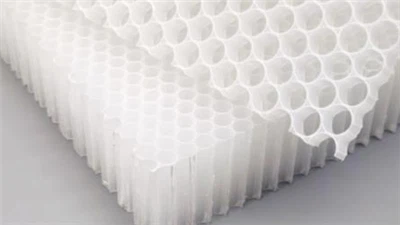
PP Honeycomb Core
Excellent moisture resistance
High fatigue durability
Requires resin-impregnated skins or coupling layers for optimal bonding
Paper Honeycomb
Cost-effective but moisture-sensitive
Not suitable for high-humidity or refrigerated applications
Key Insight:
Core selection must match environmental exposure, not just weight or cost targets.
Where Most Delamination Problems Begin
Adhesive Selection Is Not Universal
A frequent industry mistake is using a single adhesive system across all panel types.
Adhesives must be selected based on:
Face sheet material
Core material
Expected service temperature range
Moisture exposure
Fatigue loading cycles
Common Adhesive Types and Their Risks
Polyurethane (PU) Adhesives
Flexible, impact-resistant
Sensitive to moisture during curing
Poor mixing or humidity control leads to weak bonds
Epoxy Adhesives
High strength and stiffness
Brittle under impact if not toughened
Sensitive to cure temperature control
MMA (Methyl Methacrylate)
Excellent adhesion to low-energy surfaces
Strong odor and handling requirements
Good fatigue resistance
Adhesive Thickness Control
Too thin:
Incomplete wetting
Stress concentration
Too thick:
Increased peel stress
Reduced stiffness
Best Practice:
Maintain adhesive thickness within 0.3–0.8 mm, controlled via spacers or calibrated rollers.
The Most Underestimated Step
Up to 70% of delamination failures can be traced to improper surface preparation.
Surface Contamination Sources
Mold release agents
Dust and oils
Oxidation layers
Moisture condensation
Even invisible contamination can reduce bond strength by more than 50%.
Recommended Surface Preparation Methods
For FRP:
Light sanding (80–120 grit)
Solvent wipe (IPA or acetone)
For Aluminum:
Mechanical abrasion
Chemical conversion coating
Controlled oxide stabilization
For Thermoplastics:
Flame treatment
Plasma treatment
Chemical primers
Key Insight:
Surface preparation must be process-controlled, not operator-dependent.
Manufacturing Process Control and Its Impact on Delamination
Pressure Uniformity During Bonding
Insufficient or uneven pressure causes:
Local air entrapment
Incomplete adhesive contact
Weak interfacial zones
Vacuum pressing or controlled hydraulic pressing is preferred over manual weighting.
Cure Time and Temperature Discipline
Premature demolding is a leading cause of early-life delamination.
Common errors include:
Accelerating production cycles
Inconsistent ambient temperature
Ignoring post-cure requirements
Best Practice:
Define and document minimum cure energy, not just time.
Structural Design Choices That Reduce Delamination Risk
Avoiding Edge-Induced Peel Stress
Edges are the most vulnerable delamination initiation points.
Mitigation strategies:
Edge capping profiles
Resin-sealed edges
Load-spreading inserts
Insert and Hard Point Design
Improper inserts cause localized stress peaks.
Best practices include:
Load-distribution plates
Potting compounds compatible with the core
Gradual stiffness transition zones
Moisture, Temperature, and Chemicals
Moisture Ingress and Hygrothermal Cycling
Moisture causes:
Core swelling
Adhesive plasticization
Freeze-thaw microcracking
This is especially critical for:
Refrigerated vehicles
Cold-chain logistics
High-humidity regions
Chemical Exposure in Logistics Fleets
Cleaning agents, fuels, and road salts can degrade adhesives over time.
Preventive measures include:
Chemical-resistant adhesive systems
Protective coatings
Sealed joints and edges
The Silent Delamination Drivers
Composite panels in logistics fleets experience:
Continuous vibration
Torsional deformation
Dynamic load shifts
Fatigue-induced delamination often appears only after hundreds of thousands of kilometers.
Design strategies:
Use fatigue-tested adhesive systems
Select cores with high shear fatigue endurance
Avoid abrupt stiffness transitions
Inspection, Detection, and Early Intervention
Early Signs of Delamination
Localized softness
Surface bulging
Unusual acoustic response under tapping
Temperature inconsistencies in refrigerated panels
Non-Destructive Testing (NDT)
Ultrasonic testing
Infrared thermography
Tap testing for field inspection
Early detection allows localized repair, avoiding full panel replacement.
Repairability and Design for Maintainability
Preventing delamination is ideal, but designing for repairability is equally important.
Recommended practices:
Modular panel construction
Replaceable skins
Accessible bonding interfaces
This approach significantly reduces lifecycle costs for fleet operators.
Lifecycle Cost Perspective: Prevention vs Repair
| Aspect | Poor Delamination Control | Preventive Design |
|---|---|---|
| Panel lifespan | 3–5 years | 10–15 years |
| Maintenance cost | High | Low |
| Downtime | Frequent | Minimal |
| Total cost of ownership | Unpredictable | Stable |
Delamination prevention is not a cost-it is a risk mitigation investment.
Key Engineering Takeaways
Delamination is a system failure, not a single-material issue
Adhesive selection must match materials and environment
Surface preparation and process control are decisive
Structural design details matter as much as material strength
Moisture, fatigue, and temperature cycling must be addressed upfront
Final Thoughts
As composite panels replace traditional metal structures across logistics, refrigerated transport, and industrial vehicles, delamination resistance becomes the defining performance metric.
Successful prevention requires:
Engineering discipline
Cross-functional coordination
Long-term lifecycle thinking
Organizations that treat composite panels as engineered systems rather than commodity materials will achieve superior durability, lower operating costs, and higher fleet reliability.