Humidity as a Critical Design Constraint
High-humidity environments represent one of the most challenging conditions for lightweight structural materials. Moisture exposure is rarely a single event; it is continuous, cyclic, and often combined with temperature fluctuations, chemicals, and mechanical loads. In logistics vehicles, refrigerated bodies, marine-adjacent buildings, cleanrooms, and food-processing facilities, humidity is not an exception-it is the baseline operating condition.
Within this context, PP (polypropylene) honeycomb core has gained significant attention as a lightweight structural core material. However, a recurring engineering question remains: Can PP honeycomb core be reliably used in high-humidity environments without compromising structural performance or service life?
This article answers that question by examining PP honeycomb core from a material science, structural mechanics, and system-integration perspective, rather than relying on simplified yes-or-no claims.
Understanding PP Honeycomb Core at Material Level
What Is PP Honeycomb Core?
PP honeycomb core is a lightweight core material made from polypropylene sheets formed into a hexagonal or similar cellular structure. The cells are typically bonded or thermally fused, creating a stable, load-bearing geometry with extremely low density.
Key material characteristics of polypropylene include:
Hydrophobic polymer structure
Chemical inertness
Low moisture absorption
High fatigue resistance
Stable performance across a wide temperature range
These properties directly influence how PP honeycomb behaves in humid environments.
Hydrophobic Nature of Polypropylene
From a molecular standpoint, polypropylene is non-polar and hydrophobic. Unlike wood-based, paper-based, or certain foam materials, PP does not absorb water into its polymer chains. This is a fundamental advantage when humidity is a concern.
In practical terms:
PP does not swell when exposed to moisture
Mechanical properties remain stable
Long-term exposure does not cause hydrolytic degradation
This differentiates PP honeycomb sharply from paper honeycomb and some polymer foams.
Moisture Exposure Mechanisms in Real Applications
To evaluate suitability, it is essential to clarify what "high-humidity environment" actually means in practice.
Typical High-Humidity Scenarios
Common scenarios include:
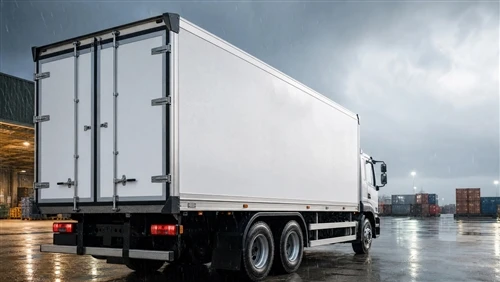
Refrigerated truck bodies with frequent door openings
Cold-chain logistics with condensation cycles
Coastal and marine-adjacent structures
Food processing and wash-down environments
Tropical or monsoon climates
In these environments, materials are exposed not only to humidity but also to condensation, standing water, cleaning chemicals, and temperature gradients.
Moisture Pathways in Sandwich Panels
Moisture-related failures typically occur through:
Water absorption by core material
Capillary action along cell walls
Wicking through damaged skins or joints
Trapped condensation within closed structures
Whether PP honeycomb performs well depends not only on the core itself, but on how it is integrated into the sandwich panel system.
Moisture Resistance of PP Honeycomb Core
Water Absorption Behavior
PP honeycomb core exhibits near-zero water absorption at the material level. Even under prolonged exposure:
The polymer does not absorb moisture
Cell walls remain dimensionally stable
Mechanical properties are retained
Unlike foam cores that may slowly absorb water through micro-cracks or diffusion, PP honeycomb remains chemically unaffected by moisture.
Comparison with Alternative Core Materials
| Core Type | Moisture Resistance | Risk in High Humidity |
|---|---|---|
| Paper honeycomb | Poor | High (swelling, collapse) |
| PU foam | Moderate | Risk of moisture ingress over time |
| PVC / PET foam | Good | Density-dependent |
| Aluminum honeycomb | Material stable | Corrosion risk |
| PP honeycomb | Excellent | Very low |
From a pure moisture-resistance standpoint, PP honeycomb is one of the most reliable lightweight cores available.
Structural Performance Under Humid Conditions
Shear and Compressive Stability
Because PP honeycomb does not absorb water:
Shear modulus remains stable
Compressive strength does not degrade
No softening or embrittlement occurs
This is particularly important in applications such as truck sidewalls and trailer panels, where shear loads are continuous and long-term.
Fatigue Performance in Humidity
Humidity often accelerates fatigue degradation in materials that absorb moisture. PP honeycomb avoids this mechanism entirely. In vibration-intensive environments:
Cell geometry remains intact
Adhesive interfaces, not the core, become the limiting factor
Fatigue performance remains predictable
This makes PP honeycomb suitable for high-mileage logistics fleets operating in humid regions.
Condensation and Internal Moisture Management
Condensation vs Absorption
It is critical to distinguish between condensation presence and material absorption.
Condensation may form on surfaces
PP honeycomb does not absorb or wick moisture
Water does not migrate into the core material
If condensation enters a panel cavity due to poor sealing, PP honeycomb will not degrade-but system-level design must still address drainage and sealing.
Importance of Edge Sealing
In high-humidity applications, proper edge sealing is essential:
Prevent standing water inside cells
Avoid freeze–thaw stress in cold environments
Maintain long-term hygiene standards
PP honeycomb tolerates moisture presence, but good panel design prevents unnecessary moisture accumulation.
Chemical and Cleaning Resistance in Humid Environments
High-humidity environments often involve frequent cleaning.
PP honeycomb offers strong resistance to:
Detergents
Mild acids and alkalis
Disinfectants
Salt spray
This makes it especially suitable for:
Food logistics
Pharmaceutical transport
Wash-down industrial environments
Unlike metal cores, PP does not corrode or require protective coatings.
Thermal Cycling Combined with Humidity
Dimensional Stability
PP honeycomb maintains dimensional stability under:
Repeated temperature cycling
High humidity combined with cold storage
Freeze–thaw conditions (within design limits)
There is no moisture-driven expansion or contraction, which protects skin–core bonding integrity.
Relevance for Refrigerated Vehicles
In refrigerated vehicles, humidity and temperature cycling occur simultaneously. PP honeycomb performs well in:
Roof and sidewall panels
Partition walls
Lightweight structural sections
However, it is typically combined with foam cores in zones where thermal insulation is the primary requirement, as PP honeycomb itself is not an insulator.
System-Level Design Considerations
Skin Selection Matters
The performance of PP honeycomb in humidity depends on compatible skins:
FRP skins provide excellent moisture barriers
CFRT skins add recyclability
Metal skins require careful thermal bridge management
The core itself resists humidity, but the panel system must be designed holistically.
Adhesive Compatibility
Structural adhesives used with PP honeycomb must be:
Moisture-resistant
Capable of bonding low-surface-energy polymers
Durable under temperature and humidity cycling
When properly specified, adhesive failure is rare.
Applications Where PP Honeycomb Excels in High Humidity
PP honeycomb core is well suited for:
Trailer and truck sidewalls in humid climates
Refrigerated vehicle partitions (non-insulating zones)
Logistics fleet body panels
Marine-adjacent architectural panels
Cleanroom wall systems
In these applications, long-term moisture stability translates directly into lower maintenance costs.
Limitations and Misuse Scenarios
While PP honeycomb performs well in humidity, it is not universally optimal.
When PP Honeycomb Is Not Ideal
Applications requiring high thermal insulation alone
Areas with heavy point loads without reinforcement
Poorly sealed panel designs allowing water pooling
These are design issues rather than material failures, but they must be acknowledged.
Maintenance and Lifecycle Implications
Because PP honeycomb does not degrade in humidity:
No moisture-related core replacement
Stable mechanical properties over time
Reduced inspection frequency
This contributes to lower total cost of ownership, especially in logistics fleets operating in wet or tropical environments.
Sustainability Perspective
Polypropylene honeycomb offers:
Long service life
Recyclability potential
Reduced material usage through lightweight design
In humid environments where alternative cores degrade faster, PP honeycomb often delivers better lifecycle sustainability.
A Qualified Yes-With Engineering Discipline
So, can PP honeycomb core be used in high-humidity environments?
Yes-decisively and reliably-when applied with proper system-level engineering.
PP honeycomb's hydrophobic polymer structure, chemical resistance, dimensional stability, and fatigue durability make it one of the most humidity-tolerant lightweight core materials available today. It does not absorb water, does not swell, and does not suffer moisture-induced degradation.
However, long-term success depends on:
Proper skin selection
Effective edge sealing
Appropriate adhesive systems
Correct load-path design
When these conditions are met, PP honeycomb core is not merely suitable for high-humidity environments-it is often one of the most robust and maintenance-efficient choices available.