Structural Paradigms: Engineered Geometry Versus Material Mass
The fundamental difference between honeycomb core panels and traditional boards lies in their structural philosophy. Traditional boards rely on material mass and thickness to achieve strength and stiffness. Whether plywood, solid plastic sheets, or metal plates, their load-bearing capacity increases primarily by adding material.
Honeycomb core panels, by contrast, are engineered structures. Their performance is driven by geometry, load separation, and efficient material placement. Instead of filling the entire thickness with solid material, honeycomb panels distribute material strategically-thin, strong face sheets carry bending stresses, while a lightweight cellular core stabilizes the structure and transfers shear.
This divergence in design philosophy underpins all subsequent performance differences between the two panel types.
Bending Performance and Stiffness Efficiency
Bending stiffness is one of the most critical performance metrics for panels used in floors, walls, roofs, and vehicle bodies. Traditional boards resist bending through bulk material stiffness distributed across their thickness.
In solid boards, a significant portion of the material near the neutral axis contributes little to bending resistance. As a result, increasing stiffness requires disproportionately thicker and heavier panels.
Honeycomb core panels overcome this inefficiency by separating the face sheets as far as possible within a lightweight structure. This dramatically increases the second moment of area, enabling high bending stiffness at a fraction of the weight.
For applications involving large spans or strict deflection limits, honeycomb panels consistently outperform traditional boards when stiffness-to-weight ratio is considered.
Shear Load Transfer and Panel Deformation
Under bending loads, panels experience not only bending stresses but also transverse shear. In traditional boards, shear resistance is provided by the same bulk material that carries bending stresses.
While solid boards often exhibit adequate shear capacity, they tend to accumulate shear deformation under load, contributing to overall deflection. This effect becomes more pronounced as thickness increases.
Honeycomb core panels separate these functions. The honeycomb core is specifically optimized for shear load transfer, while face sheets handle bending stresses. The cellular core distributes shear forces across multiple load paths, limiting localized deformation and improving dimensional stability.
This separation of structural roles results in more predictable deformation behavior under service loads.
Weight and Structural Efficiency
Weight is an increasingly decisive factor in modern structural applications. Traditional boards scale weight linearly with thickness, making significant stiffness gains costly in terms of mass.
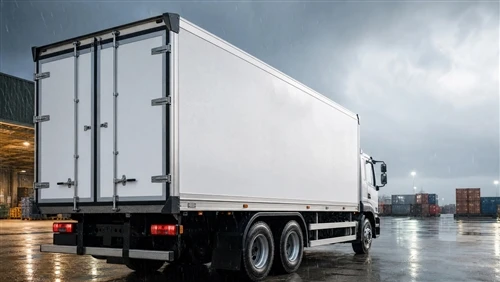
Honeycomb core panels achieve comparable or superior structural performance with substantially lower weight. This efficiency directly benefits applications such as transport bodies, modular structures, and mobile equipment, where weight reduction improves payload capacity and energy efficiency.
The performance advantage of honeycomb panels becomes especially apparent at larger panel sizes, where traditional boards become impractically heavy to meet stiffness requirements.
Impact Resistance and Damage Behavior
Impact resistance is often cited as a strength of traditional boards, particularly plywood and solid plastics, which can absorb localized impacts through bulk deformation.
However, this resistance comes at the cost of permanent damage propagation. Cracks, delamination, or moisture ingress often spread beyond the impact zone, compromising structural integrity over time.
Honeycomb core panels manage impact differently. The cellular core absorbs and redistributes impact energy, while composite face sheets resist cracking. Damage tends to remain localized, reducing the likelihood of structural failure spreading across the panel.
While extremely high-energy impacts may crush local core regions, the surrounding structure often remains functional, preserving overall panel performance.
Fatigue Performance Under Repeated Loading
In real-world applications, panels are subjected to cyclic loads rather than static forces. Fatigue performance therefore plays a critical role in long-term reliability.
Traditional boards often develop fatigue cracks along grain directions (in plywood) or stress concentration zones (in plastics and metals). Once initiated, these cracks can propagate rapidly through continuous material.
Honeycomb core panels distribute cyclic stresses across numerous cell walls and bonding interfaces. This diffusion of stress reduces peak amplitudes and delays crack initiation.
As a result, honeycomb panels generally maintain stiffness and load capacity longer under repeated loading, especially in mobile and vibration-prone environments.
Environmental Resistance and Moisture Sensitivity
Environmental exposure significantly influences panel performance over time. Traditional boards exhibit varying levels of sensitivity to moisture, temperature, and chemicals.
Plywood is particularly vulnerable to moisture ingress, leading to swelling, rot, and loss of mechanical properties. Solid plastics resist moisture but may suffer from creep, UV degradation, or thermal expansion issues. Metal panels introduce corrosion risks and thermal bridging.
Honeycomb core panels, particularly those using thermoplastic composites and polymer-based cores, offer improved environmental stability. Moisture-resistant materials preserve shear and bonding properties, while corrosion-free construction ensures consistent performance in humid or aggressive environments.
Environmental durability reduces maintenance demands and extends service life compared to many traditional boards.
Dimensional Stability and Long-Term Flatness
Maintaining flatness and dimensional accuracy is critical in applications such as vehicle bodies, insulated enclosures, and modular construction.
Traditional boards are prone to warping due to moisture absorption, temperature gradients, or internal stress release. Over time, this dimensional instability can compromise sealing, alignment, and aesthetic quality.
Honeycomb core panels exhibit superior dimensional stability due to their symmetric sandwich construction and low moisture uptake. The balanced structure resists warping and preserves flatness across large panel areas.
This stability simplifies integration with frames, doors, and sealing systems.
Manufacturing Consistency and Quality Control
Traditional boards often exhibit inherent material variability. Wood-based panels vary by grain structure and moisture content, while metals and plastics may show thickness or property variations across batches.
Honeycomb core panels are engineered products manufactured under controlled conditions. Core geometry, face sheet thickness, and bonding quality are tightly regulated, resulting in predictable mechanical behavior.
This consistency allows engineers to design closer to performance limits without excessive safety margins, improving material efficiency and cost predictability.
Integration and System-Level Performance
Panels rarely function as isolated elements. Their performance depends on how they interact with frames, fasteners, and adjacent components.
Heavier traditional boards impose higher loads on supporting structures, often requiring reinforced frames and larger fasteners. This increases system weight and complexity.
Honeycomb core panels reduce demands on surrounding structures, enabling lighter frames and simplified support systems. The benefits of weight reduction therefore extend beyond the panel itself, improving overall system efficiency.
Maintenance, Repair, and Service Life Considerations
Traditional boards are often easier to understand and repair but may require frequent maintenance due to environmental degradation or fatigue damage.
Honeycomb core panels are designed for long-term durability, reducing maintenance frequency. While repair techniques may be more specialized, damage localization often allows targeted repairs rather than full panel replacement.
Over extended service periods, reduced maintenance and replacement needs translate into lower total ownership costs.
Application-Specific Performance Alignment
The choice between honeycomb core panels and traditional boards ultimately depends on application requirements. Traditional boards may remain suitable for low-cost, low-performance, or short-term applications.
However, in demanding environments where weight, durability, and long-term performance are critical, honeycomb core panels provide a structural solution aligned with modern engineering priorities.
Their performance advantages are not limited to a single metric but emerge from a combination of structural efficiency, environmental stability, and system-level integration benefits.
Performance Comparison as an Engineering Decision Tool
Comparing honeycomb core panels to traditional boards highlights a broader shift in structural engineering-from material-heavy solutions toward geometry-driven efficiency.
Rather than asking which material is stronger in isolation, modern engineering evaluates how structures behave under real-world conditions, over time, and within integrated systems.
Honeycomb core panels represent an evolution in panel design that aligns performance with the multifaceted demands of contemporary structures, challenging the assumptions that have long favored traditional solid boards.