Cost Evaluation Beyond Material Price
In many engineering projects, cost discussions begin and end with material price per square meter. While this approach may simplify procurement decisions, it often leads to suboptimal outcomes when evaluating structural panels for transportation, logistics, and industrial applications.
High-performance composite core panels typically carry a higher upfront material cost than traditional solid boards or basic sandwich constructions. However, focusing solely on purchase price obscures the broader economic advantages that emerge across manufacturing, installation, operation, and maintenance phases.
A meaningful cost assessment must consider total system cost rather than isolated material expense. Composite core panels redefine cost efficiency by reducing mass, improving structural performance, and minimizing downstream expenses throughout the product lifecycle.
Structural Efficiency as a Cost Driver
Structural efficiency directly influences cost. Panels that achieve required stiffness and strength with less material reduce not only material consumption but also associated processing, handling, and support structure costs.
High-performance composite core panels leverage sandwich construction principles, where thin, high-strength face sheets are separated by a lightweight core. This configuration maximizes bending stiffness while minimizing material usage.
Compared to solid boards, which rely on bulk material for strength, composite core panels place material where it contributes most effectively to load resistance. This efficiency reduces unnecessary mass and allows engineers to meet performance requirements without overdesign, translating into measurable cost savings at the system level.
Weight Reduction and Operational Cost Savings
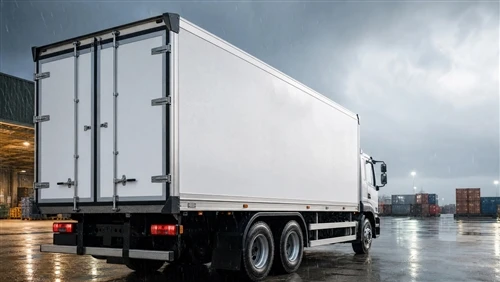
In mobile structures such as truck bodies, trailers, railcars, and modular transport units, weight directly impacts operating costs. Every kilogram saved increases payload capacity or reduces energy consumption.
High-performance composite core panels enable substantial weight reductions compared to plywood, steel, or aluminum panels of equivalent stiffness. These savings accumulate over time through:
Lower fuel or energy consumption
Increased payload per trip
Reduced wear on suspension, brakes, and tires
Improved vehicle efficiency and range
Even modest weight reductions at the panel level can yield significant operational cost advantages when applied across an entire fleet.
Manufacturing Efficiency and Process Cost Reduction
Manufacturing cost is influenced not only by material price but by process complexity, cycle time, and quality consistency. High-performance composite core panels are increasingly designed for scalable, repeatable manufacturing.
Uniform core geometry, controlled bonding processes, and consistent panel thickness reduce production variability and rework rates. Compared to traditional multi-layer assemblies that require extensive fastening or reinforcement, composite core panels often integrate structural and functional roles into a single component.
Reduced part count simplifies assembly, lowers labor costs, and shortens production cycles. In high-volume manufacturing environments, these efficiencies can outweigh higher raw material costs.
Installation and Assembly Cost Advantages
Lightweight composite core panels are easier to handle, transport, and install than heavier solid materials. Reduced panel weight lowers labor requirements and minimizes the need for heavy lifting equipment during assembly.
In modular construction and vehicle body assembly, lighter panels accelerate installation and reduce alignment challenges. Faster assembly translates into shorter production timelines and lower indirect costs, including reduced downtime and improved throughput.
Additionally, dimensional stability of composite core panels reduces the need for on-site adjustments or corrective work, further contributing to cost efficiency.
Reduced Support Structure Requirements
Panel weight influences not only the panel itself but the entire supporting structure. Heavier panels require stronger frames, reinforcements, and fastening systems, increasing material and fabrication costs.
By reducing panel mass while maintaining stiffness, high-performance composite core panels lower structural demands on frames and substructures. This cascading effect enables:
Thinner or lighter supporting members
Reduced fastener size or quantity
Simplified structural design
System-level material savings often exceed the cost difference between composite panels and traditional alternatives.
Durability and Maintenance Cost Reduction
Maintenance costs represent a significant portion of total ownership cost, particularly in logistics and industrial environments. Traditional materials such as plywood and steel are prone to moisture damage, corrosion, and fatigue-related degradation.
High-performance composite core panels are engineered for environmental resistance. Moisture-resistant cores, corrosion-free face sheets, and stable bonding systems preserve structural properties over time.
Reduced susceptibility to rot, corrosion, and delamination minimizes repair frequency and extends service intervals. For fleet operators, this translates into lower maintenance budgets and reduced downtime.
Longevity and Replacement Cost Avoidance
Service life is a critical economic factor. Panels that require frequent replacement may appear cost-effective initially but incur substantial long-term expenses.
Composite core panels maintain stiffness and strength under cyclic loading and environmental exposure, extending usable lifespan. Their resistance to fatigue and impact damage reduces the likelihood of catastrophic failure or premature replacement.
When evaluated over years of service, longer lifespan offsets higher initial costs, making composite panels economically favorable in long-term applications.
Repairability and Lifecycle Cost Control
Modern high-performance composite core panels are increasingly designed with repairability in mind. Localized damage can often be addressed without replacing the entire panel, reducing material waste and repair costs.
Compared to monolithic materials where damage propagates easily, composite panels localize damage within confined regions. This containment simplifies repair procedures and reduces labor intensity.
Lifecycle cost control benefits from predictable repair strategies and reduced need for full component replacement.
Energy Efficiency and Indirect Cost Benefits
Weight reduction and improved insulation properties of composite core panels contribute to energy efficiency beyond structural considerations.
In refrigerated transport and climate-controlled enclosures, composite panels reduce thermal bridging and energy loss. Lower energy demand decreases operating costs and supports compliance with increasingly strict efficiency regulations.
Indirect cost benefits also include reduced emissions-related penalties and improved sustainability metrics, which are becoming economically relevant in regulated markets.
Design Flexibility Reducing Customization Costs
High-performance composite core panels offer design flexibility that reduces customization costs. Panels can be engineered to meet specific load, insulation, or surface requirements without fundamental changes to the production process.
This adaptability reduces the need for multiple material types or bespoke constructions across product lines. Standardized panel platforms simplify inventory management and reduce engineering overhead.
The ability to tune performance through geometry and material selection rather than redesigning entire structures lowers development costs and accelerates time to market.
Risk Reduction and Cost Predictability
Cost overruns often result from performance uncertainty and failure risk. Composite core panels manufactured under controlled conditions offer predictable mechanical behavior and environmental performance.
This predictability reduces the need for conservative overdesign, which adds material and cost. Engineers can design closer to actual performance limits with confidence, improving cost efficiency without compromising safety.
Reduced failure risk also lowers warranty claims and liability exposure, contributing to long-term financial stability.
Total Cost of Ownership as the True Metric
Evaluating high-performance composite core panels through a total cost of ownership lens reveals their economic advantage. While initial material costs may be higher, cumulative savings across manufacturing, operation, maintenance, and replacement phases create a favorable cost profile.
By reducing mass, improving durability, simplifying assembly, and extending service life, composite core panels transform cost structures at both component and system levels.
In industries where efficiency, reliability, and long-term performance drive competitiveness, high-performance composite core panels are not a premium option-they are a cost-optimized engineering solution.