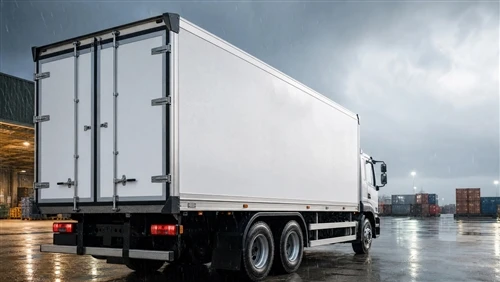
In modern transportation, vehicle manufacturing, cold-chain logistics, and structural engineering, sandwich composite panels have become a key material solution for their high strength-to-weight ratio, impact resistance, and long‑term durability. For OEMs, trailer builders, fleet operators, and industrial designers, choosing high‑performance sandwich panels requires a clear understanding of the core factors that directly determine mechanical behavior, service life, stability, and cost‑effectiveness.
1. Core Material Type and Structural Properties
The core is the backbone of any sandwich panel. It bears compression loads, absorbs impact energy, maintains panel thickness, and determines overall rigidity.
PP Honeycomb Core (Holycore Standard)
Polypropylene honeycomb provides a unique combination of lightweight performance, impact absorption, and environmental stability. Key influences on performance include:
Material composition: Pure PP honeycomb is waterproof, rot‑proof, corrosion‑resistant, and fatigue‑tolerant.
Cell structure: Hexagonal cell shape ensures uniform stress distribution and high energy absorption under impact.
Cell size: Smaller cells improve surface flatness and point‑load resistance; larger cells reduce weight for roof and interior panels.
Core density: Higher density enhances compression strength and impact resistance, while lower density optimizes lightweight design.
By contrast, paper honeycomb absorbs moisture and degrades rapidly, while aluminum honeycomb adds weight, corrodes, and conducts heat-issues completely avoided in Holycore products.
2. Face Sheet Material and Thickness
Face sheets carry tensile and flexural loads, resist puncture, abrasion, and environmental damage. Their material and thickness directly define external performance.
Holycore uses two high‑performance skin systems:
Thermoplastic fiberglass face sheets: High elasticity, impact resilience, and resistance to permanent denting-ideal for truck bodies and side panels.
FRP face sheets: High rigidity, puncture resistance, and abrasion tolerance-suitable for truck floors, container liners, and high‑wear areas.
Thickness effect:
Thicker skins significantly improve flexural strength, impact resistance, and durability against forklift collision and road debris.
Thinner skins reduce weight for ceilings, interior partitions, and decorative panels.
3. Adhesion and Bonding Quality Between Core and Skins
Bonding determines whether the sandwich structure acts as an integrated unit. Delamination is the primary failure mode of low‑quality sandwich panels.
Key performance factors:
Bonding strength and peel resistance
Uniformity of glue distribution without voids or weak areas
Stability under temperature cycling, vibration, and humidity
Long‑term aging resistance
Holycore uses professional thermal lamination and structural adhesive systems designed for PP honeycomb and fiberglass composites, ensuring stable bonding even under long‑haul vibration and extreme temperature changes.
4. Panel Thickness and Aspect Ratio
Overall thickness directly affects flexural rigidity, load capacity, and buckling resistance.
Thicker panels provide much higher stiffness and impact performance.
Length‑to‑thickness and width‑to‑thickness ratios influence deformation behavior and installation stability.
Larger panel sizes reduce assembly joints and improve structural integrity.
Holycore offers customized thickness options to match different applications such as flooring, side walls, roofs, and door panels.
5. Fiber Type, Content, and Orientation in Reinforced Skins
For fiberglass‑reinforced thermoplastic and FRP panels, fiber design is critical to directional strength and impact resistance.
Woven fiberglass: Balanced multi‑directional strength against impact from any angle.
Continuous fiber reinforcement: Improves toughness, fatigue life, and resistance to cracking.
Fiber volume ratio: Higher fiber content increases strength but must be balanced with surface flatness.
Holycore optimizes fiber layout to resist road debris impact, cargo shifting, and repeated dynamic loads in transport equipment.
6. Operating Environment and Weathering Conditions
Environmental exposure significantly changes long‑term performance:
Temperature range: Holycore panels maintain stable performance from –40°C to +80°C, suitable for global cold‑chain and overland transport.
Moisture and humidity: PP honeycomb and fiberglass skins are completely waterproof, avoiding swelling, rot, or strength loss.
UV radiation: UV‑stabilized surface treatments prevent chalking, fading, and embrittlement.
Chemical exposure: Resistance to fuel, cleaning agents, and corrosive cargo ensures stable performance in special transport scenarios.
7. Impact Loads, Fatigue, and Dynamic Stress
Transport equipment faces continuous dynamic stress:
High‑speed impact from road debris
Forklift collision during loading and unloading
Cargo shift impact
Long‑term vibration fatigue
Panel performance depends on:
Energy absorption capacity
Puncture and dent resistance
Fatigue life under cyclic loading
Ability to deform elastically without permanent damage
Holycore panels absorb energy through controlled compression of the PP honeycomb core, minimizing structural damage.
8. Manufacturing Process and Quality Consistency
Even premium materials cannot guarantee performance without precise manufacturing. Key quality factors:
Uniform core density and cell formation
Consistent skin thickness and fiber distribution
High flatness and dimensional accuracy
Automated production to reduce human error
Holycore implements strict in‑line quality control to ensure each panel meets OEM‑level mechanical standards.
9. Edge Treatment, Sealing, and Installation Design
Real‑world performance is often limited by improper edge treatment and installation:
Edge sealing prevents moisture penetration and delamination.
Fastener type and spacing affect local strength.
Support structure layout influences stress distribution.
Thermal expansion compatibility avoids warping during service.
Holycore provides professional engineering guidelines for cutting, drilling, sealing, and assembly to ensure designed performance is fully realized.
10. Surface Finish and Functional Coatings
Surface treatments extend service life and expand application scenarios:
Gel coat for scratch resistance and UV protection
Textured surfaces for anti‑slip flooring
Decorative layers for interior van, bus, and RV panels
Easy‑to‑clean surfaces for hygiene and low maintenance
Holycore's Decorative Panel series combines structural performance with aesthetic finishes for interior transport applications.
Conclusion
The performance of sandwich composite panels is determined by the combined effects of core material, face sheet design, bonding technology, structural dimensions, environmental resistance, manufacturing quality, and installation. Each factor directly influences strength, stiffness, impact resistance, durability, and service life.
For transport OEMs and fleet operators, selecting Holycore PP honeycomb‑based sandwich panels means optimizing all critical performance variables, resulting in lighter weight, higher payload, lower maintenance cost, and longer service life compared to plywood, metal panels, and low‑grade composites.