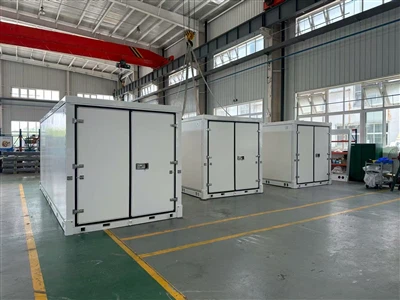
In modern engineering and industrial design, structural efficiency has become one of the most critical considerations when developing load-bearing systems. Whether used in transportation equipment, architectural structures, industrial platforms, or modular construction systems, materials must provide high strength while minimizing weight and material usage. Traditional materials such as solid steel plates, plywood boards, and reinforced plastics often struggle to achieve the balance between strength, weight, and durability that modern engineering demands.
Honeycomb composite panels have emerged as a preferred solution for many load-bearing applications because they combine exceptional structural stiffness, lightweight performance, and excellent durability within a single engineered material system. Their unique cellular structure allows engineers to design components that can support substantial loads while reducing overall system mass.
This article explores the top reasons engineers choose honeycomb panels for load-bearing projects, highlighting the structural advantages, engineering benefits, and real-world applications that make these panels increasingly popular across industries.
Exceptional Strength-to-Weight Ratio
One of the primary reasons engineers choose honeycomb panels for structural applications is their outstanding strength-to-weight ratio.
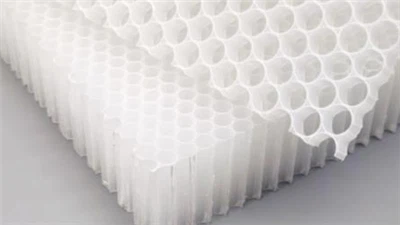
Honeycomb composite panels are constructed using a sandwich structure, which consists of two outer skins bonded to a lightweight honeycomb core. The outer skins provide tensile and compressive strength, while the honeycomb core maintains separation between them and distributes shear forces.
This design works similarly to an I-beam, where the outer skins function as the flanges and the core acts as the web. By increasing the distance between the skins without adding excessive material mass, the panel achieves high bending stiffness.
As a result, honeycomb panels can support significant loads while remaining much lighter than solid materials. This characteristic is particularly valuable in applications such as transportation, aerospace engineering, and modular construction, where weight reduction directly improves efficiency and performance.
High Structural Stiffness and Load Distribution
Load-bearing structures must maintain their shape under mechanical stress without excessive bending or deformation. Honeycomb panels excel in this area due to their high bending stiffness and efficient load distribution.
The honeycomb core contains thousands of interconnected hexagonal cells that distribute forces across the panel surface. Instead of concentrating stress at a single point, the cellular structure spreads loads evenly throughout the panel.
This design improves structural stability and allows panels to withstand both static and dynamic loads. Engineers frequently use honeycomb panels in structures that must support heavy equipment, mechanical components, or repeated operational loads.
Applications include vehicle floors, industrial platforms, structural partitions, and equipment enclosures where stiffness and reliability are essential.
Lightweight Construction for Improved System Efficiency
Reducing structural weight is often a critical design objective, especially in industries such as transportation and aerospace. Heavy materials increase energy consumption, limit payload capacity, and complicate installation.
Honeycomb panels offer a solution by delivering strong load-bearing performance with minimal material mass. The internal honeycomb structure occupies most of the panel volume while using very little material, significantly reducing overall density.
This lightweight construction provides several benefits:
improved fuel efficiency in transportation systems
increased payload capacity for vehicles and cargo structures
easier handling during installation and maintenance
reduced structural load on supporting frameworks
For engineers designing large structures or mobile equipment, these advantages can lead to substantial operational improvements.
Excellent Impact Resistance and Energy Absorption
Load-bearing structures must often withstand unexpected impacts, vibrations, and mechanical shocks. Honeycomb composite panels provide strong impact resistance and energy absorption capabilities due to their cellular internal structure.
When an external force strikes the panel surface, the honeycomb core distributes the energy across multiple cells. This prevents localized stress concentration and reduces the likelihood of structural failure.
In addition, many honeycomb panels incorporate reinforced skins such as fiberglass reinforced plastic or aluminum sheets. These skins protect the internal core and improve surface durability.
Because of these characteristics, honeycomb panels are widely used in environments where materials must tolerate frequent impacts or vibration, including transport equipment, industrial machinery enclosures, and modular structural systems.
Superior Material Efficiency
From an engineering perspective, material efficiency is a major advantage of honeycomb composite panels. The honeycomb structure uses minimal material while achieving high structural performance.
This efficiency results from the geometric design of the hexagonal cells. The honeycomb pattern provides strong compressive resistance and excellent load distribution while minimizing unnecessary mass.
Compared with solid panels of similar stiffness, honeycomb composites require far less raw material. This not only reduces weight but also lowers manufacturing costs and resource consumption.
In large-scale projects where thousands of panels may be required, these savings can become significant.
Versatility Across Different Structural Applications
Another important reason engineers choose honeycomb panels is their versatility. Honeycomb composite technology can be adapted to a wide variety of structural requirements by adjusting core materials, panel thickness, and skin compositions.
Common honeycomb core materials include:
polypropylene thermoplastic cores
aluminum honeycomb structures
aramid fiber honeycomb cores
Each material offers unique performance characteristics suitable for different environments.
Similarly, outer skins can be manufactured from materials such as:
fiberglass reinforced plastic (FRP)
aluminum sheets
thermoplastic composite laminates
By combining different core and skin materials, engineers can create panels optimized for specific structural loads, environmental conditions, and aesthetic requirements.
This adaptability makes honeycomb panels suitable for applications ranging from vehicle structures and industrial enclosures to architectural panels and marine components.
Durability in Harsh Environments
Load-bearing structures often operate in challenging environments that expose materials to moisture, chemicals, temperature fluctuations, and mechanical wear.
Honeycomb composite panels can be engineered to provide strong resistance to these conditions. For example, thermoplastic honeycomb cores are highly resistant to moisture and corrosion, making them ideal for transportation and logistics systems that operate outdoors.
Composite skins can also be designed to resist UV radiation, chemical exposure, and mechanical abrasion.
This durability ensures that honeycomb panels maintain structural performance over long periods of time, reducing maintenance costs and extending the lifespan of load-bearing systems.
Design Flexibility and Customization
Honeycomb composite panels offer significant design flexibility, allowing engineers to tailor structural solutions to specific project requirements.
Panel properties can be customized through:
varying core density and cell size
adjusting panel thickness
selecting different skin materials
incorporating reinforcement inserts for load points
applying specialized surface finishes
This flexibility enables designers to optimize panels for different structural roles within the same project.
For example, a transportation vehicle might use thicker panels for structural floors, lighter panels for sidewalls, and insulated panels for temperature-controlled cargo compartments.
Simplified Manufacturing and Modular Assembly
Honeycomb panels also contribute to more efficient manufacturing processes.
Because panels can be produced as large prefabricated components, they simplify assembly for many structural systems. Engineers can design modular structures where panels serve as both structural and surface elements.
This panelized approach reduces the number of separate components required during fabrication and speeds up installation.
In construction and transportation equipment manufacturing, modular panel systems allow faster production while maintaining consistent structural quality.
Improved Sustainability and Reduced Environmental Impact
Sustainability has become an increasingly important factor in engineering design. Honeycomb composite panels support environmental goals in several ways.
First, their lightweight structure reduces energy consumption in transportation applications, which lowers carbon emissions over time.
Second, many thermoplastic honeycomb materials are recyclable, supporting circular material strategies.
Finally, the long service life of durable composite panels reduces the need for frequent replacements, minimizing overall resource usage.
For companies seeking to meet environmental targets while maintaining structural performance, honeycomb panels offer an effective solution.
Real-World Load-Bearing Applications
Engineers use honeycomb composite panels in many real-world load-bearing applications across different industries.
Examples include:
truck body structures and cargo floors
aircraft interior structural panels
modular building walls and partitions
marine deck structures
industrial equipment platforms
railway interior panels
lightweight architectural structures
In each of these applications, the combination of strength, stiffness, and lightweight performance provides clear engineering advantages.
Conclusion
Honeycomb composite panels have become a preferred material choice for load-bearing projects because they deliver exceptional structural performance while maintaining lightweight construction. Their high strength-to-weight ratio, excellent load distribution, impact resistance, and environmental durability make them ideal for modern engineering applications.
By providing material efficiency, design flexibility, and long-term durability, honeycomb panels enable engineers to create structures that are both stronger and more efficient than those built with traditional materials. As industries continue to prioritize lightweight design and sustainable engineering solutions, honeycomb composite technology will remain a key component in the development of advanced load-bearing systems across transportation, construction, manufacturing, and beyond.