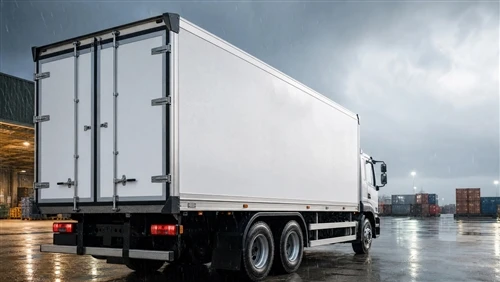
Why Composite Panels Are Central to Modern Refrigerated Vehicles
Refrigerated vehicles operate at the intersection of structural engineering, thermal management, hygiene control, and energy efficiency. Unlike general dry cargo bodies, refrigerated truck and trailer bodies must maintain strict internal temperature stability while enduring continuous vibration, frequent door openings, wash-down cycles, and long-term exposure to moisture and chemicals.
In this context, composite sandwich panels have become the dominant construction solution for modern refrigerated vehicles. Traditional metal-based structures struggle to meet the combined requirements of low thermal conductivity, high stiffness, corrosion resistance, and long service life. Composite panels, by contrast, offer a system-level solution where structure, insulation, and surface performance are integrated into a single engineered component.
This article provides a comprehensive technical overview of composite panels for refrigerated vehicle applications, explaining why they are used, how they are designed, how they perform under real operating conditions, and how to select the right composite panel system for different cold-chain requirements.
Performance Requirements Unique to Refrigerated Vehicles
Thermal Stability and Insulation Efficiency
The primary function of a refrigerated vehicle body is to maintain a controlled internal temperature, often ranging from deep frozen conditions below –20°C to chilled environments between 0°C and +8°C. Any thermal leakage directly increases refrigeration unit workload, fuel consumption, and operating cost.
Key insulation requirements include:
Low thermal conductivity across the entire panel
Minimal thermal bridging at joints and interfaces
Stable insulation performance over long service life
Composite sandwich panels inherently address these requirements by combining low-conductivity cores with non-metallic skins.
Structural Integrity Under Cyclic Loads
Refrigerated vehicles experience:
Continuous vibration during transport
Repeated thermal cycling
Dynamic loads from cargo movement
The body structure must retain stiffness and dimensional stability without developing fatigue cracks or delamination. Composite panels excel in fatigue resistance compared to monolithic metal structures.
Hygiene and Cleanability
Food, pharmaceutical, and medical logistics impose strict hygiene standards. Internal surfaces must be:
Smooth and non-porous
Resistant to moisture and bacteria
Compatible with frequent wash-down and disinfectants
Composite panel skins can be engineered specifically to meet these hygiene requirements.
What Are Composite Panels in Refrigerated Vehicle Construction?
Basic Sandwich Panel Structure
Composite panels used in refrigerated vehicles are typically sandwich panels consisting of:
Outer skins made from fiber-reinforced composites or coated metal
A lightweight insulating core, usually polymer foam
Structural adhesives bonding skins to the core
This configuration creates a lightweight yet stiff structure with integrated insulation.
Integrated Functional Design
Unlike traditional multi-layer constructions, composite panels integrate:
Structural strength
Thermal insulation
Moisture resistance
Surface durability
into a single engineered component, reducing assembly complexity and potential failure points.
Skin Materials Used in Refrigerated Composite Panels
Glass Fiber Reinforced Plastic (GFRP)
GFRP is the most common skin material in refrigerated vehicle panels due to its balanced performance:
High corrosion resistance
Good impact tolerance
Excellent fatigue behavior
Smooth, hygienic surface finish
GFRP skins can be gel-coated or laminated with food-grade finishes to meet regulatory requirements.
Continuous Fiber Thermoplastics (CFRT)
CFRT skins are increasingly adopted in high-performance refrigerated vehicles:
High strength-to-weight ratio
Thermoformability
Improved recyclability
CFRT allows faster production cycles and improved sustainability performance.
Metal Skins in Hybrid Designs
In some applications, thin aluminum or stainless steel skins are used externally for impact resistance. However, metal skins introduce thermal bridges and require careful design to preserve insulation efficiency.
Core Materials for Refrigerated Vehicle Composite Panels
Polyurethane (PU) Foam Cores
PU foam is widely used due to:
Very low thermal conductivity
Good adhesion to composite skins
Lightweight structure
PU foam cores are particularly suitable for deep-freeze applications.
PET and PVC Foam Cores
PET and PVC foams offer:
Better mechanical strength than PU
Improved recyclability (PET)
Good fatigue resistance
These foams are often selected for vehicles requiring higher structural durability.
Hybrid Core Concepts
Modern refrigerated panels may use:
Higher-density foam in floor and edge zones
Lower-density foam in large wall areas
This zoning approach balances insulation efficiency with mechanical performance.
Thermal Performance and Cold-Chain Efficiency
Minimizing Thermal Bridges
Metal frames, fasteners, and reinforcements create thermal bridges that compromise insulation. Composite panels minimize this risk by:
Reducing metal content
Using adhesive bonding instead of mechanical fasteners
Integrating insulation across the entire panel thickness
Energy Consumption Implications
Improved insulation performance results in:
Lower refrigeration unit runtime
Reduced fuel or energy consumption
Lower CO₂ emissions per transport unit
Over the vehicle's lifetime, these savings significantly outweigh initial material costs.
Moisture Resistance and Condensation Control
Water Absorption Risks
Moisture ingress can degrade insulation performance and cause long-term damage. Composite panels address this through:
Closed-cell foam cores
Non-porous composite skins
Sealed panel joints
Condensation Management
By maintaining stable internal surface temperatures, composite panels reduce condensation risk, which is critical for hygiene and structural longevity.
Structural Performance in Refrigerated Applications
Bending and Shear Stiffness
Sandwich composite panels achieve high bending stiffness with minimal weight, allowing:
Larger unsupported spans
Reduced need for internal framing
More usable internal volume
Fatigue Resistance
Composite materials distribute stresses across fibers, resulting in superior fatigue performance under cyclic loads compared to welded metal structures.
Floor, Roof, and Door Panel Considerations
Refrigerated Vehicle Floors
Floors must handle concentrated loads from pallets and forklifts while maintaining insulation. Composite floor panels typically feature:
High-density foam cores
Reinforced skins
Local load-spreading layers
Roof Panels
Roof panels benefit greatly from composite construction due to:
Large surface area
Low direct impact exposure
High importance of insulation
Insulated Doors
Composite panels allow insulated doors with:
Low thermal leakage
Reduced weight
Improved sealing performance
Hygiene, Food Safety, and Regulatory Compliance
Surface Finish Requirements
Composite panel surfaces can be engineered to be:
Smooth and easy to clean
Resistant to disinfectants
Compliant with food-contact regulations
ATP and Cold-Chain Standards
Composite panels are widely used in vehicles certified under ATP and similar standards due to their consistent insulation performance and durability.
Manufacturing and Assembly Advantages
Modular Construction
Composite panels enable modular refrigerated vehicle construction:
Pre-fabricated panels
Faster assembly times
Improved dimensional consistency
Adhesive Bonding
Adhesive bonding:
Reduces thermal bridging
Improves fatigue performance
Lowers overall body weight
This is a critical advantage over mechanically fastened metal bodies.
Repairability and Maintenance
Field Repairs
Composite panels can be repaired using:
Local patching
Resin injection
Surface refinishing
This reduces downtime compared to metal panel replacement.
Long-Term Maintenance
Corrosion resistance and moisture stability reduce long-term maintenance costs, particularly in high-humidity and wash-down environments.
Lifecycle Cost Analysis
Initial Investment
Composite panels typically involve higher upfront material and processing costs. However, this must be evaluated against operational savings.
Total Cost of Ownership
Over the vehicle lifecycle, composite panels deliver:
Lower fuel and energy costs
Reduced maintenance
Longer service life
For cold-chain operators, total cost of ownership is often significantly lower.
Sustainability Considerations
Operational Sustainability
Improved insulation reduces energy consumption and emissions per transported unit.
Material Sustainability
Advances in recyclable foams and thermoplastic composites are improving the environmental profile of composite panels.
Application-Specific Panel Selection
Deep-Freeze Transport
Prioritize:
PU foam cores
Maximum insulation thickness
Minimal thermal bridges
Chilled Food Distribution
Balance:
Insulation performance
Impact resistance
Repairability
Pharmaceutical Cold Chain
Focus on:
Temperature stability
Hygiene compliance
Structural durability
Common Design Mistakes to Avoid
Underestimating joint thermal leakage
Using excessive metal reinforcement
Ignoring fatigue and vibration effects
Selecting core density based only on insulation value
Composite panel performance depends on system-level design, not individual material properties alone.
Future Trends in Refrigerated Vehicle Composite Panels
Emerging trends include:
Integrated sensor systems for temperature monitoring
Lightweight hybrid composite structures
Increased use of recyclable thermoplastics
Digital simulation-driven panel optimization
These developments will further strengthen the role of composite panels in cold-chain logistics.
Composite Panels as the Foundation of Efficient Cold-Chain Transport
Composite panels are not merely an alternative to traditional materials-they are the structural and thermal foundation of modern refrigerated vehicle design. By integrating insulation, strength, durability, and hygiene into a single engineered solution, composite panels enable refrigerated vehicles to meet the growing demands of efficiency, sustainability, and regulatory compliance.
For manufacturers and operators alike, the strategic selection and proper design of composite panels directly determine cold-chain reliability, operating cost, and long-term competitiveness. In refrigerated vehicle applications, composite panels are no longer optional-they are essential.