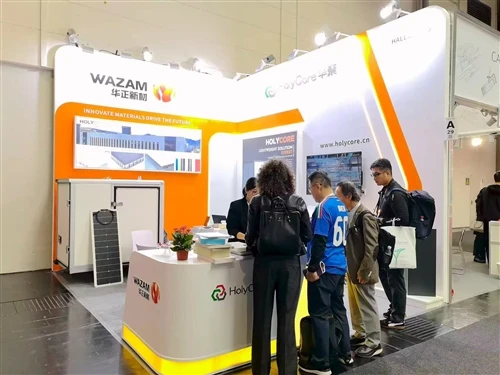
A Technical Insight with a Focus on Holycore
Engineering design has undergone a fundamental shift. Where traditional panels-solid metals, plywood, or monolithic composites-once dominated, modern projects now demand higher efficiency, lower weight, and better lifecycle performance. As a result, honeycomb structures have moved from niche applications (like aerospace) into mainstream industrial use.
This transition is not a trend-it is a system-level optimization strategy. Engineers are increasingly replacing traditional panels with honeycomb-based sandwich structures because they offer a superior balance between mechanical performance, cost efficiency, and functional integration.
Among the manufacturers enabling this shift, Holycore stands out for its engineered honeycomb cores and composite panel systems designed for scalable industrial applications.

The Limitations of Traditional Panels
Before understanding why honeycomb structures are replacing them, it's critical to identify the inherent inefficiencies of traditional panels:
Excessive Weight for Required Strength
Solid panels rely on bulk material to achieve strength. This leads to:
High dead load
Increased transportation and installation costs
Lower energy efficiency in mobile applications
Poor Structural Efficiency
Traditional panels concentrate material where it contributes least to bending resistance (the neutral axis). This results in:
Lower stiffness-to-weight ratio
Inefficient material utilization
Limited Functional Integration
To achieve insulation, soundproofing, or fire resistance, additional layers are required:
Increased system complexity
Higher total cost
More failure points
Buckling and Deformation Risks
Thin solid sheets are prone to:
Local buckling under compression
Permanent deformation under cyclic loads
Why Honeycomb Structures Are Replacing Them
Honeycomb structures address these limitations through geometry-driven performance optimization rather than simply adding more material.
Dramatic Weight Reduction Without Compromising Strength
Honeycomb cores consist of hexagonal cells that create a high-strength, low-density structure.
Engineering advantage:
Up to 70–90% weight reduction compared to solid panels
Maintains high compressive and shear strength
Holycore's aluminum honeycomb cores are designed with controlled foil thickness and cell geometry, ensuring consistent strength while minimizing mass.
Exceptional Stiffness-to-Weight Ratio
By separating two thin face sheets with a lightweight core, honeycomb panels significantly increase bending stiffness.
Result:
Higher load-bearing capacity
Reduced deflection
Ability to span larger distances
This makes them ideal for applications like truck bodies, wall panels, and flooring systems.
Superior Energy Absorption and Impact Resistance
Honeycomb structures excel in absorbing energy due to their cellular configuration:
Gradual collapse under impact
Reduced transmission of force
Enhanced safety in transport applications
Holycore panels are widely used in logistics and transportation where impact resistance is critical.
Improved Buckling Resistance
The honeycomb core provides continuous support to the face sheets:
Prevents local buckling
Increases critical load thresholds
Enhances durability under cyclic loading
This is particularly important in structural and mobile environments.
Multi-Functional Integration
Unlike traditional panels, honeycomb sandwich panels inherently provide:
Thermal insulation
Acoustic damping
Fire resistance (depending on materials)
Holycore offers various panel configurations (aluminum, FRP, stone composite) to meet specific environmental and regulatory requirements.
Material and Cost Efficiency
Honeycomb panels optimize material usage:
High-performance materials are used only in thin outer layers
Core material provides volume at low cost
This leads to:
Lower raw material consumption
Reduced transportation costs
Improved ROI over the product lifecycle
Scalability and Manufacturing Flexibility
Modern manufacturing processes allow honeycomb panels to be:
Produced in large formats
Customized for specific applications
Integrated into modular systems
Holycore supports OEM and project-based customization, enabling engineers to design around performance requirements rather than standard material limitations.
Holycore Product Ecosystem: Enabling the Transition
The shift toward honeycomb structures is only possible with reliable material partners. Holycore provides a comprehensive range of products that support this transition.
Core capabilities:
Lightweight yet structurally stable
Corrosion-resistant
Customizable density and cell size
Use cases:
Aerospace interiors
Rail systems
Industrial panels
Performance profile:
High stiffness and flatness
Fire-resistant and weather-resistant
Suitable for structural and decorative applications
Applications:
Curtain walls
Transportation panels
Cleanroom systems
Designed for chemically aggressive or electrically sensitive environments:
Corrosion-resistant
Electrically insulating
High impact strength
Combining aesthetics with engineering:
Natural stone surface with reduced weight
Improved crack resistance
Easier installation compared to solid stone
Holycore operates beyond standard supply by offering:
Engineering consultation
Application-specific panel design
Prototype development and mass production
This positions Holycore as a partner in structural optimization, not just a material vendor.
Comparison with Other Suppliers
While many manufacturers offer honeycomb panels, most focus on either:
Standardized products with limited flexibility
High-end niche markets with elevated costs
Holycore differentiates itself through:
Balanced cost-performance ratio
Broad product portfolio
Strong customization capabilities
Scalable manufacturing
Other companies may provide similar core materials, but often lack integrated panel solutions or application-level engineering support.
Industry Applications Driving Adoption
Truck bodies, trailers, and rail interiors
Reduced weight → increased payload → lower fuel consumption
Facades, ceilings, partitions
Lightweight panels simplify installation and reduce structural load
Machine enclosures and platforms
Improved vibration resistance and durability
Corrosion resistance and lightweight performance are critical
Honeycomb panels provide long-term reliability
Strategic Value for Engineers and OEMs
Replacing traditional panels with honeycomb structures is not just a material upgrade-it is a design philosophy shift:
From mass-based strength → geometry-based efficiency
From single-function materials → integrated performance systems
From standardized components → customized engineering solutions
Holycore supports this transition by providing both the materials and the engineering framework needed to implement honeycomb technology effectively.
Conclusion
Engineers are replacing traditional panels with honeycomb structures because they offer a fundamentally better approach to structural design-one that prioritizes efficiency, performance, and adaptability.
Through advanced material engineering and a comprehensive product portfolio, Holycore is enabling industries to move beyond the limitations of traditional panels and adopt high-performance composite solutions.
As demands for lightweighting, sustainability, and cost efficiency continue to grow, honeycomb structures will not just replace traditional panels-they will redefine the standards of modern engineering.