Introduction
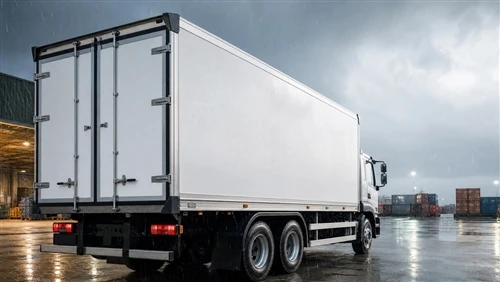
In commercial vehicle manufacturing, the ability to assemble truck bodies close to the final market can significantly affect logistics costs, import duties, production flexibility, and fleet delivery schedules. For truck manufacturers, vehicle distributors, body builders, and fleet operators, a Lightweight CKD Truck Body Kit provides a practical way to separate component manufacturing from final vehicle assembly.
CKD, or Completely Knocked Down, refers to a supply method in which a truck body is manufactured as a set of individual components or subassemblies, packaged for transportation, and shipped to another country or region for local assembly. Instead of importing a fully assembled truck body, the buyer receives panels, frames, doors, roof components, flooring systems, reinforcement members, fasteners, and other required parts in a controlled kit configuration.
The lightweight aspect adds another important engineering objective. A truck body must provide sufficient structural stiffness, impact resistance, weather protection, and dimensional stability without adding unnecessary mass to the chassis. Reducing body weight can increase available payload while also reducing transportation and handling requirements during CKD logistics.
For fleet production, the combination of CKD packaging and lightweight body construction is particularly valuable. A local assembly facility can receive standardized kits, establish repeatable assembly procedures, and produce multiple truck bodies using the same component architecture. This creates a production model that is different from conventional finished-body export and is better suited to markets requiring localized manufacturing.
What Is a Lightweight CKD Truck Body Kit?
A lightweight CKD truck body kit is a complete or semi-complete package of truck body components designed to be transported in disassembled condition and assembled at the destination.
The kit normally contains structural and non-structural components that can be connected through bolting, riveting, adhesive bonding, welding, or a combination of these methods, depending on the body design.
Typical components include:
|
Component |
Typical Function |
|
Side wall panels |
Enclose the cargo compartment |
|
Front wall |
Protects cargo from forward movement and forms the front structure |
|
Roof panels |
Provides weather protection and enclosure |
|
Rear doors |
Provides cargo access |
|
Floor assembly |
Supports cargo loads |
|
Bottom frame |
Transfers body loads toward the chassis |
|
Vertical posts |
Supports side panels and roof structure |
|
Cross members |
Maintains dimensional stability |
|
Corner profiles |
Reinforces body joints |
|
Door frames |
Provides mounting and sealing structure |
|
Fasteners |
Connects modular components |
|
Sealing materials |
Provides weather and dust resistance |
The exact configuration depends on the intended truck body, chassis dimensions, payload requirement, cargo type, and local assembly process.
A CKD kit should therefore not be regarded simply as a collection of truck body parts. It is an engineered assembly system in which individual components are designed to fit together accurately after transportation.

Why Lightweight Construction Matters in Commercial Trucks
Truck body weight directly affects the amount of cargo that can legally and practically be transported.
For a vehicle with a fixed gross vehicle weight rating, reducing body mass can increase the available payload. For example, if the chassis and powertrain remain unchanged while the body weight is reduced by 150 kg, approximately 150 kg of additional payload capacity may become available, subject to axle-load limitations and local regulations.
This relationship is particularly important for delivery trucks, dry freight vehicles, refrigerated vehicles, and fleet-operated commercial vehicles that accumulate high annual mileage.
Lightweight construction must not simply mean reducing material thickness. A thinner panel can decrease weight but may also reduce dent resistance, panel stiffness, fastening strength, or fatigue performance.
The engineering objective is therefore to achieve a suitable strength-to-weight ratio.
Common approaches include:
Using sandwich panels instead of solid heavy sheet structures
Selecting aluminum or galvanized steel according to the load requirement
Applying formed reinforcement profiles
Optimizing cross-member spacing
Reducing unnecessary structural overlap
Using modular corner and joint profiles
Designing components according to actual load paths
Standardizing fasteners and connection points
A properly engineered lightweight body distributes loads through the floor, frame, side walls, front wall, and roof structure instead of relying excessively on thick individual panels.
CKD Design Begins With Modularization
The most important difference between a conventional truck body and a CKD body system is the requirement for assembly-oriented design.
A body designed only for factory welding may not be suitable for international CKD shipment. Welded assemblies can occupy significant packaging volume and may require specialized equipment at the destination.
A CKD-oriented design divides the body into manageable modules.
For example, a dry freight body can be divided into:
Front wall module
Left side wall module
Right side wall module
Roof module
Floor module
Rear door frame
Rear door leaves
Lower frame
Corner and reinforcement profiles
Fastener and accessory package
Each module should have defined interfaces.
These interfaces determine:
Overall dimensions
Hole locations
Fastener specifications
Joint tolerances
Panel overlap
Sealing positions
Assembly sequence
Required tools
The purpose is to ensure that local workers do not need to redesign or modify components during assembly.
Lightweight Panel Construction for CKD Applications
Panel selection has a major influence on both body weight and transportation efficiency.
Common panel technologies include aluminum sheets, galvanized steel panels, and composite sandwich panels.
Aluminum Panels
Aluminum offers a relatively low density compared with steel and can be used where weight reduction is a primary consideration.
It is commonly applied to:
Side walls
Rear doors
Roof structures
Interior panels
Certain frame components
However, aluminum requires appropriate joint design because its mechanical characteristics differ from steel. Fastener selection, galvanic corrosion protection, and connection strength must be considered.
Galvanized Steel Panels
Galvanized steel provides high structural strength and corrosion resistance through its zinc coating. It is frequently used for truck body frames and reinforcement members where stiffness and durability are more important than achieving the absolute minimum weight.
Sandwich Panels
Sandwich construction consists of two relatively thin outer skins separated by a lightweight core.
A typical panel may contain:
External skin
Insulating or structural core
Internal skin
Edge reinforcement
The core increases panel thickness without adding the same mass as a solid sheet of equivalent overall thickness. This improves bending stiffness and can also provide thermal insulation.
For CKD logistics, sandwich panels can be manufactured in standardized dimensions and stacked carefully to optimize container space.
Structural Frame Design
A lightweight body still requires a reliable structural framework.
The lower frame is especially important because it transfers cargo and body loads to the truck chassis.
A typical frame includes longitudinal members and transverse cross members.
The longitudinal members primarily support loads along the length of the body, while cross members control lateral deformation and distribute concentrated cargo loads.
The frame design should account for:
Static cargo weight
Dynamic road loads
Braking forces
Cornering forces
Chassis torsion
Uneven-road conditions
Repeated loading cycles
This is particularly important for trucks operating on roads with significant vibration and surface irregularities.
A body that performs well under static loading may still experience fatigue problems if the structural connections are not designed for repeated dynamic loading.
Therefore, CKD body engineering should consider the actual operating environment rather than relying solely on nominal payload calculations.
Connection Methods for Local Assembly
The connection system determines how easily a CKD kit can be assembled at the destination.
Several methods are available.
Bolted Connections
Bolted joints are highly suitable for local assembly because they require relatively simple tools and allow components to be replaced or serviced.
Advantages include:
Simple installation
Controlled fastening
Easy maintenance
No welding equipment required
Suitable for semi-skilled assembly operations
Riveted Connections
Rivets are frequently used for panel-to-frame connections. They provide consistent fastening and can be suitable for high-volume assembly.
Adhesive Bonding
Structural or semi-structural adhesives can be used to join panels while reducing the number of mechanical fasteners. Adhesive selection must account for temperature, humidity, vibration, surface preparation, and curing conditions.
Welding
Welding provides strong permanent joints but requires appropriate equipment, operator skills, process control, and workplace safety measures.
For a CKD program, welding may be concentrated at the local assembly plant for specific structural subassemblies while other modules use mechanical connections.
Packaging Efficiency Is Part of CKD Engineering
One of the most overlooked aspects of CKD truck body manufacturing is packaging.
A component can be technically suitable but commercially inefficient if it occupies excessive shipping volume.
The objective is not simply to minimize the physical weight of the kit. The supplier should optimize the relationship between:
Component dimensions + stacking method + container utilization + protection requirements + assembly sequence.
Flat panels can often be stacked efficiently, while long profiles may require bundled packaging.
Components should be protected against:
Scratches
Edge deformation
Moisture
Salt exposure
Dust
Impact during loading
Container vibration
Packaging should also make inventory identification straightforward.
For fleet production, every kit should have clear part numbers, quantity information, assembly references, and packaging labels. This reduces the possibility of missing components during local assembly.
Standardization for Fleet Production
Fleet production requires much more than manufacturing one truck body.
A fleet operator may require dozens, hundreds, or thousands of bodies with consistent dimensions and interfaces.
CKD kits are particularly suitable for this model because the component architecture can be standardized.
For example, a manufacturer may establish several body lengths while retaining the same:
Door hardware
Corner profiles
Fastener system
Panel construction
Frame architecture
Assembly procedures
Only selected dimensions need to change.
This creates a modular product platform.
A supplier can also establish common component families for different truck models. This reduces tooling duplication and simplifies spare-parts management.
Local Assembly Can Reduce Import Complexity
Importing a fully assembled truck body can involve transportation restrictions because the finished body occupies a large volume relative to its weight.
A CKD system changes the logistics equation.
Disassembled panels and profiles can be packed more efficiently, allowing more body components to be transported in a single shipment.
Depending on the destination country's customs and trade regulations, CKD supply may also provide different tariff treatment compared with importing a completed vehicle body. However, tariff classification and local-content requirements vary significantly between countries, so these matters must be confirmed with the relevant customs authority and trade specialists.
The commercial advantage therefore comes from combining:
Efficient transportation
Local assembly
Potential localization
Standardized production
Reduced finished-product logistics
Regional fleet manufacturing
Assembly Process at the Destination Plant
A typical CKD truck body assembly sequence may follow a controlled workflow.
Step 1: Kit Inspection
Incoming components are checked against the packing list and inspected for:
Quantity
Dimensions
Surface condition
Part numbers
Fastener availability
Step 2: Floor and Lower Frame Assembly
The floor and lower frame are positioned using an assembly jig.
Correct squareness and dimensional alignment are established at this stage.
Step 3: Side Wall Installation
Left and right side wall modules are installed and temporarily fixed.
Step 4: Front Wall Installation
The front wall is connected to the side walls and lower structure.
Step 5: Roof Installation
The roof module is positioned and secured to the upper side-wall interfaces.
Step 6: Rear Door Assembly
The rear frame, hinges, door leaves, locks, and sealing components are installed.
Step 7: Sealing and Finishing
Joints, corners, and openings are sealed according to the design requirements.
Step 8: Dimensional Inspection
The finished body is checked for:
Overall length
Width
Height
Door opening dimensions
Diagonal dimensions
Floor level
Chassis mounting position
This process allows the local facility to establish a repeatable production cycle rather than treating each body as a custom fabrication project.
Assembly Jigs Improve Production Consistency
When multiple truck bodies are produced, assembly jigs become increasingly valuable.
A jig can define the position of:
Floor cross members
Side walls
Front wall
Door frame
Roof supports
Chassis mounting points
Without a jig, dimensional errors can accumulate from one component to another.
For fleet production, even a small dimensional deviation can create problems when installing doors, chassis brackets, accessories, or body-mounted equipment.
A properly designed jig therefore serves as a dimensional reference system.
The investment becomes more valuable as production volume increases.
Quality Control for CKD Truck Body Kits
Quality control should occur before shipment rather than relying entirely on destination assembly inspection.
Important inspection categories include:
|
Inspection Area |
Typical Control |
|
Panel dimensions |
Length, width, thickness |
|
Profile dimensions |
Section geometry and length |
|
Hole positions |
Mounting accuracy |
|
Frame geometry |
Squareness and alignment |
|
Surface finish |
Scratches, coating defects |
|
Fasteners |
Specification and quantity |
|
Door components |
Opening and closing function |
|
Sealing components |
Dimensions and condition |
|
Packaging |
Moisture and impact protection |
If one side panel has a different hole pattern from another production batch, local assembly time increases and modification may be required.
For high-volume programs, suppliers should maintain controlled drawings, revision numbers, inspection standards, and production records.
How Lightweight CKD Kits Support Fleet Operators
Fleet operators typically evaluate truck bodies according to total operating cost rather than purchase price alone.
A lightweight body can contribute to fleet efficiency through payload optimization.
If each truck can legally carry additional cargo without exceeding its gross vehicle or axle limits, the fleet may transport more goods per trip.
Other benefits can include:
Lower manual handling requirements during assembly
More efficient CKD shipping
Standardized replacement components
Faster body assembly
Easier fleet specification control
Simplified spare-parts inventory
Regional production flexibility
For large fleets, consistency can be as important as the initial body price. A standardized body architecture allows maintenance teams to become familiar with the same door systems, panels, fasteners, and repair procedures.
Key Parameters to Define Before Ordering
A CKD project should begin with a technical specification rather than a generic product request.
The buyer should define:
Chassis make and model
Wheelbase
Cab-to-axle dimension
Required body length
Required body width
Overall height limitation
Payload target
Cargo type
Floor loading requirement
Door configuration
Panel material
Panel thickness
Frame material
Surface treatment
Assembly method
Local tools available
Expected annual production
Shipping container requirements
Local regulatory requirements
Required documentation
These parameters allow the supplier to design a kit that can actually be assembled and installed in the target market.
CKD Versus Fully Assembled Truck Bodies
The two supply models serve different manufacturing objectives.
|
Factor |
CKD Truck Body Kit |
Fully Assembled Body |
|
Shipping volume |
Lower through disassembly |
Higher |
|
Local labor |
Required |
Minimal |
|
Local manufacturing |
High |
Low |
|
Assembly flexibility |
High |
Limited |
|
Production localization |
Suitable |
Limited |
|
Tooling requirements |
Destination assembly tools needed |
Mainly supplier-side |
|
Fleet standardization |
High |
High |
|
Replacement components |
Easy to standardize |
Depends on supplier |
|
Regional customization |
Easier |
More difficult |
|
Large-volume local production |
Highly suitable |
Less flexible |
For companies establishing regional production capacity, CKD is generally more appropriate than simply importing completed truck bodies.
Common Applications
Lightweight CKD body systems can be configured for several commercial vehicle applications.
Dry Freight Trucks
These bodies use enclosed panels to protect packaged goods from weather, dust, and road contamination.
Distribution Trucks
Urban and regional distribution vehicles benefit from lightweight construction because frequent delivery operations make payload utilization important.
Fleet Delivery Vehicles
Large logistics fleets can use standardized CKD body configurations to simplify procurement and maintenance.
Refrigerated Truck Bodies
Insulated panel systems can be adapted for temperature-controlled transportation, although refrigeration bodies require additional thermal, sealing, and structural specifications.
Service and Utility Trucks
CKD modular structures can also be adapted for mobile workshops, maintenance vehicles, and specialized service bodies.
What Makes a CKD Supplier Suitable for Fleet Projects?
A suitable supplier should provide more than individual body components.
The supplier should be capable of supporting the complete engineering chain:
Chassis interface → body design → component manufacturing → quality inspection → CKD packaging → assembly documentation → local production support.
Technical documentation may include:
General arrangement drawings
Component drawings
Assembly drawings
Fastener lists
Bill of materials
Installation instructions
Inspection standards
Packaging specifications
Spare-parts lists
For fleet programs, revision control is also essential. When a component changes, the supplier should clearly identify the engineering revision so that old and new parts are not mixed unintentionally.
Future Development of CKD Truck Body Manufacturing
The CKD model is increasingly connected with regional manufacturing strategies.
Instead of maintaining a single centralized production facility, manufacturers can distribute selected production activities across different markets.
The supplier can manufacture standardized structural components centrally while the destination facility performs final assembly, chassis integration, painting, accessory installation, or market-specific configuration.
This creates a hybrid manufacturing model.
Over time, some components can potentially be localized according to production volume and technical capability. High-volume items such as basic profiles, brackets, fasteners, or flooring components may eventually be sourced locally, while specialized panels and engineered components remain imported.
The resulting production system can evolve from pure CKD assembly toward greater regional manufacturing.
Conclusion
A Lightweight CKD Truck Body Kit is not simply a disassembled truck body. It is a modular engineering and manufacturing system designed around transportation efficiency, assembly accuracy, structural performance, and repeatable fleet production.
Lightweight construction can increase payload potential, while modularization makes international transportation and local assembly more practical. Standardized interfaces, controlled fastening systems, assembly jigs, and detailed documentation allow destination factories to produce truck bodies with consistent dimensions and quality.
For commercial vehicle manufacturers and fleet production companies, the most important consideration is therefore not simply how much a body weighs. The complete system must answer four engineering questions:
How efficiently can the components be transported? How quickly can they be assembled? How consistently can multiple bodies be produced? And how well does the finished structure perform under actual operating loads?
When these factors are addressed together, CKD truck body manufacturing becomes a practical strategy for regional assembly, fleet standardization, and localized commercial vehicle production.