The Industry Is Shifting Away From Solid Panel Construction
Many transportation and industrial products still use solid plywood, HDPE sheet, aluminum plate, or solid fiberglass laminate for floors, partitions, equipment covers, and wall structures.
As panel thickness increases, solid constructions add material throughout the entire cross-section, including regions that contribute little to bending resistance.
A thermoplastic honeycomb panel replaces the solid interior with a cellular core structure. Instead of filling the full thickness with material, the panel uses thin skins separated by a polypropylene honeycomb core. This configuration maintains panel thickness while reducing the amount of polymer, wood, or metal required per square meter.
The increasing adoption of thermoplastic honeycomb panels is largely driven by this structural replacement process.
Transportation Platforms Require Weight Reduction Without Redesigning Vehicle Geometry
Vehicle manufacturers often cannot reduce panel thickness because floor heights, wall dimensions, door openings, and mounting locations are fixed by the original design.
A thermoplastic honeycomb panel allows engineers to remove material from the interior of the panel while maintaining external dimensions.
For example, a vehicle floor designed around a 25 mm panel thickness may retain the same installation height after replacing a solid board with a sandwich structure. Existing support frames, fastening locations, and equipment clearances can remain unchanged while panel mass decreases.
This characteristic simplifies integration into existing vehicle platforms.
Moisture Exposure Continues To Eliminate Wood-Based Structures
Wood-based panels can absorb moisture through cut edges, drilled holes, and damaged surface coatings.
In transportation and marine environments, repeated wet-dry cycles may cause:
Thickness swelling
01
Fastener loosening
02
Surface deformation
03
Biological degradation
04
A polypropylene honeycomb core does not absorb water because the cell walls are formed from thermoplastic polymer.
When manufacturers seal panel edges after cutting and machining operations, the internal cellular structure remains isolated from external moisture exposure.
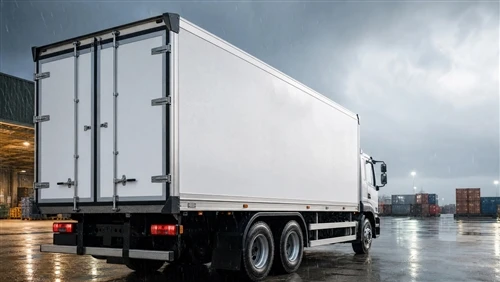
Applications such as ferry interiors, wash-down vehicle compartments, and refrigerated transport bodies are increasing the use of polymer-based sandwich structures for this reason.
Production Lines Are Moving Toward Automated Panel Processing
Modern manufacturing facilities increasingly rely on CNC routing, robotic cutting, automated adhesive application, and modular assembly systems.
Thermoplastic honeycomb panels can be processed using:
CNC cutting
Edge trimming
Insert installation
Thermoplastic welding
Adhesive bonding
The panel arrives as a flat sheet and can be converted into finished components through repeatable machining operations.
As manufacturers increase production volumes, material systems compatible with automated processing become more attractive than assemblies requiring extensive manual finishing.
Panel Functions Are Being Consolidated Into Single Assemblies
Traditional assemblies often require multiple components to achieve structural support, surface protection, and attachment capability.
A thermoplastic honeycomb panel can be configured with:
Anti-slip surface layers
Fiberglass reinforcement skins
Decorative laminate surfaces
Embedded inserts
Edge profiles
Instead of assembling separate backing boards, surface layers, and support structures, manufacturers can integrate several functions into a single panel system.
This reduces the number of parts that must be handled during assembly.

Fire and Safety Requirements Are Influencing Material Development
Public transportation systems, marine interiors, and industrial enclosures often require compliance with project-specific fire performance requirements.
To meet these requirements, panel manufacturers continue to develop:
- Fire-retardant thermoplastic skins
- Modified polypropylene formulations
- Composite surface laminates
- Low-smoke material systems
Future panel development is increasingly linked to safety specifications rather than simply reducing weight.
As regulatory requirements evolve, material suppliers must adapt panel constructions to meet both structural and compliance requirements.
End-of-Life Material Recovery Is Becoming a Design Consideration
Many traditional sandwich structures combine wood, thermoset resin, foam, metal, and adhesive systems within a single panel.
These mixed-material constructions can complicate material recovery after service life.
Thermoplastic honeycomb panels can be manufactured using polymer-based cores and compatible thermoplastic surface layers. This allows manufacturers to reduce the number of material families within the panel structure.
As vehicle manufacturers and equipment producers evaluate lifecycle management requirements, material recovery is becoming part of the design process rather than an afterthought.
What Future Demand Means for Honeycomb Panel Suppliers
Future demand is expected to focus on panels that can:
Maintain thickness while reducing mass
Resist moisture exposure
Accept machining and routing operations
Integrate fastening systems
Meet project-specific fire requirements
Fit into automated production lines
Growth is therefore linked less to the panel itself and more to its ability to replace existing materials inside transportation, marine, construction, and industrial systems.
HolyCore Thermoplastic Honeycomb Panel Solutions

HolyCore manufactures polypropylene honeycomb cores and thermoplastic honeycomb panel systems for transportation, marine, industrial, and construction applications.
Panel structures can be configured with different core thicknesses, cell geometries, skin materials, and reinforcement methods according to load requirements and installation conditions.
The honeycomb core transfers shear forces between panel skins while reducing material volume inside the structure.
Depending on the application, panels can be machined, bonded, edge-sealed, fitted with inserts, and integrated into floors, partitions, wall systems, equipment housings, and vehicle interior assemblies.