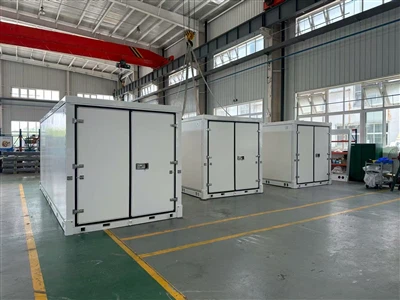
In the field of materials science and engineering, lightweight, high-performance, and recyclable materials have become the key drivers of industrial upgrading. Continuous Fiber Reinforced Thermoplastics (CFRT) offer a unique combination of high strength, lightweight properties, recyclability, and compatibility with mass production. As a result, CFRT is gradually replacing traditional metals and thermoset composites, emerging as a critical material solution in industries such as automotive, aerospace, and renewable energy. This article provides a systematic analysis of CFRT's industry logic and application prospects from four dimensions: technical fundamentals, industrial value, current development, and future trends.This article provides a comprehensive overview of CFRT, its composition, properties, processing methods, and how it can be combined with PP, XPS, and PET foam cores to form advanced sandwich panels.
Definition and Concept
CFRT is the abbreviation of continuous fiber reinforced thermoplastic. It is a composite material in which continuous fibers are used as reinforcing materials and are impregnated with a thermoplastic resin matrix. The materials that can be used as reinforcing fibers mainly include glass fiber, carbon fiber andaramid fiber, etc. The materials that can be used as matrix resin mainly include polypropylene (PP), Polyethylene Terephthalate(PET)and Extruded Polystyrene (XPS).
What is Continuous Fiber Reinforced Thermoplastic Composite Panels?
Continuous fiber-reinforced thermoplastic composite panels are constructed from two or more layers of unidirectional tape laid at 0/90° angles, laminated with UV-resistant and aging-resistant films and non-woven fabrics, and then heat-laminated. Due to its lightweight, high-strength, environmentally friendly, and recyclable properties, it is a promising alternative to traditional metal and fiberglass in applications such as refrigerated container and truck skins, subfloors, recreational vehicles, shelters, and residential buildings.

Composition and Materials
CFRT can be combined with lightweight foam cores-PP foam, PET foam, and XPS foam-to produce high-performance sandwich panels. These panels are widely used in automotive, aerospace, electronics, and construction due to their excellent stiffness-to-weight ratio, thermal insulation, and structural integrity.
Panel Structure:
Sandwich configuration:
●Top and bottom skins: CFRT layers provide the primary structural strength.
●Core: Foam (PP, PET, or XPS) reduces weight while enhancing thermal and impact performance.
Typical thickness:
●CFRT skins: 0.5–2 mm
● Foam cores: 5–30 mm depending on application and required stiffness.
Fiber orientation in CFRT skins:
●Unidirectional fibers for maximum tensile strength along a specific axis.
●Woven or cross-laid fibers for multidirectional reinforcement.
Product Features
● Continuous fibers can greatly meet the requirements of high strength and rigidity.
● The product surface is seamless, corrosion - resistant, mildew - proof, and not affected by chemical cleaning agents.
● The product has excellent interlaminar shear performance and high impact strength.
●The layering method of sheet, the type of reinforcing material and the fiber content can be customized.
●Meet the lightweight requirements of transportation tools and be green and environmentally friendly.
●It can be "35% lighter than FRP sheet and 100% tougher than FRP sheet.

The Difference Between CFRT Panels And FRP Panels
Thermoplastic CFRT sheets are made of thermoplastic resins that soften and resolidify upon heating, making them malleable and recyclable. Thermosetting resins, on the other hand, cannot be softened or recycled upon heating. Thermoplastic CFRT sheets can be formed through various processing methods, including thermoforming, extrusion, and injection molding, offering high processability and flexibility.
1. Material Composition
| Panel Type | Composition | Features |
|---|---|---|
| CFRT (Continuous Fiber Reinforced Thermoplastics) | Continuous fibers (glass or carbon) + thermoplastic resin (PP, PA, PET) | High strength and stiffness, thermoplastic processable, recyclable |
| FRP (Fiber Reinforced Plastics / Fiberglass Reinforced Plastics) | Short or continuous fibers + thermosetting resin (epoxy, polyester) | High strength but brittle, cannot be remolded, difficult to recycle |
2. Processing Methods
| Panel Type | Processing Method | Notes |
|---|---|---|
| CFRT Panel | Hot pressing, injection molding, extrusion, lamination | Can be reshaped with heat, suitable for complex shapes |
| FRP Panel | Compression molding, hand lay-up, spray molding | Once cured, cannot be remolded, recycling is difficult |
3.Performance Comparison
| Performance | CFRT Panel | FRP Panel |
|---|---|---|
| Tensile Strength | High (especially along fiber direction) | Medium to high (depends on fiber orientation) |
| Impact Resistance | Relatively high, ductile | Relatively brittle |
| Weight | Lightweight | Slightly heavier |
| Recyclability | Recyclable and reprocessable | Difficult to recycle, usually incinerated or landfilled |
CFRT Product

HolyPan ®
HolyPan is a thermoplastic honeycomb sandwich panel with a glass fiber reinforced polypropylene (PP) core in the middle.

UDPan ®
Thermoplastic honeycomb panels are sandwich-structured panels whose skins are composed of CFRT (continuous fiberglass thermoplastic) sheets and the middle layer structure is a polypropylene honeycomb core.

GWT®
GWT thermoplastic composite sheet is a novel polypropylene composite material reinforced with glass fiber cloth.

CFRT XPS Sandwich Panels
XPS foam board is a fully recyclable insulation material. Made from extruded polystyrene, a material that does not deteriorate.

CFRT PET Sandwich Panels
PET foam is primarily made from polyethylene terephthalate (PET). It is a closed-cell, low-density, thermoplastic structural polyester foam.
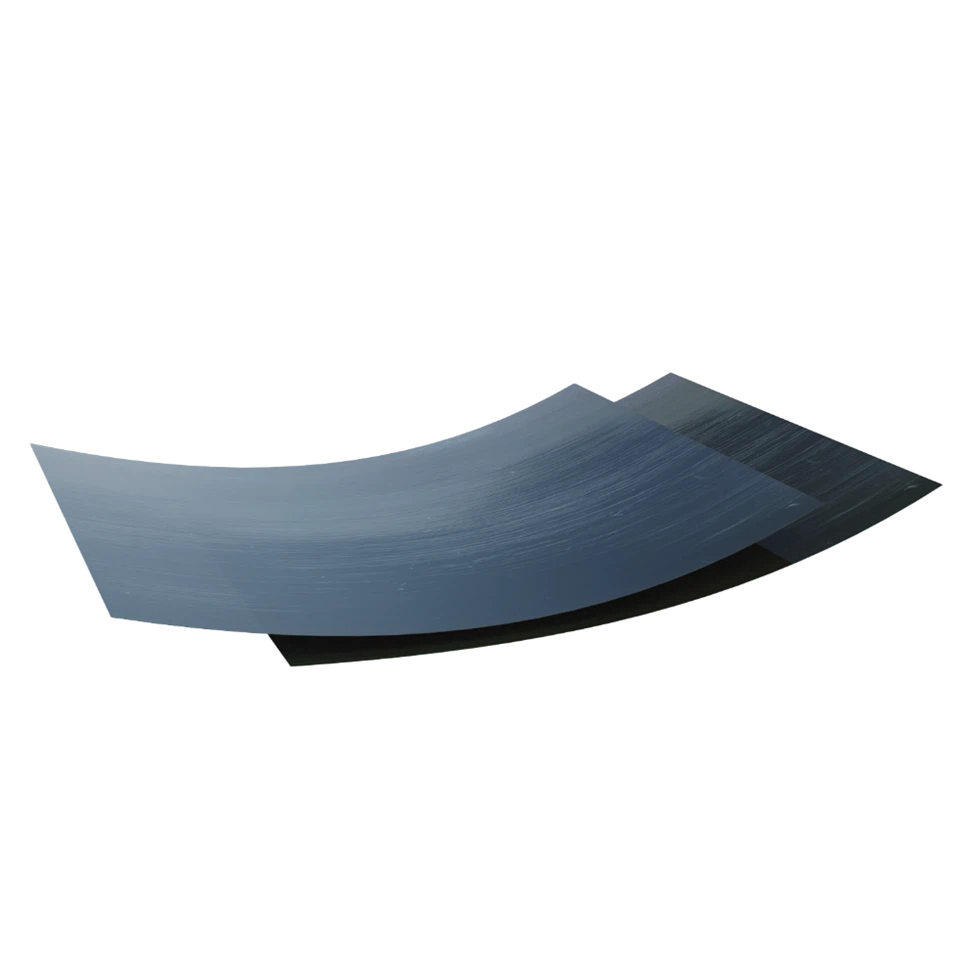
CFRT Tape
CFRT sheets are lightweight thermoplastic FRP materials made from laminated continuous fiber tapes.
CFRT Flexible Design
CFRT can be flexibly changed through different laying designs, freely setting the laying angle, changing the overall structure of the plate, and making the material perform at its best. The thickness of a single sheet formed by efficient continuous roll forming is less than 3mm, and the thickness of a multi-layer hot-pressed plate is greater than 3mm.
| Product | Grammage | Thickness | Tensile Strength | Elongation at Break | Bending Strength |
|---|---|---|---|---|---|
| CFP - 2 - 740 | 740 | 0.5 | 300 | 15 | 250 |
| CFP - 2 - 900 | 900 | 0.6 | 300 | 15 | 250 |
| CFP - 4 - 1480 | 1480 | 1 | 280 | 15 | 230 |
| CFP - 4 - 1800 | 1800 | 1.2 | 280 | 15 | 230 |
| CFP - 10 - 4500 | 4500 | 3 | 250 | 13 | 210 |
| CFP - 18 - 8100 | 8100 | 5.5 | 250 | 13 | 210 |
| ZRCFP - 4 - 1800 | 1800 | 1.2 | 250 | 13 | 210 |
Applications of CFRT


Industry Trends of CFRT (Continuous Fiber Reinforced Thermoplastics)
●Lightweight and New Energy Demand: CFRT is increasingly used in electric vehicles and renewable energy equipment due to its lightweight and high-strength properties.
● Sustainability and Recycling: The thermoplastic matrix enables CFRT to be recycled and reprocessed, aligning with green manufacturing trends.
● High Performance and Diversification: Advanced resins and hybrid fibers drive CFRT applications into high-temperature, corrosion-resistant, and multifunctional fields.
● Automation and Mass Production: Mature processes such as ATL and AFP make CFRT more suitable for large-scale, efficient manufacturing.
● Composite Structural Applications: CFRT is often combined with foam cores or metals to form lightweight sandwich panels and multi-material structures.
● Global Market Landscape: Europe focuses on automotive, the U.S. leads in aerospace, while China is rapidly expanding in wind energy and rail transit.
● Future Outlook: CFRT will become a key material balancing lightweight performance and recyclability, with applications continuing to expand across industries.
Conclusion
CFRT, especially when combined with PP, XPS, and PET foam cores, represents a transformative solution for industries demanding lightweight, strong, and thermally efficient panels. Its combination of mechanical strength, thermal resilience, recyclability, and design flexibility ensures CFRT will play an increasingly vital role in automotive, aerospace, electronics, and construction sectors.