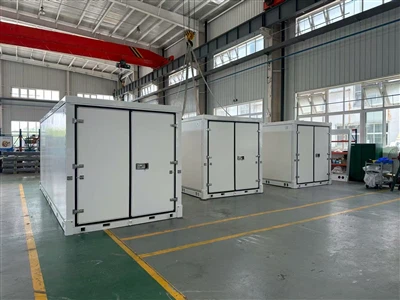
Honeycomb panels have become a cornerstone material solution across transportation, construction, industrial equipment, and logistics applications. Their defining advantage lies in an exceptional strength-to-weight ratio, achieved by combining thin yet rigid face sheets with a lightweight honeycomb core. However, the real performance of a honeycomb panel is determined not by its geometry alone, but by material selection, both for the sheets and the core.
Selecting the appropriate materials requires a clear understanding of mechanical requirements, environmental exposure, cost constraints, manufacturing processes, and long-term durability expectations. This article provides a detailed industry-level analysis of material selection for honeycomb panels, focusing separately on sheet materials and core materials, while explaining how these two components interact to form a high-performance composite structure.
Understanding the Structure of Honeycomb Panels
A standard honeycomb panel consists of three primary layers:
Top face sheet
Honeycomb core
Bottom face sheet
The face sheets bear most of the bending and in-plane loads, while the core primarily resists shear forces, stabilizes the face sheets, and maintains panel thickness. Proper material matching between sheets and core is essential to achieve optimal stiffness, impact resistance, and durability.
Sheet Material Selection
Sheet materials define the surface properties, load-bearing behavior, and environmental resistance of honeycomb panels. Different applications require different sheet materials based on performance priorities.
Aluminum Sheets
Aluminum is one of the most widely used face sheet materials in honeycomb panel construction.
Key characteristics:
High strength-to-weight ratio
Excellent corrosion resistance
Good formability and machinability
Stable performance across temperature variations
Aluminum sheets are commonly used in applications such as:
Transportation panels
Vehicle bodies
Industrial enclosures
Architectural cladding
From a structural standpoint, aluminum sheets contribute significantly to bending stiffness, especially when bonded to a honeycomb core with sufficient panel thickness.
Fiberglass Reinforced Plastic (FRP) Sheets
FRP sheets are composite laminates made from glass fiber reinforcement and polymer resin systems.
Key characteristics:
High impact resistance
Excellent corrosion and moisture resistance
Electrical insulation properties
Design flexibility in surface finish
FRP sheets are frequently selected for environments involving:
High humidity
Chemical exposure
Frequent washing or sanitation
They are particularly suitable for logistics and transportation applications where durability and low maintenance are critical.
Thermoplastic Sheets
Thermoplastic face sheets, such as polypropylene-based or polyethylene-based sheets, are increasingly used in lightweight applications.
Key characteristics:
Low density
Good chemical resistance
High recyclability
Resistance to moisture absorption
Thermoplastic sheets are often chosen for:
Lightweight transport panels
Modular structures
Cost-sensitive applications
Their compatibility with thermoplastic honeycomb cores allows for improved recyclability and thermal welding options.
Coated or Pre-Finished Sheets
In many applications, face sheets are supplied with surface coatings or decorative finishes.
Functional benefits include:
Enhanced UV resistance
Improved scratch resistance
Aesthetic consistency
Reduced post-processing requirements
Surface-treated sheets are common in visible applications such as vehicle exteriors and architectural panels.
Core Material Selection
The honeycomb core defines the panel's lightweight nature and shear performance. Core material selection must align with load requirements, environmental exposure, and manufacturing compatibility.
Aluminum Honeycomb Core
Aluminum honeycomb cores are widely used in high-performance structural panels.
Key characteristics:
Excellent shear strength
High stiffness-to-weight ratio
Good thermal stability
Fire resistance
Aluminum cores are commonly used in:
Transportation structures
Industrial platforms
Architectural systems
Cell size, foil thickness, and core height can be adjusted to meet specific load requirements.
Polypropylene (PP) Honeycomb Core
Polypropylene honeycomb cores are among the most popular thermoplastic core materials.
Key characteristics:
Extremely lightweight
High moisture resistance
Good chemical stability
Noise and vibration damping properties
PP honeycomb cores are widely applied in:
Truck body panels
Packaging structures
Lightweight partitions
Their closed-cell or semi-closed-cell designs enhance water resistance and long-term durability.
Thermoplastic Composite Honeycomb Core
Advanced thermoplastic composite cores combine polymers with reinforcement additives.
Key characteristics:
Improved impact resistance
Enhanced fatigue performance
Consistent cell geometry
Long service life
These cores are suitable for applications requiring repeated load cycles and dynamic stress resistance.
Core Geometry and Cell Design
Beyond material type, core performance is influenced by:
Cell size (small cells increase strength)
Cell shape (hexagonal vs. rectangular)
Core thickness
Density distribution
Engineers often optimize these parameters to balance strength, weight, and cost.


Interaction Between Sheet and Core Materials
The performance of a honeycomb panel depends heavily on the compatibility between sheet and core materials.
Adhesive Bonding Compatibility
Material selection must consider:
Adhesive type
Surface energy of sheets
Thermal expansion compatibility
Mismatched materials may lead to delamination under thermal or mechanical stress.
Thermal Expansion and Environmental Stability
Different materials exhibit different coefficients of thermal expansion.
Proper matching:
Reduces internal stress
Prevents warping
Improves long-term dimensional stability
This is particularly important in outdoor or refrigerated environments.
Mechanical Load Transfer
Face sheets carry tensile and compressive stresses, while the core transfers shear loads.
Optimized material pairing ensures:
Even stress distribution
Improved fatigue resistance
Enhanced impact performance
Application-Driven Material Selection Strategies
Transportation and Truck Body Panels
Key priorities:
Lightweight construction
Impact resistance
Moisture and corrosion resistance
Common configurations include:
FRP or aluminum sheets + PP honeycomb core
Refrigerated and Insulated Panels
Key priorities:
Thermal insulation
Airtight structure
Hygienic surfaces
Material combinations often involve:
Composite or coated sheets + closed-cell thermoplastic cores
Industrial and Structural Applications
Key priorities:
High load capacity
Fire resistance
Long-term durability
Typical solutions:
Metal sheets + aluminum honeycomb core
Architectural and Interior Panels
Key priorities:
Flatness
Aesthetic quality
Dimensional stability
Material choices may vary widely based on design requirements.


Manufacturing Considerations in Material Selection
Material choice directly affects manufacturing processes:
Panel lamination methods
Cutting and machining requirements
Tolerance control
Production scalability
Selecting materials compatible with automated production improves consistency and cost efficiency.
Sustainability and Lifecycle Considerations
Modern honeycomb panel design increasingly considers environmental impact.
Key factors include:
Material recyclability
Weight reduction for energy savings
Durability and service life
Waste reduction during manufacturing
Thermoplastic-based panels are gaining popularity due to improved recyclability.
Quality Control and Performance Testing
Material selection must be validated through testing, including:
Flatwise compression tests
Shear strength tests
Impact resistance tests
Environmental aging tests
Consistent testing ensures selected materials meet design expectations.
Material selection for honeycomb panels is a complex engineering decision that directly determines structural performance, durability, manufacturability, and lifecycle value. By analyzing sheet materials and core materials separately-while understanding their interaction as a composite system-engineers and decision-makers can design panels that precisely meet application requirements.
From aluminum and composite face sheets to thermoplastic and metal honeycomb cores, each material offers unique advantages. The optimal solution is rarely defined by a single factor, but rather by a balanced evaluation of mechanical performance, environmental resistance, weight efficiency, cost structure, and long-term reliability.