Why "Thicker Panels" Often Fail to Deliver Expected Stiffness
In sandwich panel design, increasing panel thickness is still one of the most common responses to stiffness-related problems. When a panel deflects too much, feels soft under load, or fails serviceability requirements, the instinctive reaction is to specify thicker face sheets or a greater overall panel thickness.
This approach appears logical. Thicker panels should be stiffer. Stronger face sheets should carry more load. However, in real engineering applications, especially those involving thick sandwich panels, this logic frequently breaks down.
Across vehicle bodies, industrial enclosures, modular structures, and insulated panels, engineers encounter a recurring issue: panels become heavier and more expensive, yet deflection remains excessive. In many cases, the panel performs only marginally better-or sometimes worse-than a thinner design.
The root cause is rarely insufficient face sheet strength. Instead, it is most often core shear deformation that limits performance.
Sandwich Panels Are Structural Systems, Not Material Stacks
A sandwich panel does not behave like a solid plate. It is a composite structural system composed of:
Two face sheets carrying tensile and compressive stresses
A lightweight core transferring shear forces and stabilizing the faces
A bonding interface enabling composite action
If any one of these elements underperforms, the entire system suffers.
Face sheets provide bending resistance. The core provides separation and shear transfer. The bond ensures load continuity. When designers focus only on face sheet properties, they implicitly assume that the core is infinitely stiff in shear. In practice, this assumption is almost never true.
Understanding the Real Contributors to Panel Deflection
Total deflection in a sandwich panel consists of two distinct components:
Bending deflection, dominated by face sheet stiffness and panel geometry
Shear deflection, dominated by core shear modulus and panel thickness
In thin panels, bending deflection typically dominates. This is where face sheet strength and thickness play a major role.
In thick sandwich panels, however, shear deflection increases rapidly and often becomes the controlling factor. Once this happens, further increases in face sheet thickness deliver diminishing returns.
This distinction is critical, yet frequently overlooked in specification-driven designs.
Why Shear Modulus Becomes Critical as Panels Get Thicker
Shear modulus defines a material's resistance to shear deformation. In sandwich panels, it governs how much the core deforms when transferring load between face sheets.
As panel thickness increases:
Bending stiffness increases nonlinearly
Shear deformation increases approximately linearly
If the core has a low shear modulus, the panel quickly enters a shear-dominated deflection regime. In this regime, additional thickness increases shear strain faster than it reduces bending strain.
The result is a panel that looks robust on paper but behaves flexibly in service.
Why Face Sheet Strength Is Rarely the Limiting Factor
In most industrial and transportation applications, sandwich panels do not fail because face sheets reach their tensile or compressive limits. Instead, performance issues arise due to:
Excessive deflection
Vibration and resonance
Creep under sustained load
Loss of dimensional stability
All of these are strongly influenced by core shear behavior.
Increasing face sheet thickness improves ultimate strength but often does little to improve serviceability. In many cases, it simply adds weight and cost without addressing the true structural bottleneck.
The Cost of Over-Reliance on Face Sheet Thickness
From a system perspective, thicker face sheets introduce several penalties:
Higher areal weight
Increased material cost
Longer curing or processing cycles
Reduced handling and assembly efficiency
Yet these penalties are frequently accepted because the alternative-rethinking core selection-appears more complex or less familiar.
In reality, optimizing core shear properties often achieves the same stiffness targets with less material and lower total system cost.
Core Materials and Their Shear Behavior in Practice
General Structural Foam Cores
Foam cores are widely used due to their low density and cost efficiency. However, their shear modulus is relatively low.
In thin or lightly loaded panels, foam cores can perform adequately. As panel thickness increases, shear deformation becomes significant, limiting stiffness and accelerating creep under sustained load.
Foam cores often become the governing factor long before face sheet limits are approached.
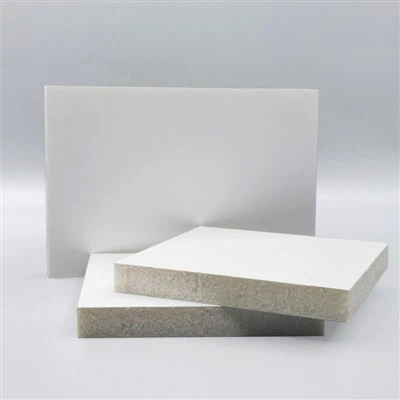
XPS Cores: Insulation First, Structure Second
XPS cores are valued for their closed-cell structure, moisture resistance, and thermal performance. From a structural standpoint, their shear modulus remains moderate.
In insulated panels, XPS cores work well thermally but often constrain mechanical performance. Thick insulated panels with XPS cores frequently exhibit noticeable deflection under service loads, even when paired with strong face sheets.
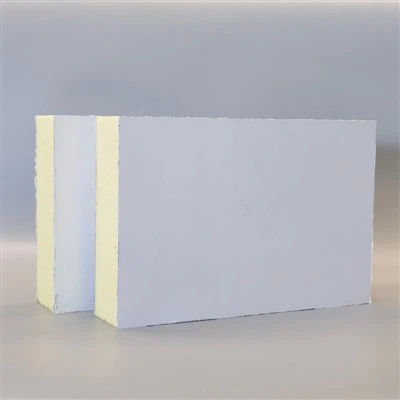
PU Cores: Density-Driven Performance
PU cores occupy a middle ground. Their shear modulus varies significantly with density and formulation.
Higher-density PU cores can provide improved shear stiffness while retaining good insulation properties. However, performance consistency depends heavily on process control. Variations in density or bonding quality can significantly affect panel behavior.
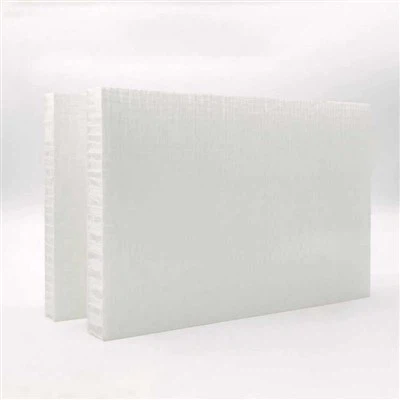
Structural PP Cores: Designed for Shear Stability
PP structural cores are engineered specifically to provide higher effective shear modulus while maintaining low weight and excellent fatigue resistance.
In dynamic environments-vehicle bodies, floors, and sidewalls-PP cores demonstrate superior resistance to shear deformation under cyclic loading. Their higher shear stiffness allows designers to fully utilize panel thickness without resorting to thicker face sheets.
Why Core Selection Determines Whether Thickness "Works"
Panel thickness creates geometric potential for stiffness, but only if the core can sustain shear without excessive deformation.
A low-shear-modulus core limits usable stiffness regardless of thickness. A higher-shear-modulus core allows thickness to translate directly into structural performance.
This is why two panels with identical face sheets and thickness can behave entirely differently in service.
Implications for FRP Face Sheet Designs
FRP face sheets provide stable, isotropic performance and are rarely the weak link in sandwich panels.
In many FRP-based designs, increasing skin thickness is an inefficient way to improve stiffness. Optimizing core shear properties typically yields better results with less added weight.
FRP panels benefit most when paired with cores capable of maintaining shear integrity across the full panel thickness.
Implications for CFRT Face Sheet Designs
CFRT face sheets offer exceptional stiffness-to-weight ratios. However, their advantages can be neutralized by a low-shear-modulus core.
When CFRT is combined with a soft core, the panel behaves as if the face sheets are underutilized. In such cases, the advanced material delivers limited real-world benefit.
CFRT designs demand cores with sufficient shear stiffness to unlock their full structural potential.

FRP Sheet
CFRT Sheet

The Silent Multiplier
Even the best core selection cannot compensate for poor bonding.
The adhesive layer must transfer shear efficiently without creep, slip, or localized failure. Panels with identical materials but different lamination processes often exhibit dramatically different stiffness and durability.
From an engineering standpoint, bonding quality is inseparable from core performance.
Why Serviceability, Not Strength, Governs Most Designs
In real applications, sandwich panels are almost always governed by serviceability limits:
Maximum allowable deflection
Vibration response
Long-term dimensional stability
Shear modulus directly influences all three. Designs optimized solely for ultimate strength frequently fail to meet operational requirements.
Engineering Consequences of Ignoring Shear Modulus
When shear behavior is not addressed early:
Panels require late-stage redesign
Face sheets are thickened unnecessarily
Reinforcements are added post hoc
Weight and cost escalate
These outcomes are common and largely avoidable with informed core selection.
What Should Actually Be Specified
For procurement teams, the lesson is clear: material names and thickness alone are insufficient.
Effective specifications should address:
Core type and structural intent
Expected shear performance
Bonding and lamination capability
Consistency across production batches
Understanding why these factors matter enables better supplier evaluation and fewer surprises downstream.
A Shift Toward Performance-Based Thinking
The industry is gradually moving away from thickness-driven specifications toward performance-based criteria.
Instead of asking, "How thick is the panel?" engineers increasingly ask, "How much does it deflect under load?" This shift naturally elevates the importance of shear modulus and core selection.
Where Real Stiffness Comes From
Panel thickness defines what might be possible.
Face sheet strength defines what could be carried.
Core shear modulus defines what actually happens in service.
For engineers, recognizing this hierarchy leads to lighter, more efficient designs. For procurement professionals, it enables sourcing decisions that reduce total project cost rather than simply material price.
In sandwich panel engineering, thickness creates potential-but shear modulus determines whether that potential is ever realized.